Dear Reader,
As tensions with Iran escalate, something predictable is happening in the markets.
Money is flowing into the U.S. dollar.
Investors call it a “flight to safety.”
When things get messy in the world, capital flees toward the deepest, most liquid financial system on Earth.
And for now, that still means the U.S. dollar.
Being the world’s reserve currency has given the United States enormous advantages.
It has allowed us to borrow more cheaply than almost anyone else.
It has allowed us to run persistent trade deficits without triggering a currency collapse.
And it has allowed Washington to finance government spending on a scale that would break most other countries.
But this privilege also comes with a hidden cost…
A structural contradiction that essentially forces America deeper and deeper into debt – even without the actions of the populist politicians.
That contradiction is called Triffin’s Dilemma.
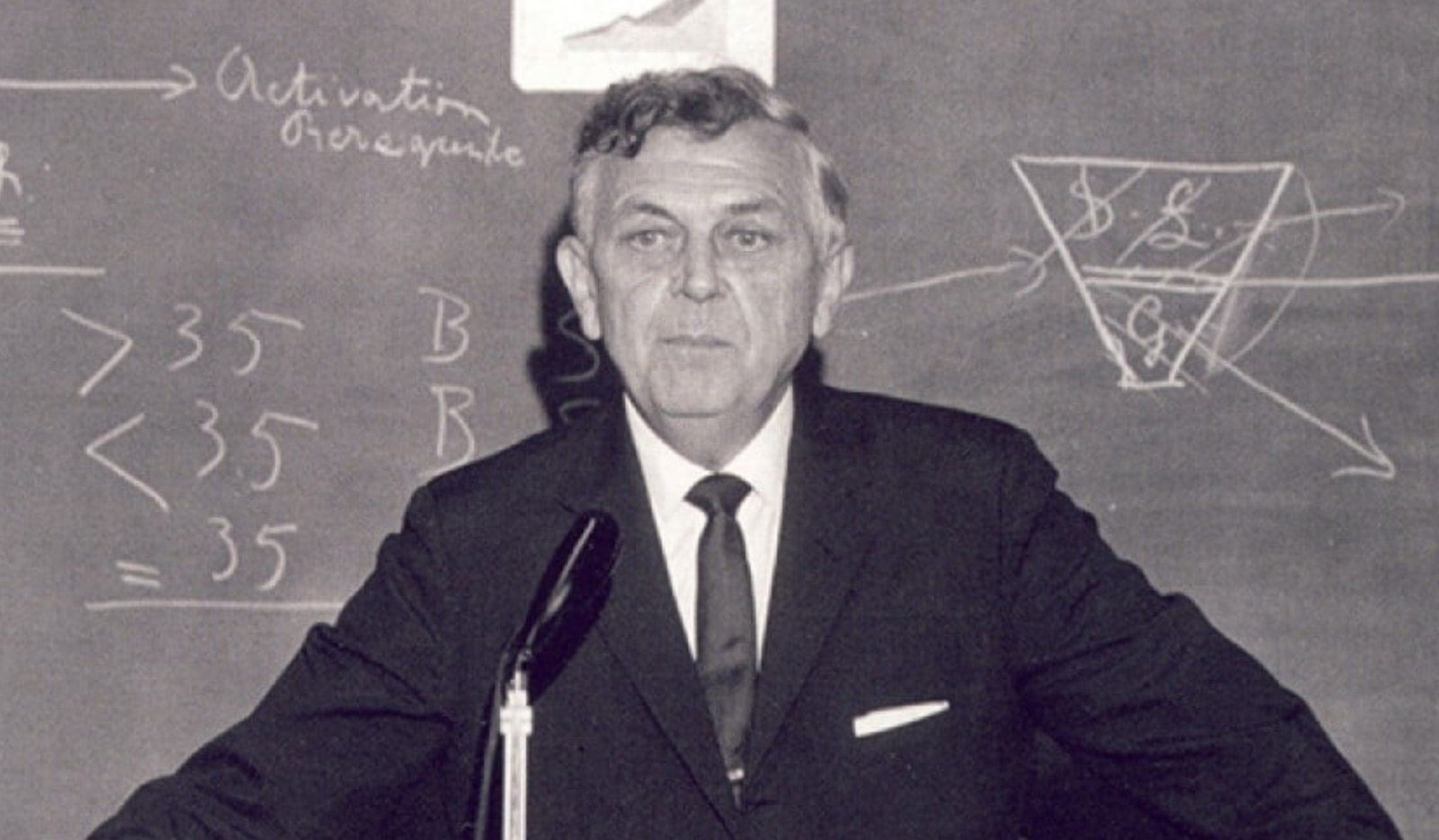
Back in the 1960s, economist Robert Triffin warned Congress about a fatal flaw built into the global monetary system. He said:
“If the United States stopped running balance of payments deficits, the resulting shortage of liquidity could pull the world economy into a contractionary spiral…
However, excessive U.S. deficits would erode confidence in the value of the U.S. Dollar. Without confidence in the dollar, it would no longer be accepted as the world's reserve currency.”
His argument was simple.
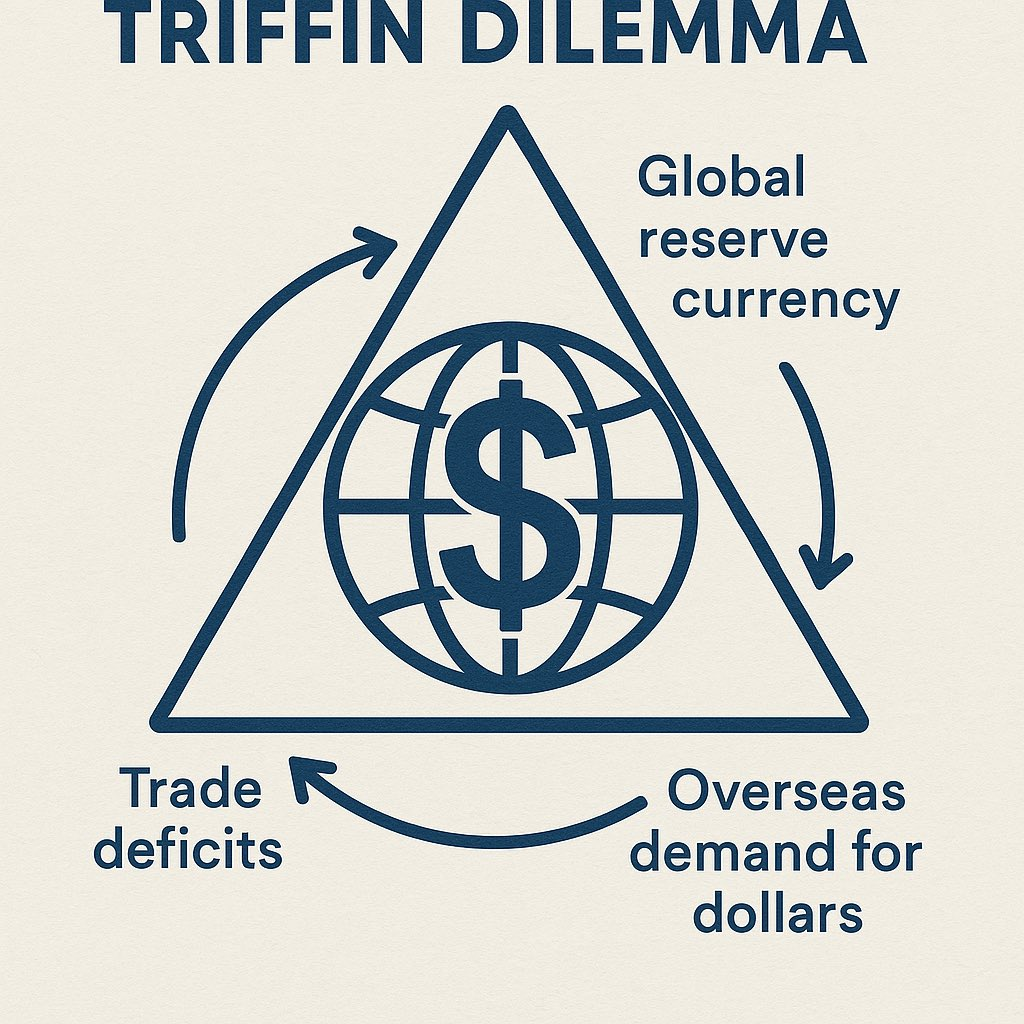
If your currency is the world’s reserve currency, the rest of the world needs a constant supply of it. Countries need dollars to:
- Trade commodities like oil
- Settle international transactions
- Service dollar-denominated debt
- Build foreign exchange reserves
Otherwise the entire world risks being pulled into a contractionary spiral.
Before 1971 before Nixon closed the gold window, those dollars didn’t magically appear overseas.
They had to leave the United States first.
The main way that happened was through trade deficits – the U.S. importing more than it exports.
In other words, in order to maintain its status as the global reserve currency…
America practically had to keep running trade deficits – which ironically eroded confidence in the value of the dollar.
Imagine the dollar system like a casino where the United States is the only table that can issue chips.
If the casino didn’t keep handing out new chips, the game stopped – but the more chips it produced, the less each chip was ultimately worth.
That’s the dilemma. And:
This Dilemma Broke the Bretton Woods System
After World War II, the global financial system was built around the dollar.
Other currencies were pegged to the dollar, and the dollar itself was tied to gold at a fixed rate of $35 per ounce.
In theory, that meant the dollar was “as good as gold.”
But the system also meant the world needed more and more dollars as global trade expanded.
So the United States began supplying them.
Dollars flowed overseas through foreign aid, military spending, and Americans buying foreign goods.
It hollowed out our manufacturing base, and sunk us deeper and deeper into debt.
In other words, the U.S. started running the very balance-of-payments deficits Triffin warned about.
Eventually there were more dollars circulating abroad than there was gold in Fort Knox to back them.
Foreign governments noticed, and they started doing the obvious thing – exchanging those dollars for gold.
Gold began leaving the United States – fast. Way too fast.
By the late 1960s the system was crackling.
And in 1971, President Nixon ended dollar convertibility into gold…
Collapsing the Bretton Woods agreement, and sticking us with the fiat system we have today.
The Triffin Dilemma in the Fiat Era
Today, the US dollar is no longer backed by gold.
So dollars can now be loaned into existence in foreign banking systems, just like they are in domestic banks.
These banks press a few buttons and the dollars magically appear.
So we may not have to run massive trade deficits anymore, but the dynamic of Triffin’s Dilemma is still the same.
Because countries need to hold our currency in reserves…
Because most of the debt taken out globally is done so in US dollars…
Because the U.S. has essentially become the “lender of last resort” for the entire world…
In order to maintain its position as the world's reserve currency, America is still on the hook to print money and provide liquidity to the world.
That’s why after every financial crisis we sink deeper and deeper into debt.
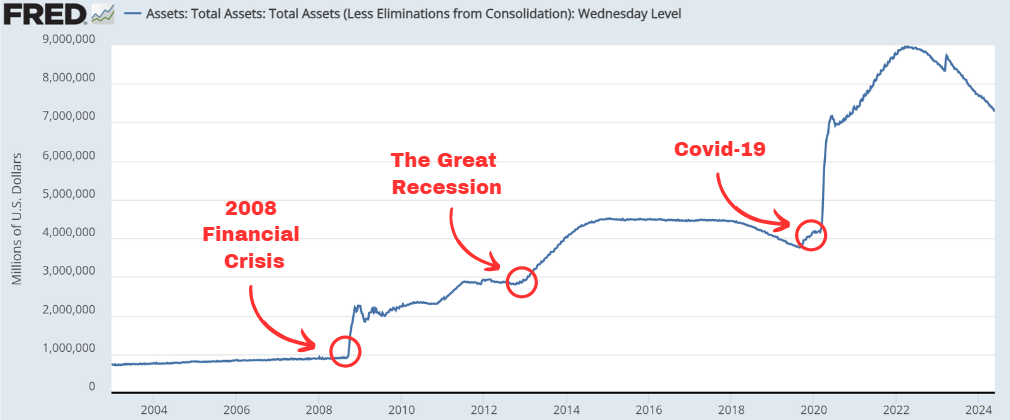
We aren’t just bailing out our own banks.
We are bailing out the entire global economy.
But now with the U.S. debt ballooning to the largest levels in history.
It’s becoming apparent that we soon won’t even be able to afford the interest on that debt.
And other countries are beginning to take notice.
In fact, and Zhou Xiaochuan Governor of the People’s Bank of China issued a warning saying that:
“The issuing countries of reserve currencies cannot maintain the value of the reserve currencies while providing liquidity to the world. The costs of such a system to the world may have exceeded its benefits.”
In other words, Triffin’s Dilemma may have finally run all the way to its end.
And during the next crisis we may not be able to be the lender of last resort anymore (a role we’ve played since WWII).
Which means the current dollar system has a prebuilt expiration date.
And when it hits, the world might not look the same.
Recognize this is where we’re headed – and prepare yourself accordingly.
Until next time,
-Joe Brown
Heresy Financial
Letters From a Heretic
P.S.
Are you interested in learning more about Triffin’s Dilemma and how it will impact the U.S. economy, and what you can do to prepare? Let me know by replying to this email.
Don't miss out!
Get our free, no-spam, weekly digest. Unsubscribe anytime. Never miss out on crucial financial insights!


I really enjoyed this course. Joe has a special skill at teaching. He is very concise which I appreciated. The only thing I was an experienced investor at was real estate so I am a complete newbie to all the other assets he touches on in this course. I feel much more confident now about investing in the stock market, his explanation of options and hedging was really insightful as well.

I loved this course. It was knowledgable and gave me a new perspective on capital management. The portfolio you put together made so much sense to me, and it's kind of surprising that it's not more widespread. I really liked how you broke down mainstream portfolios and explained the pros and cons of each. It helped me get a better sense of the investment landscape and made me feel more confident