Thank you! Your submission has been received!
Oops! Something went wrong while submitting the form.

Joe's Must-Reads:
Dive into Joe's curated selections

Library

Economics

Thomas J. DiLorenzo
The Politically Incorrect Guide to Economics
Thomas J. DiLorenzo

Another entry in the best-selling, irreverent, hard-hitting Politically Incorrect Guide series! Economics from a rational, conservative viewpoint—that is, a refreshing look at how money actually works from an author who knows the score, and how the law of economics are frequently broken and derailed by pernicious leftists and virtue signaling progressives. Markets Rule. Socialism Sucks. Time to wise up. Think economics is the Dismal Science? No more! Here is the lowdown on the biases, superstitions, and outright falsehoods that permeate and corrupt economics and economic policy. Here's the skinny on the poisonous effects of socialism and crony capitalism. Even better, here is an irreverent but clear-eyed explanation of how markets and economies work and how government intervention so often doesn’t, routinely makes things worse, and how it's usually the cause of economic crises in the first place.

More Details
Robert P. Murphy
The Politically Incorrect Guide to Capitalism
Robert P. Murphy

Most commonly accepted economic "facts" are wrong Here's the unvarnished, politically incorrect truth. The liberal media and propagandists masquerading as educators have filled the world--and deformed public policy--with politically correct errors about capitalism and economics in general. In The Politically Incorrect Guide(tm) to Capitalism, myth-busting professor Robert P. Murphy, a scholar and frequent speaker at the Ludwig von Mises Institute, cuts through all their nonsense, shattering liberal myths and fashionable socialist cliches to set the record straight.

More Details
Murray N. Rothbard
What has Government Done to Our Money
Murray N. Rothbard

When this gem first appeared in 1963, it took the form of a small paperback designed for mass distribution. We've conjured up that spirit again with this special edition of Rothbard's primer on money and government.Innumerable economists, investors, commentators, and authors have learned from this book through the decades. After fifty years, it remains the best book in print on the topic, a real manifesto of sound money.Rothbard boils down the Austrian theory to its essentials. The book also made huge theoretical advances. Rothbard was the first to prove that the government, and only the government, can destroy money on a mass scale, and he showed exactly how they go about this dirty deed. But just as importantly, it is beautifully written. He tells a thrilling story because he loves the subject so much.The passion that Murray feels for the topic comes through in the prose and transfers to the reader. Readers become excited about the subject, and tell others. Students tell professors. Some, like the great Ron Paul of Texas, have even run for political office after having read it.Rothbard shows precisely how banks create money out of thin air and how the central bank, backed by government power, allows them to get away with it. He shows how exchange rates and interest rates would work in a true free market. When it comes to describing the end of the gold standard, he is not content to describe the big trends. He names names and ferrets out all the interest groups involved.Since Rothbard's death, scholars have worked to assess his legacy, and many of them agree that this little book is one of his most important. Though it has sometimes been inauspiciously packaged and is surprisingly short, its argument took huge strides toward explaining that it is impossible to understand public affairs in our time without understanding money and its destruction.

More Details
Adam Smith
The Wealth of Nations
Adam Smith

A Masterpiece of Economic Analysis Firstly Published in 1776 by Adam Smith—The Wealth of Nations An American statistic shows that, due to its significant global impact, "The Wealth of Nations by Adam Smith" was the most important document published in 1776.This book, long considered to be the magnum opus of the Scottish philosopher and economist Adam Smith, offers a deep analysis into the causes and nature of the wealth of nations.

More Details
Matt Ridley
The Rational Optimist
Matt Ridley

In a bold and provocative interpretation of economic history, Matt Ridley, the New York Times-bestselling author of Genome and The Red Queen, makes the case for an economics of hope, arguing that the benefits of commerce, technology, innovation, and change—what Ridley calls cultural evolution—will inevitably increase human prosperity. Fans of the works of Jared Diamond (Guns, Germs, and Steel), Niall Ferguson (The Ascent of Money), and Thomas Friedman (The World Is Flat) will find much to ponder and enjoy in The Rational Optimist. For two hundred years the pessimists have dominated public discourse, insisting that things will soon be getting much worse. But in fact, life is getting better—and at an accelerating rate. Food availability, income, and life span are up; disease, child mortality, and violence are down all across the globe. Africa is following Asia out of poverty; the Internet, the mobile phone, and container shipping are enriching people's lives as never before.

More Details
Walter Block
The Privatization of Roads and Highways
Walter Block

This work has been selected by scholars as being culturally important, and is part of the knowledge base of civilization as we know it. This work was reproduced from the original artifact, and remains as true to the original work as possible. Therefore, you will see the original copyright references, library stamps (as most of these works have been housed in our most important libraries around the world), and other notations in the work. This work is in the public domain in the United States of America, and possibly other nations. Within the United States, you may freely copy and distribute this work, as no entity (individual or corporate) has a copyright on the body of the work. As a reproduction of a historical artifact, this work may contain missing or blurred pages, poor pictures, errant marks, etc. Scholars believe, and we concur, that this work is important enough to be preserved, reproduced, and made generally available to the public. We appreciate your support of the preservation process, and thank you for being an important part of keeping this knowledge alive and relevant.

More Details
Jeff Booth
The Price of Tomorrow
Jeff Booth

We live in an extraordinary time. Technological advances are happening at a rate faster than our ability to understand them, and in a world that moves faster than we can imagine, we cannot afford to stand still. These advances bring efficiency and abundance—and they are profoundly deflationary. Our economic systems were built for a pre-technology era when labour and capital were inextricably linked, an era that counted on growth and inflation, an era where we made money from inefficiency. That era is over, but we keep on pretending that those economic systems still work. The only thing driving growth in the world today is easy credit, which is being created at a pace that is hard to comprehend—and with it, debt that we will never be able to pay back. As we try to artificially drive an economic system built for the past, we are creating more than just economic trouble. On our current path, our world will become profoundly more polarized and unsafe. We need to build a new framework for our local and global economies, and soon; we need to accept deflation and embrace the abundance it can bring. Otherwise, the same technology that has the power to bring abundance to us and our world will instead destroy it. In this extraordinary contrarian book, Jeff Booth, a leading mind and CEO in e-commerce and technology for 20 years, details the technological and economic realities shaping our present and our future, and the choices we face as we go forward—a potentially alarming, but deeply hopeful situation.

More Details
William Bonner
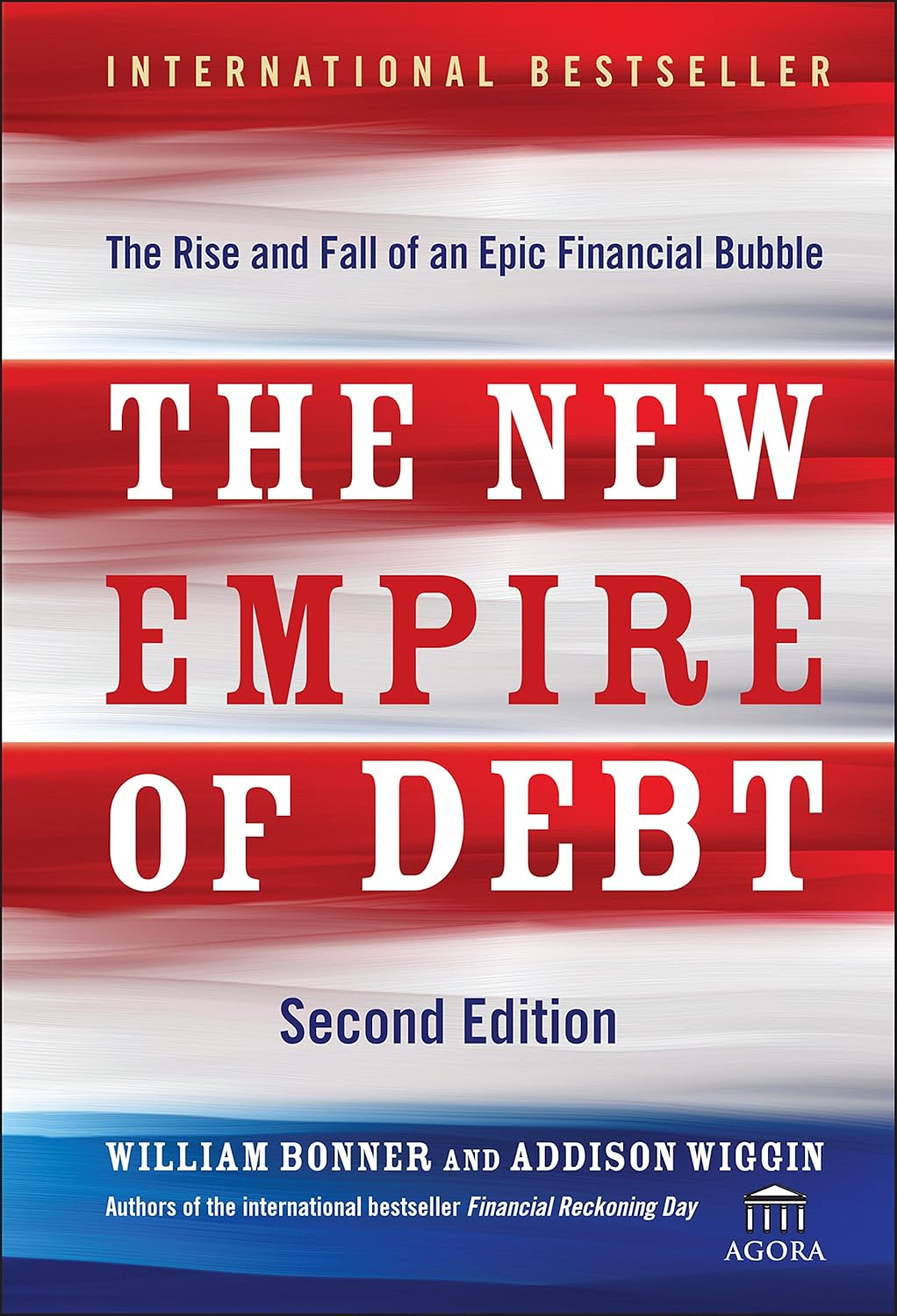
The New Empire of Debt
William Bonner

In The New Empire of Debt, financial writers Bill Bonner and Addison Wiggin return to reveal how the financial crisis that has plagued the United States will soon bring an end to this once great empire. Throughout the book, the authors offer an updated look at the United States' precarious position given the recent financial turmoil, and discuss how government control of the economy and financial system-combined with unfettered deficit spending and gluttonous consumption-has ravaged the business environment, devastated consumer confidence, and pushed the global economy to the brink. Along the way, Bonner and Wiggin cast a wide angle lens that looks back in history and ahead to the coming century: showing how dramatic changes in the economic power of the United States will inevitably impact every American.

More Details
Chris Anderson
The Long Tail
The Long Tail
Chris Anderson

"The Long Tail" is a powerful new force in our economy: the rise of the niche. As the cost of reaching consumers drops dramatically, our markets are shifting from a one-size-fits-all model of mass appeal to one of unlimited variety for unique tastes. From supermarket shelves to advertising agencies, the ability to offer vast choice is changing everything, and causing us to rethink where our markets lie and how to get to them. Unlimited selection is revealing truths about what consumers want and how they want to get it, from DVDs at Netflix to songs on iTunes to advertising on Google.

More Details
Saifedean Ammous
The Fiat Standard
The Fiat Standard
Saifedean Ammous

In The Fiat Standard, world-renowned economist Saifedean Ammous applies his unique analytical lens to the fiat monetary system, explaining it as a feat of engineering and technology just as he did for bitcoin in his global bestseller The Bitcoin Standard.

More Details
Peter Zeihan
The End of the World Is Just the Beginning
Peter Zeihan

In The End of the World is Just the Beginning, author and geopolitical strategist Peter Zeihan maps out the next world: a world where countries or regions will have no choice but to make their own goods, grow their own food, secure their own energy, fight their own battles, and do it all with populations that are both shrinking and aging. The list of countries that make it all work is smaller than you think. Which means everything about our interconnected world - from how we manufacture products, to how we grow food, to how we keep the lights on, to how we shuttle stuff about, to how we pay for it all - is about to change. In customary Zeihan fashion, rather than yelling fire in the geoeconomic theatre, he narrates the accumulation of matchsticks, gasoline, and dynamite in the hands of the oblivious audience, suggesting we might want to call the fire department. A world ending. A world beginning. Zeihan brings readers along for an illuminating (and a bit terrifying) ride packed with foresight, wit, and his trademark irreverence.

More Details
Karl Marx
The Communist Manifesto
Karl Marx

This edition is the 1888 authorized English translation of The Communist Manifesto, written by Karl Marx and Friedrich Engels in 1848. The Communist Manifesto is one of the most influential political documents in history. It outlines the foundational principles of Marxist philosophy and provides an analysis of the class struggles of the time. The Communist Manifesto has been translated into over 100 languages and has been studied around the world in universities, schools, and other educational institutions. It is a powerful tool for understanding the development of the modern world.

More Details
Saifedean Ammous
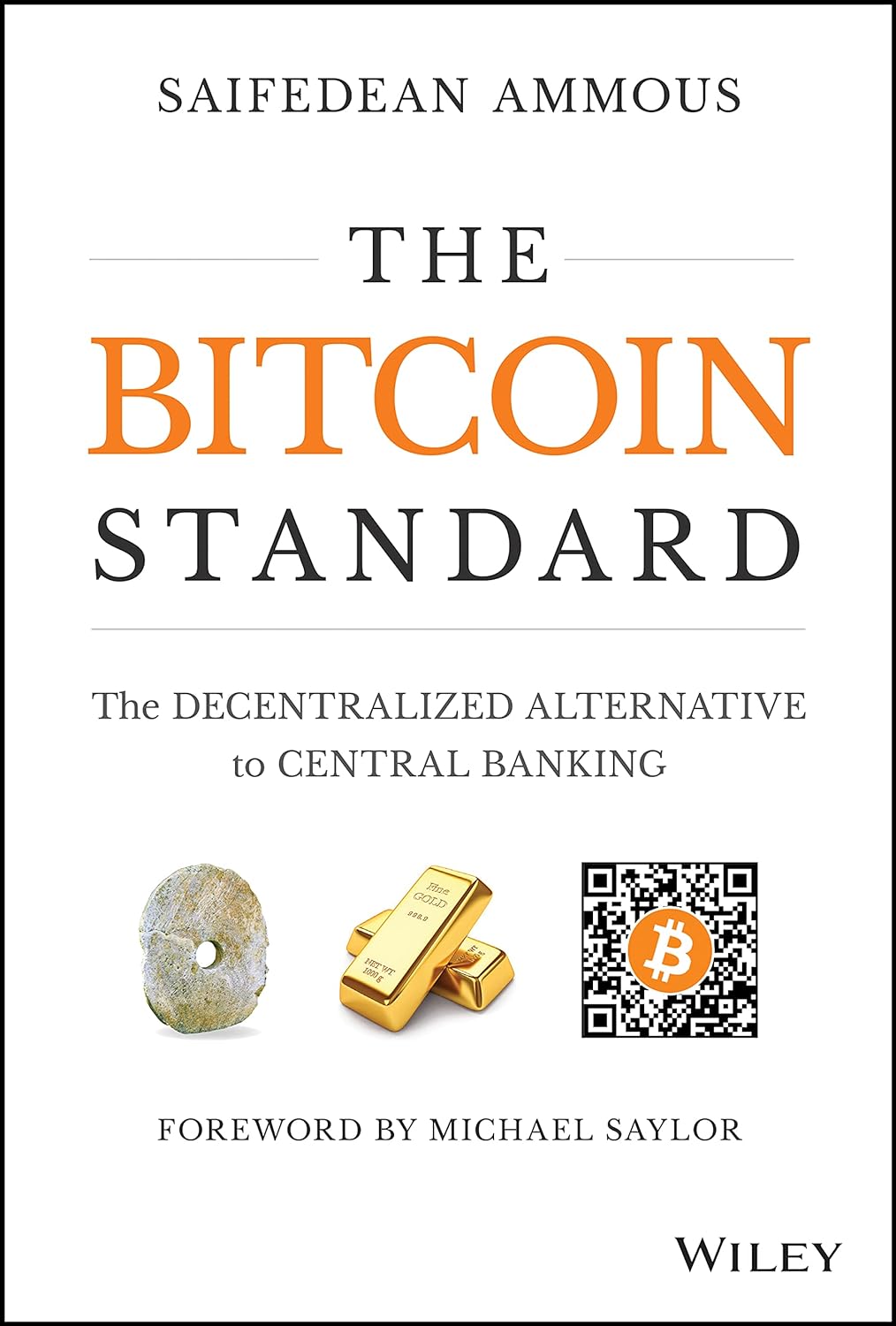
The Bitcoin Standard
Saifedean Ammous

When a pseudonymous programmer introduced “a new electronic cash system that’s fully peer-to-peer, with no trusted third party” to a small online mailing list in 2008, very few people paid attention. Ten years later, and against all odds, this upstart autonomous decentralized software offers an unstoppable and globally accessible hard money alternative to modern central banks. The Bitcoin Standard analyzes the historical context to the rise of Bitcoin, the economic properties that have allowed it to grow quickly, and its likely economic, political, and social implications.

More Details
Saifedean Ammous
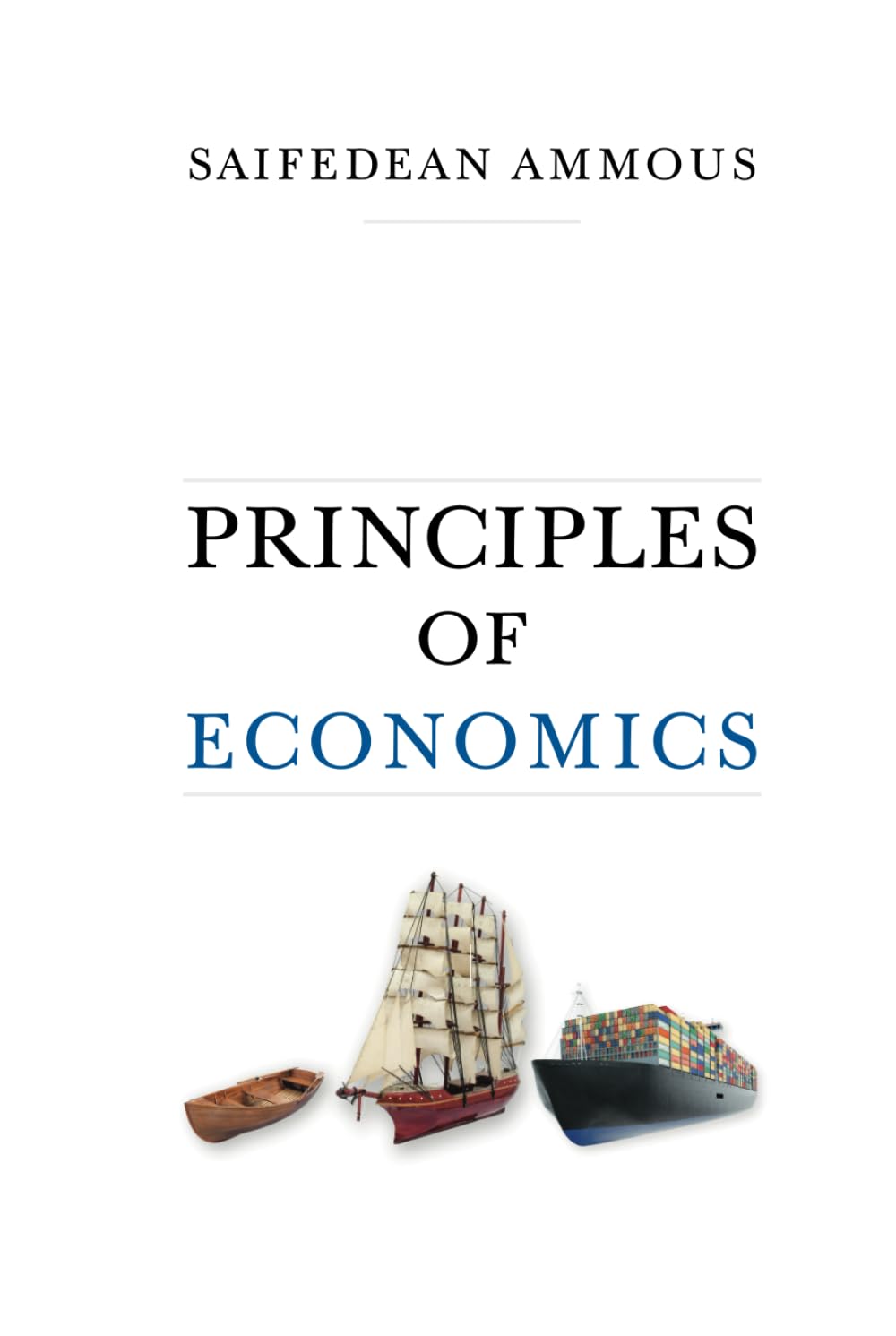
Principles of Economics
Saifedean Ammous

Saifedean Ammous’ first book, The Bitcoin Standard, is an international best-seller that has been translated into 37 languages. The book garnered praise from respected scholars, successful entrepreneurs, professional athletes, and countless readers worldwide for its engaging and enlightening presentation of sophisticated economic and technical concepts, delivered in a style accessible to the general reader. With its sequel, The Fiat Standard, Ammous established himself as one of the world’s most effective communicators of economic ideas, whose writing resonates with a growing global readership. In Principles of Economics, his most ambitious and elaborate work to date, Ammous offers readers a potent antidote to the modern economics textbook. After two decades of learning and teaching economics at university level, Ammous became aware that most economic textbooks confuse more than they illuminate and most university students tasked with reading them learn very little that is useful and actionable. The culmination of four years' work, this book uses the underappreciated approach of the Austrian school of economics to introduce the principles, methods, and concepts of economics in a readable, engaging, and informative manner. Rather than relying on mathematical analysis of aggregates and arcane theoretical models, the book uses the clear written word to effectively illustrate key economic concepts.

More Details
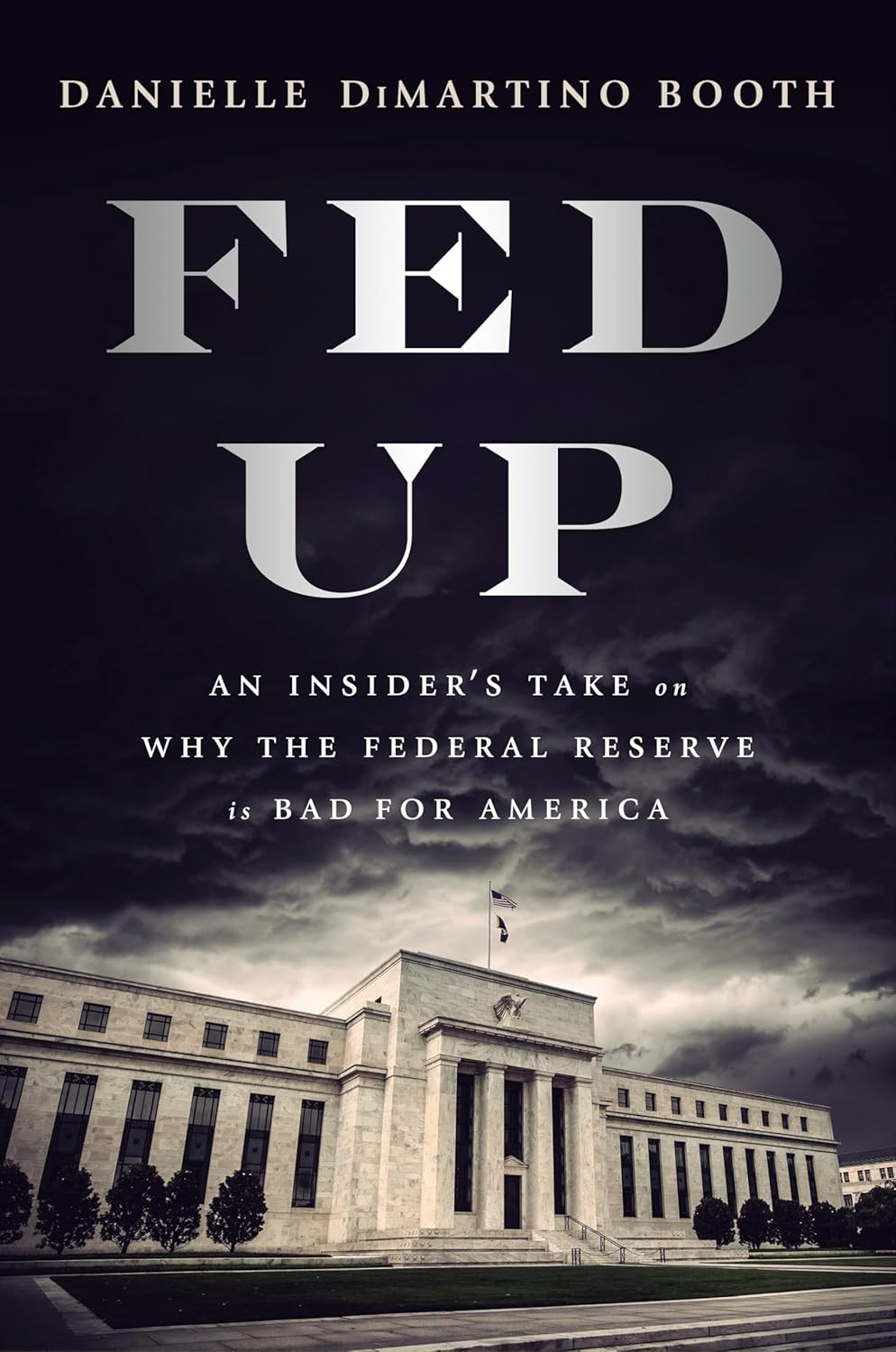
Danielle DiMartino Booth
Fed Up
Fed Up
Danielle DiMartino Booth

After correctly predicting the housing crash of 2008 and quitting her high-ranking Wall Street job, Danielle DiMartino Booth was surprised to find herself recruited as an analyst at the Federal Reserve Bank of Dallas, one of the regional centers of our complicated and widely misunderstood Federal Reserve System. She was shocked to discover just how much tunnel vision, arrogance, liberal dogma, and abuse of power drove the core policies of the Fed. DiMartino Booth found a cabal of unelected academics who made decisions without the slightest understanding of the real world, just a slavish devo­tion to their theoretical models. Over the next nine years, she and her boss, Richard Fisher, tried to speak up about the dangers of Fed policies such as quanti­tative easing and deeply depressed interest rates. But as she puts it, “In a world rendered unsafe by banks that were too big to fail, we came to understand that the Fed was simply too big to fight.”

More Details
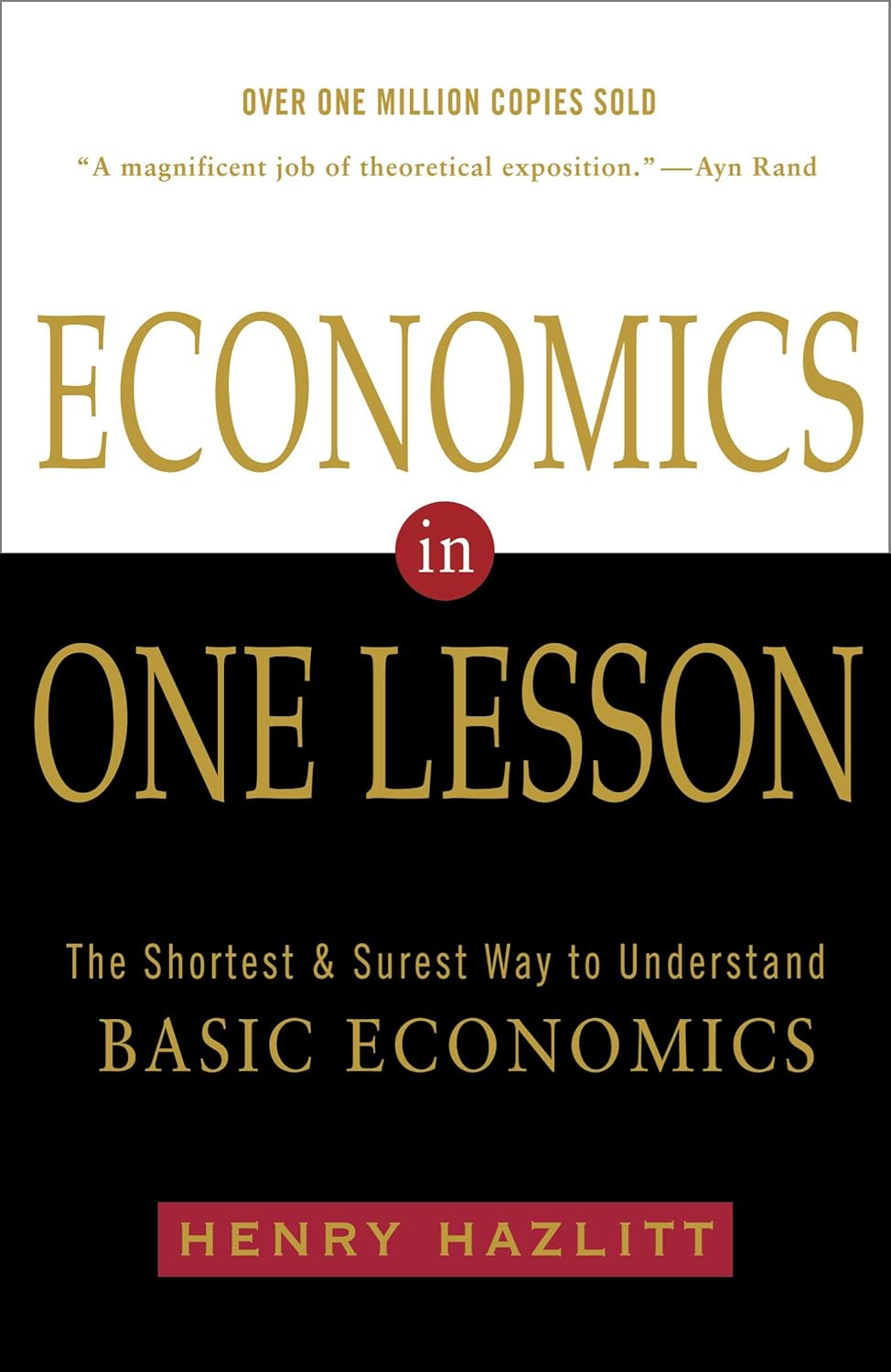
Henry Hazlitt
Economics in One Lesson
Henry Hazlitt

Considered among the leading economic thinkers of the “Austrian School,” which includes Carl Menger, Ludwig von Mises, Friedrich (F.A.) Hayek, and others, Henry Hazlitt wrote Economics in One Lesson in 1946. Concise and instructive, it is also deceptively prescient and far-reaching in its efforts to dissemble economic fallacies that are so prevalent they have almost become a new orthodoxy. Economic commentators across the political spectrum have credited Hazlitt with foreseeing the collapse of the global economy which occurred more than fifty years after the initial publication of Economics in One Lesson. Hazlitt’s focus on non-governmental solutions, strong—and strongly reasoned—anti-deficit position, and general emphasis on free markets, economic liberty of individuals, and the dangers of government intervention make Economics in One Lesson every bit as relevant and valuable today as it has been since publication.
More Details
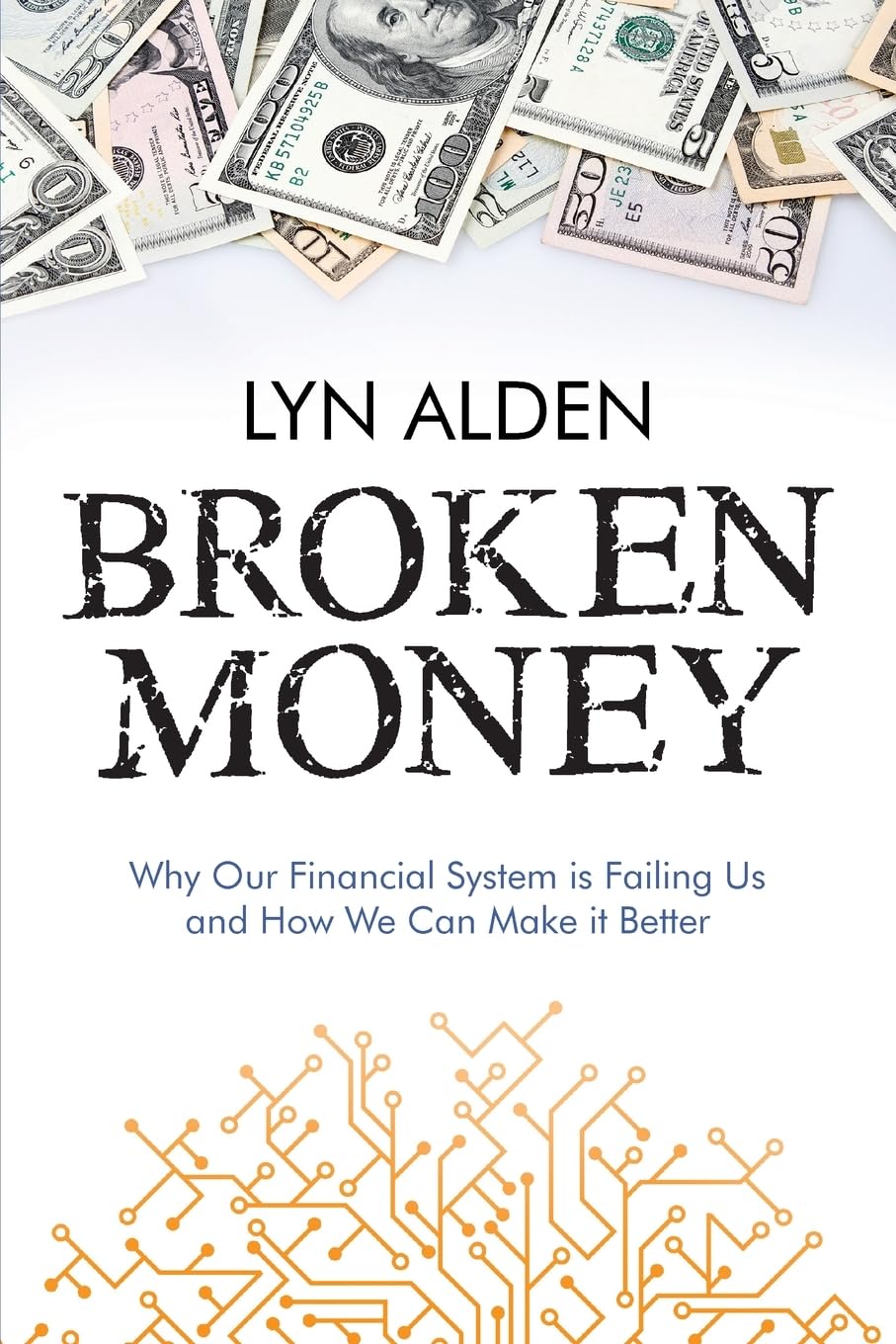
Lyn Alden
Broken Money
Broken Money
Lyn Alden

Broken Money explores the history of money through the lens of technology. Politics can affect things temporarily and locally, but technology is what drives things forward globally and permanently. The book's goal is for the reader to walk away with a deep understanding of money and monetary history, both in terms of theoretical foundations and in terms of practical implications. From shells to gold, from papyrus bills of exchange to central banks, and from the invention of the telegraph to the creation of Bitcoin, Lyn Alden walks the reader through the emergence of new technologies that have shaped what we use as money over the ages. And beyond that, Alden explores the concept of what money is at its very foundation to give the reader a framework to analyze and compare different types of monetary technologies and monetary theories.

More Details
Ray Dalio
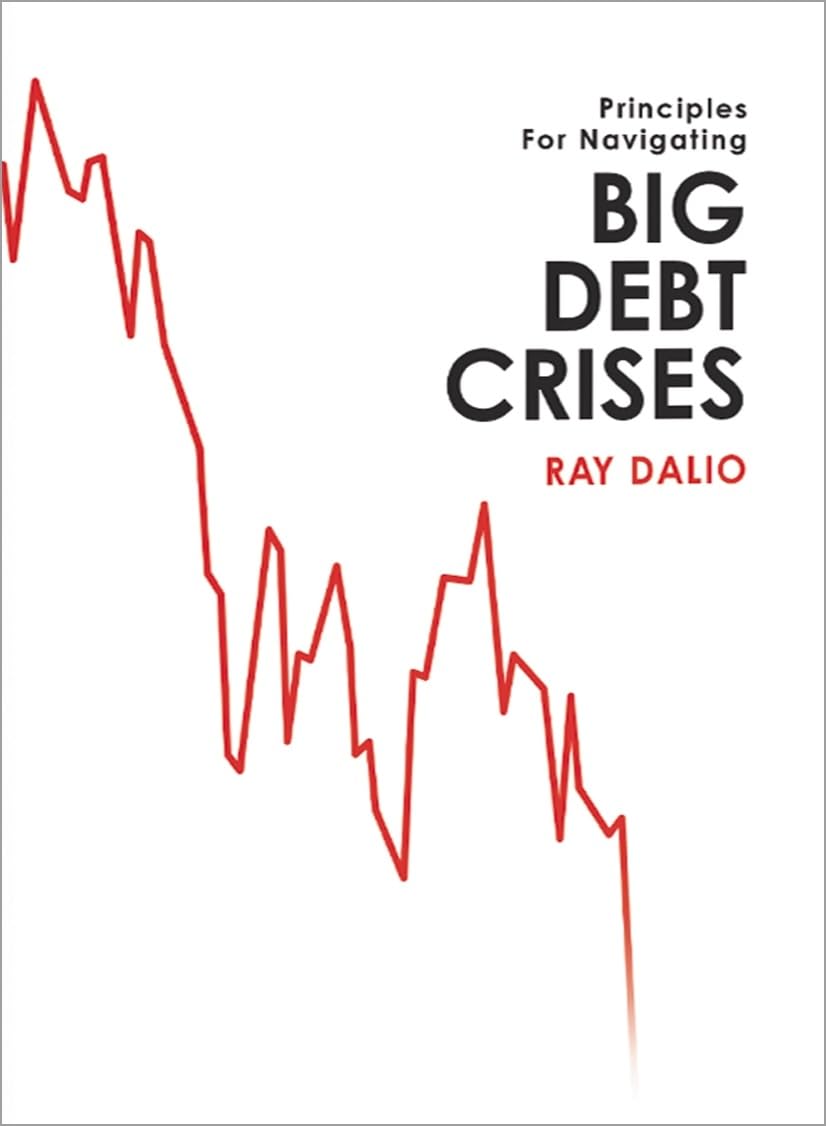
Big Debt Crises
Big Debt Crises
Ray Dalio

"A terrific piece of work from one of the world's top investors who has devoted his life to understanding markets and demonstrated that understanding by navigating the 2008 financial crisis well." - Hank Paulson "An outstanding history of financial crises, including the devastating crisis of 2008, with a very valuable framework for understanding why the engine of the financial system occasionally breaks down, and what types of policy actions by central banks and governments are necessary to resolve systemic financial crises. This should serve as a play book for future policy makers, with practical guidance about what to do and what not to do." - Tim Geithner

More Details
Joseph J Wang
Central Banking 101
Central Banking 101
Joseph J Wang

Central banking is magic. With a few words, the Fed can lift the stock market out of desperation and catapult it towards euphoric highs. With a few keystrokes, the Fed can conjure up trillions of dollars and fund virtually unlimited Federal spending. And with a few poor decisions, the Fed can plunge the entire world into a recession. The Federal Reserve is one of the most powerful institutions in the world, and also one of the most difficult to understand.

More Details

Investing

Joel Greenblatt
You Can Be A Stock Market Genius
Joel Greenblatt

A comprehensive and practical guide to the stock market from a successful fund manager—filled with case studies, important background information, and all the tools you’ll need to become a stock market genius. Fund manager Joel Greenblatt has been beating the Dow (with returns of 50 percent a year) for more than a decade. And now, in this highly accessible guide, he’s going to show you how to do it, too. You’re about to discover investment opportunities that portfolio managers, business-school professors, and top investment experts regularly miss—uncharted areas where the individual investor has a huge advantage over the Wall Street wizards.

More Details
Jim Paul
What I learned losing a million dollars
Jim Paul

This book―winner of a 2014 Axiom Business Book award gold medal―begins with the unbroken string of successes that helped Paul achieve a jet-setting lifestyle and land a key spot with the Chicago Mercantile Exchange. It then describes the circumstances leading up to Paul's $1.6 million loss and the essential lessons he learned from it―primarily that, although there are as many ways to make money in the markets as there are people participating in them, all losses come from the same few sources.

More Details
Jack D. Schwager
Unknown Market Wizards
Jack D. Schwager

Unknown Market Wizards continues in the three-decade tradition of the hugely popular Market Wizards series, interviewing exceptionally successful traders to learn how they achieved their extraordinary performance results. The twist in Unknown Market Wizards is that the featured traders are individuals trading their own accounts. They are unknown to the investment world. Despite their anonymity, these traders have achieved performance records that rival, if not surpass, the best professional managers.

More Details
Christopher D. Clothier
The Turnkey Revolution
Christopher D. Clothier

In this easy-to-use guide, you’ll find everything you need to take full advantage of today’s real estate revolution. You’ll benefit from the pros’ illuminating insights when it comes to renovating properties, working with rental agents, and managing it all through a third party, even from long distances. This essential book is packed with tools, techniques, and tricks of the trade that will save you time, money, and headaches. Better yet, you’ll be getting invaluable, expert advice on how to manage your investments and grow your portfolio for the long term. If you’ve ever dreamed of cashing in on real estate, The Turnkey Revolution is your key to financial success.

More Details
George S Clason
The Richest Man in Babylon
George S Clason

The Richest Man in Babylon, based on "Babylonian parables", has been hailed as the greatest of all inspirational works on the subject of thrift, financial planning, and personal wealth. In simple language, these fascinating and informative stories set you on a sure path to prosperity and its accompanying joys. A celebrated bestseller, it offers an understanding and a solution to your personal financial problem. Revealed inside are the secrets to acquiring money, keeping money, and making money earn more money. This original edition has the original language, content, and message from George S. Clason as intended in 1926. It's all here, uncensored.

More Details
Morgan Housel
The Psychology of Money
Morgan Housel

Doing well with money isn’t necessarily about what you know. It’s about how you behave. And behavior is hard to teach, even to really smart people. Money―investing, personal finance, and business decisions―is typically taught as a math-based field, where data and formulas tell us exactly what to do. But in the real world people don’t make financial decisions on a spreadsheet. They make them at the dinner table, or in a meeting room, where personal history, your own unique view of the world, ego, pride, marketing, and odd incentives are scrambled together. In The Psychology of Money, award-winning author Morgan Housel shares 19 short stories exploring the different ways people think about money and teaches you how to make better sense of one of life’s most important topics.

More Details
Benoit Mandelbrot
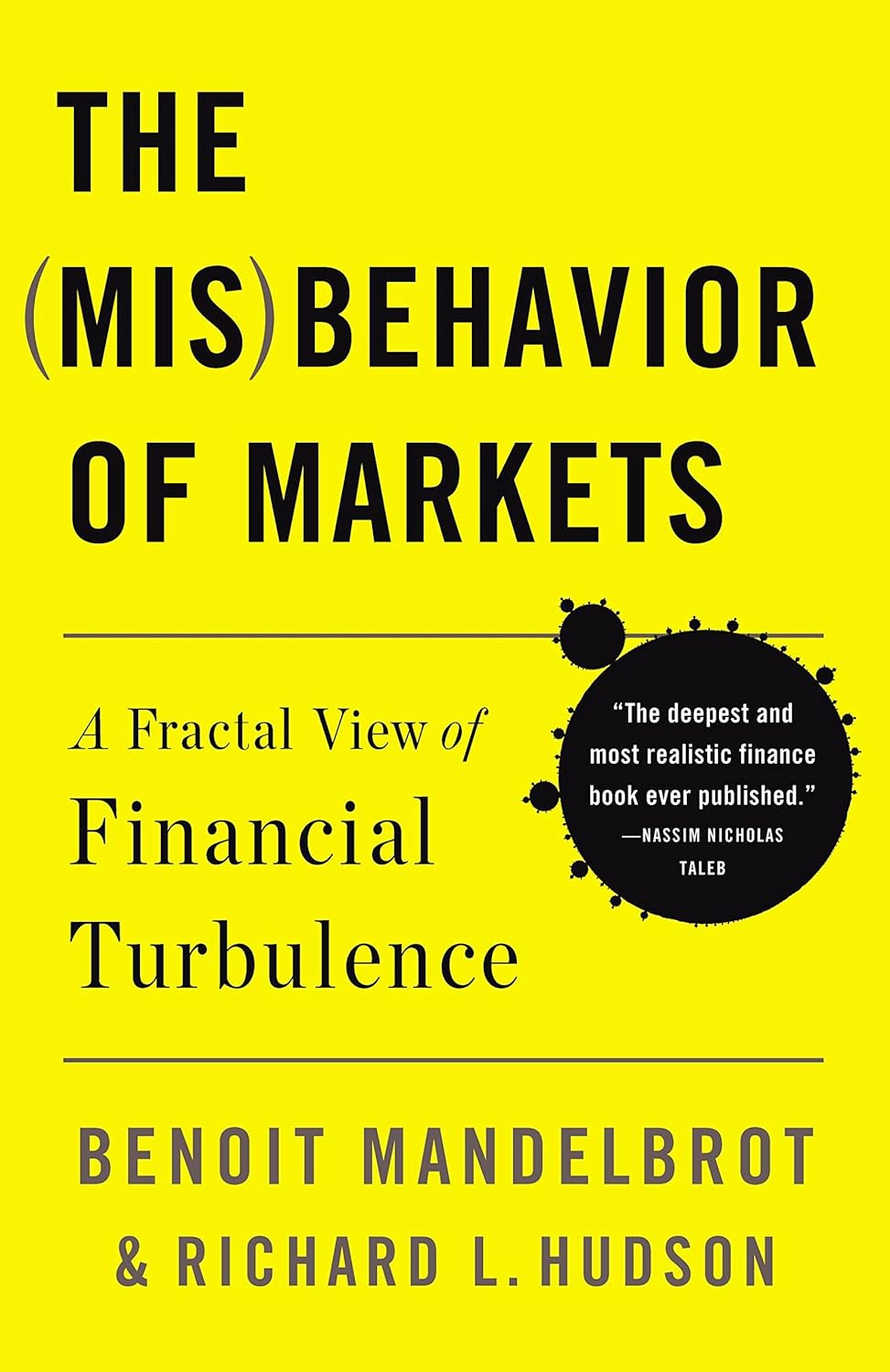
The Misbehavior of Markets
Benoit Mandelbrot

Benoit B. Mandelbrot is world-famous for inventing fractal geometry, making mathematical sense of a fact everybody knows but that geometers from Euclid on down had never assimilated: Clouds are not round, mountains are not cones, coastlines are not smooth. To these insights we can now add another example: Markets are not the safe bet your broker may claim. Mandelbrot, with co-author Richard L. Hudson, shows how the dominant way of thinking about the behavior of markets--a set of mathematical assumptions a century old and still learned by every MBA and financier in the world--simply does not work. He uses fractal geometry to propose a new, more accurate way of describing market behavior. From the gyrations of the Dow to the dollar-euro exchange rate, Mandlebrot shows how to understand the volatility of markets in far more accurate terms than the failed theories that have repeatedly brought the financial system to the brink of disaster. The result is no less than the foundation for a new science of finance.

More Details
Joel Greenblatt
The Little Book that Still Beats the market
Joel Greenblatt

As the Wall Street Journal stated about the original edition, “Mr. Greenblatt…says his goal was to provide advice that, while sophisticated, could be understood and followed by his five children, ages 6 to 15. They are in luck. His ‘Little Book’ is one of the best, clearest guides to value investing out there.”

More Details
Jason Zweig
The Little Book of Safe Money
Jason Zweig

The Little Book of Safe Money acts as a guide for those trying to make their way through today's down markets. The topics covered include everything from investing behavior-why our minds come with their own set of biases that often prove harmful-to the use of financial advisors. But this timely book goes one step further than the rest by questioning an investor's true appetite for risk.

More Details
Mark Spitznagel
The Dao of Capital
The Dao of Capital
Mark Spitznagel

In The Dao of Capital, hedge fund manager and tail-hedging pioneer Mark Spitznagel―with one of the top returns on capital of the financial crisis, as well as over a career―takes us on a gripping, circuitous journey from the Chicago trading pits, over the coniferous boreal forests and canonical strategists from Warring States China to Napoleonic Europe to burgeoning industrial America, to the great economic thinkers of late 19th century Austria. We arrive at his central investment methodology of Austrian Investing, where victory comes not from waging the immediate decisive battle, but rather from the roundabout approach of seeking the intermediate positional advantage (what he calls shi), of aiming at the indirect means rather than directly at the ends. The monumental challenge is in seeing time differently, in a whole new intertemporal dimension, one that is so contrary to our wiring.

More Details
Brandon Turner
The Book on Rental Property Investing
Brandon Turner

Are you ready to discover a safe and fast path to financial freedom? Brandon Turner, bestselling author and longtime host of The BiggerPockets Podcast, will show you how to achieve your goals by finding incredible real estate investment opportunities. With a wealth of in-depth advice, The Book on Rental Property Investing shares the secret strategies that will help you build high-margin cash flow across your real estate portfolio.

More Details
Joel Greenblatt
The Big Secret for the Small Investor
Joel Greenblatt

Let top hedge-fund manager, Columbia Business School professor, former Fortune 500 chairman, and New York Times bestselling author Joel Greenblatt take you on a journey that will reveal the Big Secret for both individual and professional investors. Based on path-breaking new research, find out how anyone can beat the market, the index funds, and the experts by following a new approach that relies on the principles of value investing, common sense, and quantitative discipline. Along the way, learn where "value" comes from, how markets work, and what really happens on Wall Street. By journey's end, small investors (and even not-so-small investors) will have found their way to some excellent new investment choices.

More Details
Mark Spitznagel
Safe Haven
Safe Haven
Mark Spitznagel

What role should they play in an investment portfolio? Do we use them only to seek shelter until the passing of financial storms? Or are they something more? Contrary to everything we know from modern financial theory, can higher returns actually come as a result of lowering risk? In Safe Haven, hedge fund manager Mark Spitznagel—one of the top practitioners of safe haven investing and portfolio risk mitigation in the world—answers these questions and more. Investors who heed the message in this book will never look at risk mitigation the same way again.

More Details
Robert T. Kiyosaki
Rich Dad Poor Dad
Rich Dad Poor Dad
Robert T. Kiyosaki

Rich Dad Poor Dad is Robert's story of growing up with two dads — his real father and the father of his best friend, his rich dad — and the ways in which both men shaped his thoughts about money and investing. The book explodes the myth that you need to earn a high income to be rich and explains the difference between working for money and having your money work for you.

More Details
Edwin Lefèvre
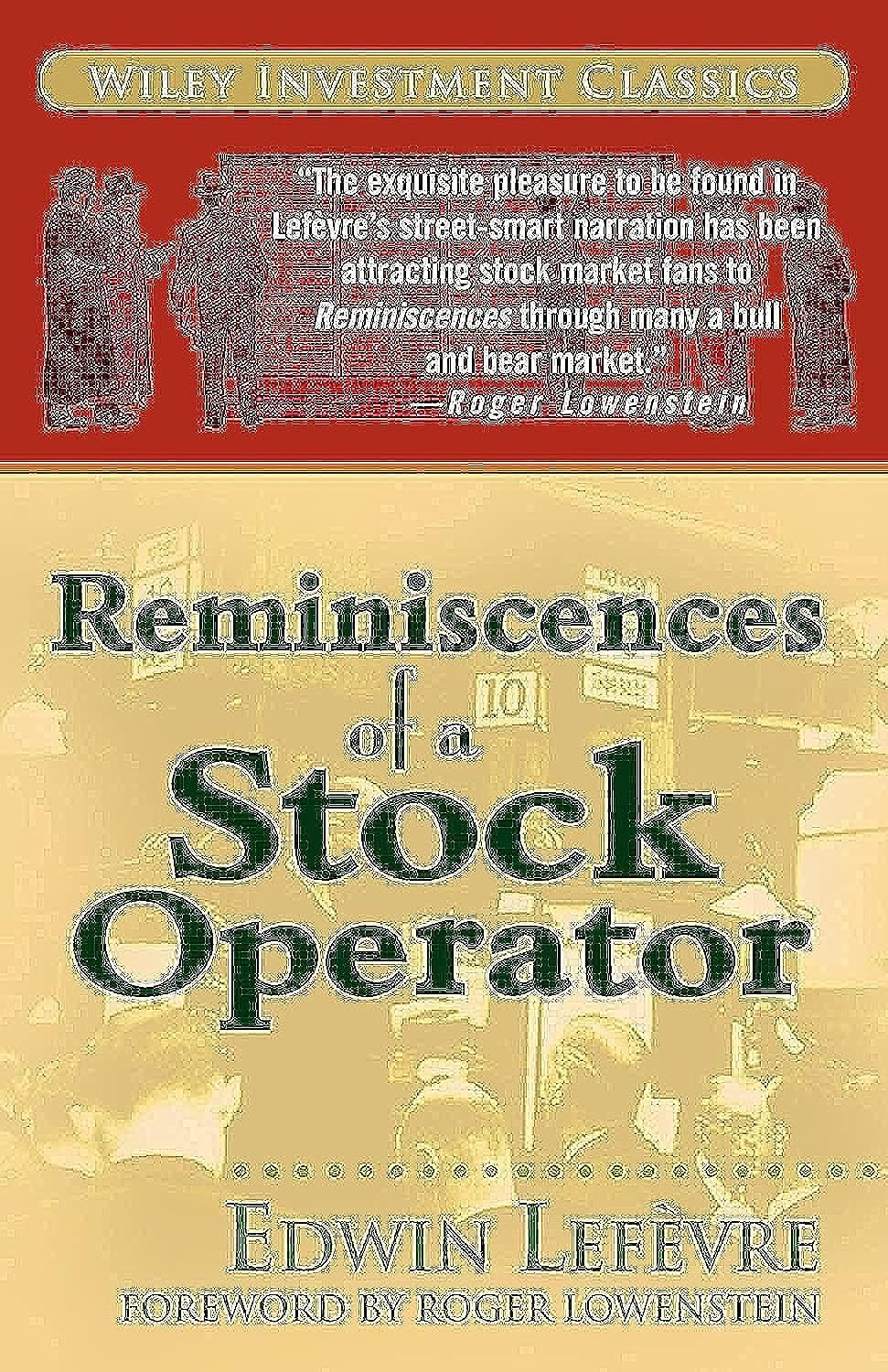
Reminiscences of a Stock Operator
Edwin Lefèvre

First published in 1923, Reminiscences of a Stock Operator is the most widely read, highly recommended investment book ever. Generations of readers have found that it has more to teach them about markets and people than years of experience. This is a timeless tale that will enrich your life―and your portfolio.

More Details
Jack D. Schwager
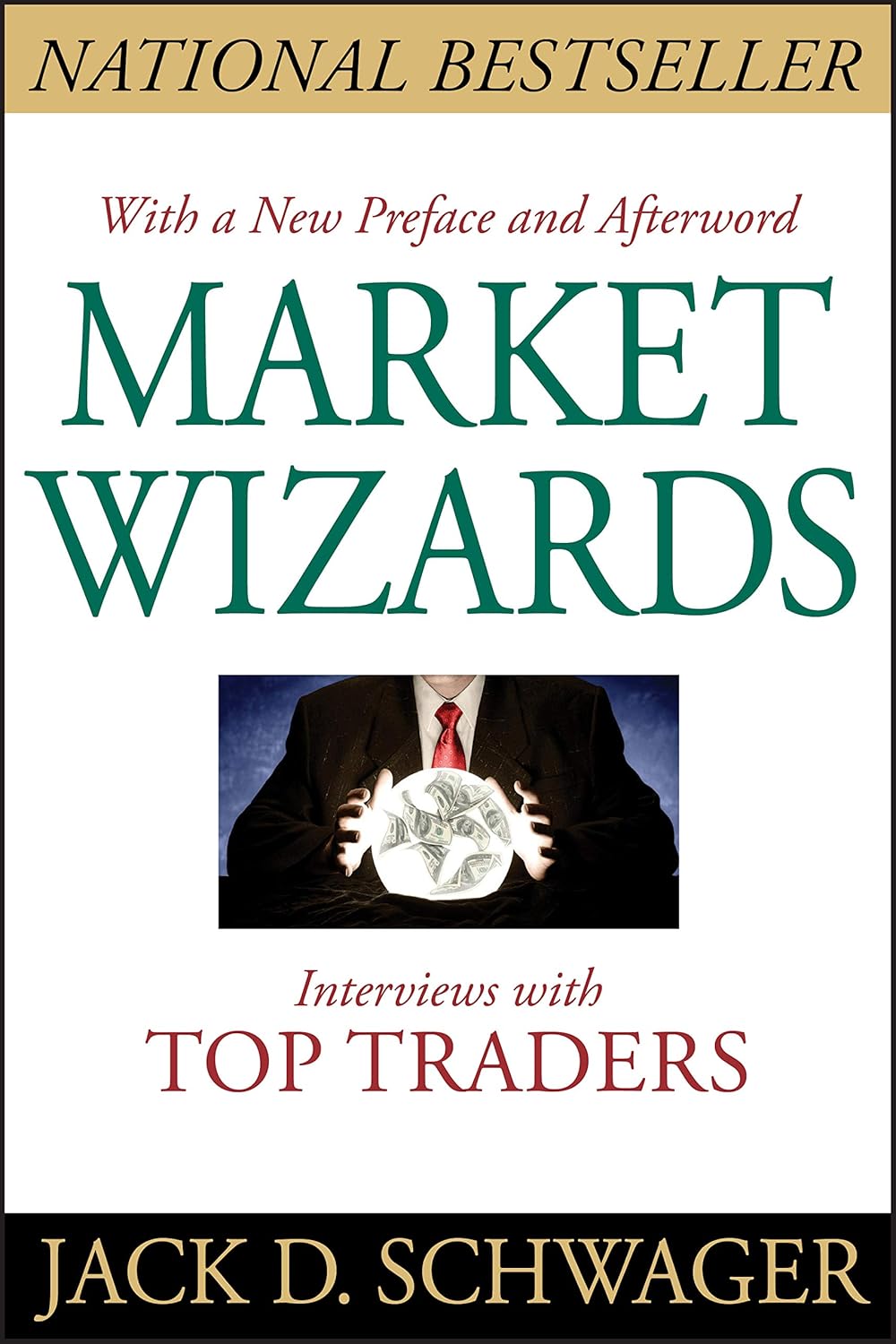
Market Wizards
Market Wizards
Jack D. Schwager

How do the world's most successful traders amass tens, hundreds of millions of dollars a year? Are they masters of an occult knowledge, lucky winners in a random market lottery, natural-born virtuosi―Mozarts of the markets? In search of an answer, bestselling author Jack D. Schwager interviewed dozens of top traders across most financial markets. While their responses differed in the details, all of them could be boiled down to the same essential formula: solid methodology + proper mental attitude = trading success. In Market Wizards Schwager lets you hear, in their own words, what those super-traders had to say about their unprecedented successes, and he distils their responses down into a set of guiding principles you can use to become a trading star in your own right.

More Details
Jack D. Schwager
Hedge Fund Market Wizards
Jack D. Schwager

From bestselling author, investment expert, and Wall Street theoretician Jack Schwager comes a behind-the-scenes look at the world of hedge funds, from fifteen traders who've consistently beaten the markets. Exploring what makes a great trader a great trader, Hedge Fund Market Wizards breaks new ground, giving readers rare insight into the trading philosophy and successful methods employed by some of the most profitable individuals in the hedge fund business.

More Details
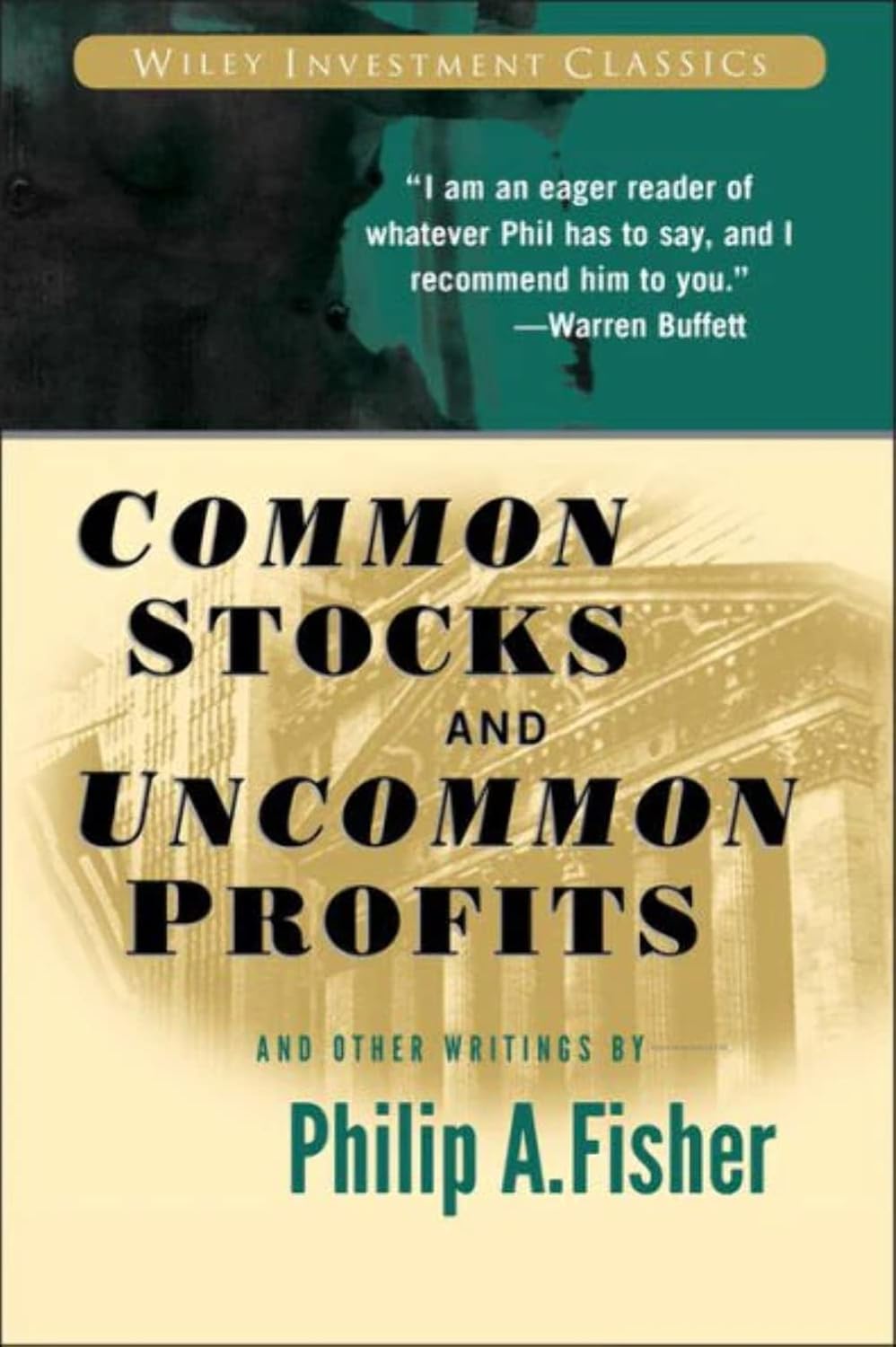
Philip A. Fisher
Common Stocks and Uncommon Profits
Philip A. Fisher

Widely respected and admired, Philip Fisher is among the most influential investors of all time. His investment philosophies, introduced almost forty years ago, are not only studied and applied by today's financiers and investors, but are also regarded by many as gospel. This book is invaluable reading and has been since it was first published in 1958. The updated paperback retains the investment wisdom of the original edition and includes the perspectives of the author's son Ken Fisher, an investment guru in his own right in an expanded preface and introduction "I sought out Phil Fisher after reading his Common Stocks and Uncommon Profits...A thorough understanding of the business, obtained by using Phil's techniques...enables one to make intelligent investment commitments." ―Warren Buffet

More Details
Nick Maggiulli
Just Keep Buying
Just Keep Buying
Nick Maggiulli

Everyone faces big questions when it comes to money: questions about saving, investing, and whether you’re getting it right with your finances. Unfortunately, many of the answers provided by the financial industry have been based on belief and conjecture rather than data and evidence―until now. In Just Keep Buying, hugely popular finance blogger Nick Maggiulli (/OfDollarsAndData) crunches the numbers to answer the biggest questions in personal finance and investing, while providing you with proven ways to build your wealth right away.

More Details

Politics

Harvey Silverglate
Three Felonies A Day
Harvey Silverglate

The average professional in this country wakes up in the morning, goes to work, comes home, eats dinner, and then goes to sleep, unaware that he or she has likely committed several federal crimes that day. Why? The answer lies in the very nature of modern federal criminal laws, which have exploded in number but also become impossibly broad and vague. In Three Felonies a Day, Harvey A. Silverglate reveals how federal criminal laws have become dangerously disconnected from the English common law tradition and how prosecutors can pin arguable federal crimes on any one of us, for even the most seemingly innocuous behavior. The volume of federal crimes in recent decades has increased well beyond the statute books and into the morass of the Code of Federal Regulations, handing federal prosecutors an additional trove of vague and exceedingly complex and technical prohibitions to stick on their hapless targets. The dangers spelled out in Three Felonies a Day do not apply solely to “white collar criminals,” state and local politicians, and professionals. No social class or profession is safe from this troubling form of social control by the executive branch, and nothing less than the integrity of our constitutional democracy hangs in the balance.

More Details
F. A. Hayek
The Road to Serfdom
The Road to Serfdom
F. A. Hayek

An unimpeachable classic work in political philosophy, intellectual and cultural history, and economics, The Road to Serfdom has inspired and infuriated politicians, scholars, and general readers for half a century. Originally published in 1944—when Eleanor Roosevelt supported the efforts of Stalin, and Albert Einstein subscribed lock, stock, and barrel to the socialist program—The Road to Serfdom was seen as heretical for its passionate warning against the dangers of state control over the means of production. For F. A. Hayek, the collectivist idea of empowering government with increasing economic control would lead not to a utopia but to the horrors of Nazi Germany and Fascist Italy.

More Details
Bryan Caplan
The Myth of the Rational Voter
Bryan Caplan

The greatest obstacle to sound economic policy is not entrenched special interests or rampant lobbying, but the popular misconceptions, irrational beliefs, and personal biases held by ordinary voters. This is economist Bryan Caplan's sobering assessment in this provocative and eye-opening book. Caplan argues that voters continually elect politicians who either share their biases or else pretend to, resulting in bad policies winning again and again by popular demand.

More Details
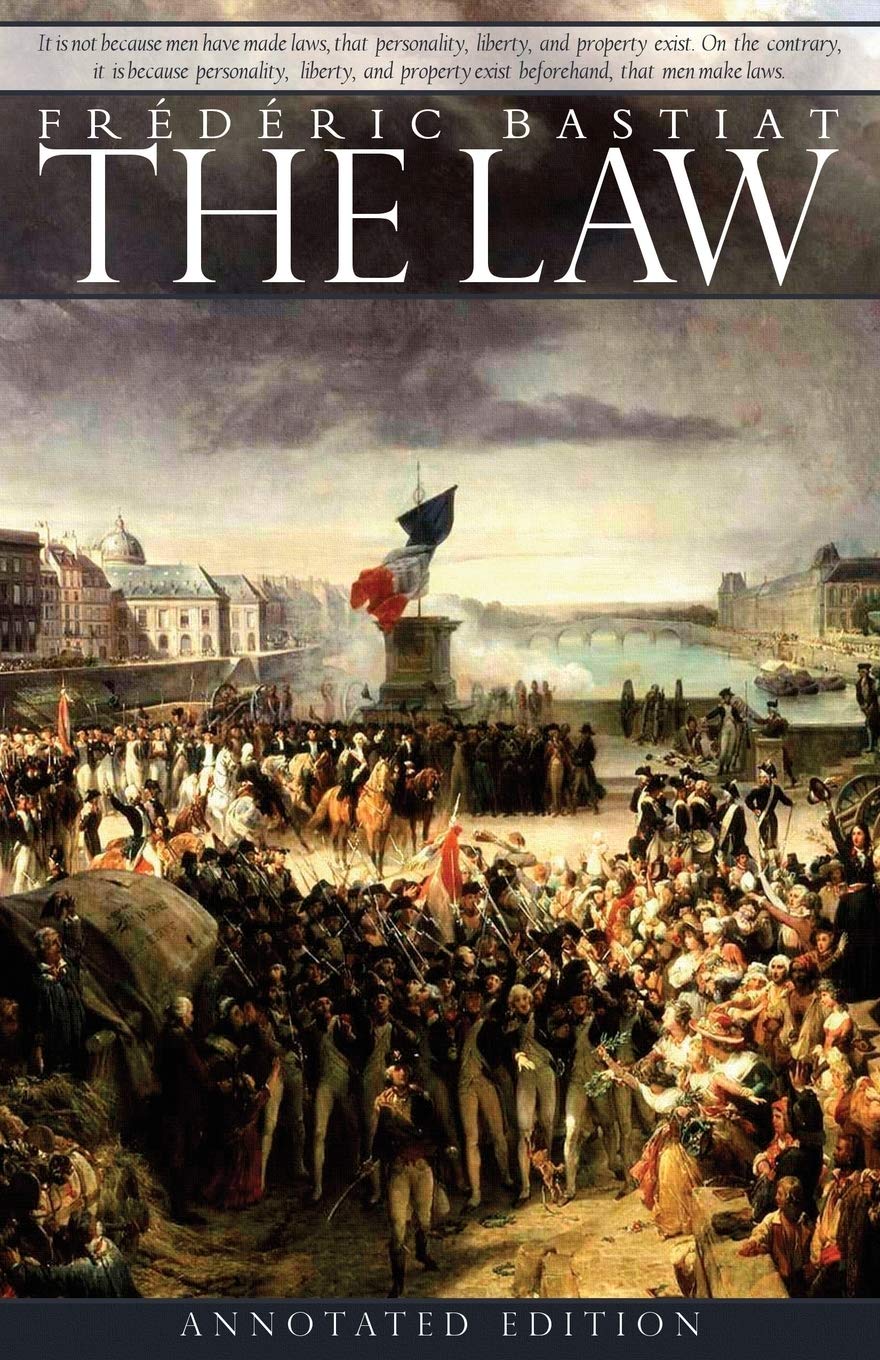
Frederic Bastiat
The Law
The Law
Frederic Bastiat

Here, in this 1850 classic, a powerful refutation of Karl Marx's Communist Manifesto, published two years earlier, Bastiat discusses: What is law?, Why socialism constitutes legal plunder, the proper function of the law, the law and morality, "the vicious circle of socialism", and the basis for stable government. French political libertarian and economist CLAUDE FRÉDÉRIC BASTIAT (1801-1850) was one of the most eloquent champions of the concept that property rights and individual freedoms flowed from natural law.

More Details
Kristopher A Borer
The Ethics of Anarcho-Capitalism
Kristopher A Borer

Anarcho-capitalism is the most exciting social philosophy of modern times. But how does it work? This book illuminates the ethical system at the heart of anarcho-capitalism. It builds the non-aggression principle from praxeological foundations and develops techniques for applying it to real world conflicts. It explores the edges of libertarianism to show where it shines, and where it fails.

More Details
Bryan Caplan
The Case Against Education
Bryan Caplan

Despite being immensely popular―and immensely lucrative―education is grossly overrated. Now with a new afterword by Bryan Caplan, this explosive book argues that the primary function of education is not to enhance students' skills but to signal the qualities of a good employee. Learn why students hunt for easy As only to forget most of what they learn after the final exam, why decades of growing access to education have not resulted in better jobs for average workers, how employers reward workers for costly schooling they rarely ever use, and why cutting education spending is the best remedy. Romantic notions about education being "good for the soul" must yield to careful research and common sense―The Case against Education points the way.

More Details
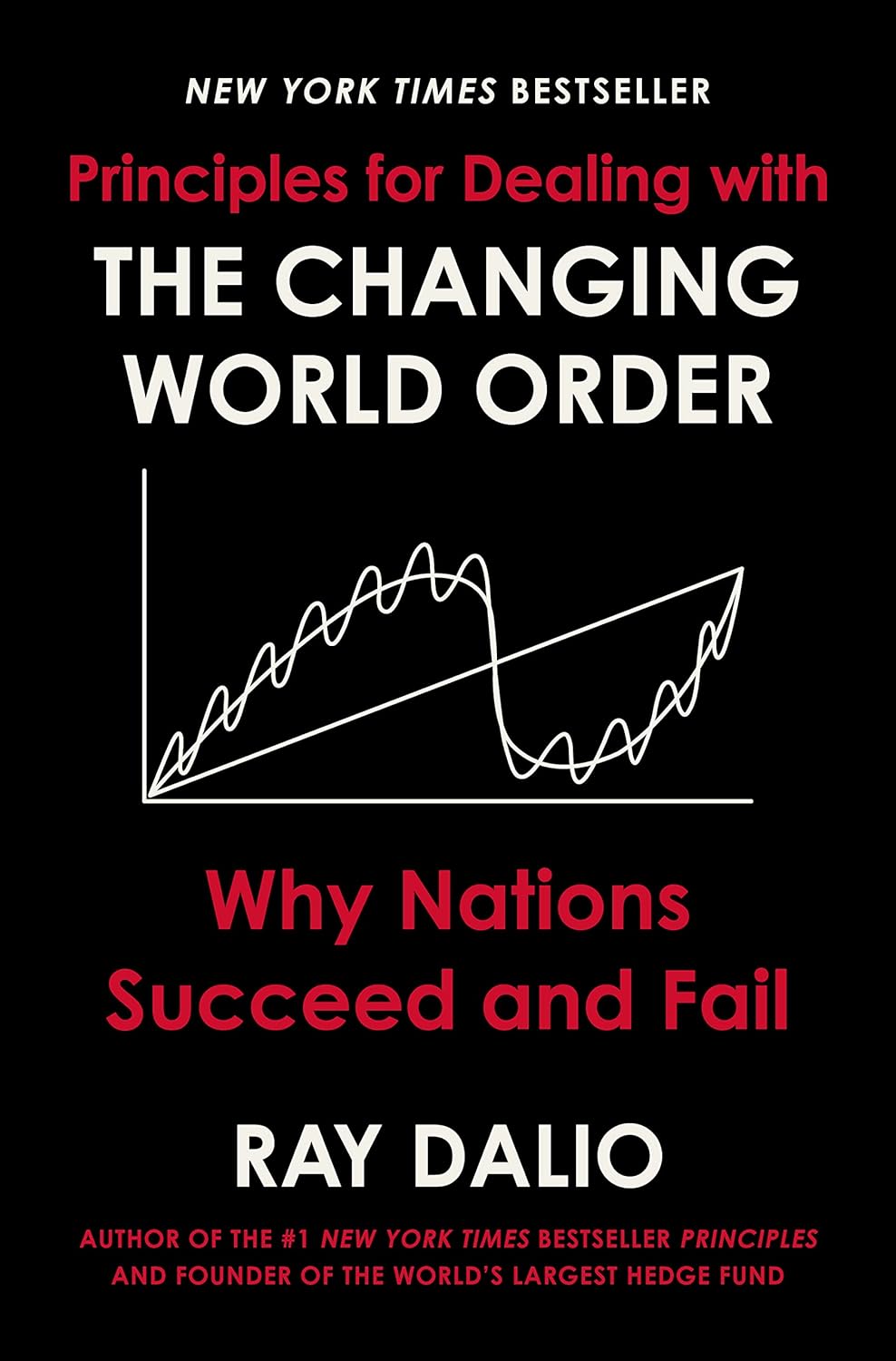
Ray Dalio
Principles for Dealing with the Changing World Order
Ray Dalio

A few years ago, Ray Dalio noticed a confluence of political and economic conditions he hadn’t encountered before. They included huge debts and zero or near-zero interest rates that led to massive printing of money in the world’s three major reserve currencies; big political and social conflicts within countries, especially the US, due to the largest wealth, political, and values disparities in more than 100 years; and the rising of a world power (China) to challenge the existing world power (US) and the existing world order. The last time that this confluence occurred was between 1930 and 1945. This realization sent Dalio on a search for the repeating patterns and cause/effect relationships underlying all major changes in wealth and power over the last 500 years. In this remarkable and timely addition to his Principles series, Dalio brings readers along for his study of the major empires—including the Dutch, the British, and the American—putting into perspective the “Big Cycle” that has driven the successes and failures of all the world’s major countries throughout history. He reveals the timeless and universal forces behind these shifts and uses them to look into the future, offering practical principles for positioning oneself for what’s ahead.

More Details
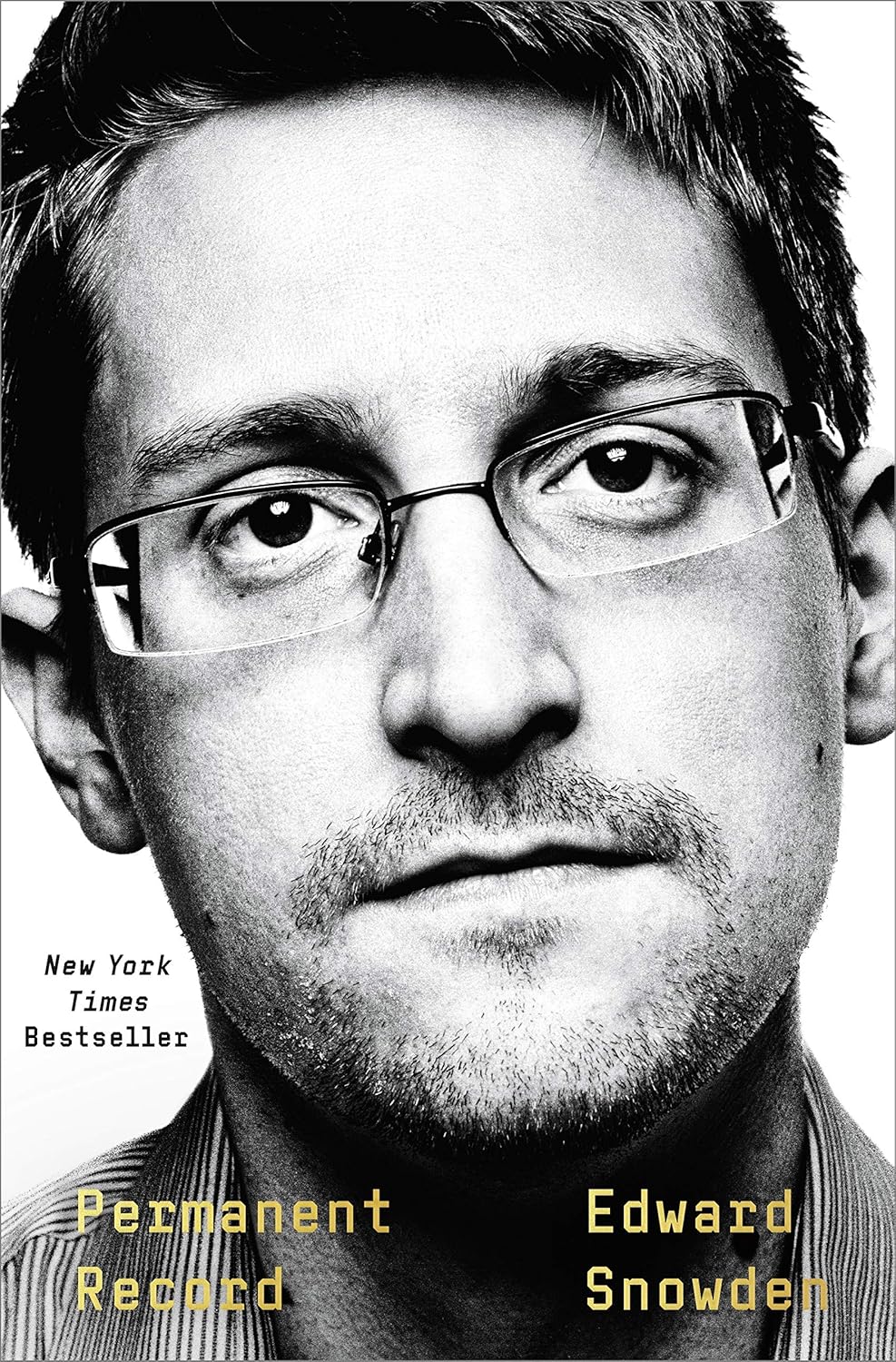
Edward Snowden
Permanent Record
Permanent Record
Edward Snowden

In 2013, twenty-nine-year-old Edward Snowden shocked the world when he broke with the American intelligence establishment and revealed that the United States government was secretly pursuing the means to collect every single phone call, text message, and email. The result would be an unprecedented system of mass surveillance with the ability to pry into the private lives of every person on earth. Six years later, Snowden reveals for the very first time how he helped to build this system and why he was moved to expose it. Spanning the bucolic Beltway suburbs of his childhood and the clandestine CIA and NSA postings of his adulthood, Permanent Record is the extraordinary account of a bright young man who grew up online―a man who became a spy, a whistleblower, and, in exile, the Internet’s conscience. Written with wit, grace, passion, and an unflinching candor, Permanent Record is a crucial memoir of our digital age and destined to be a classic.

More Details
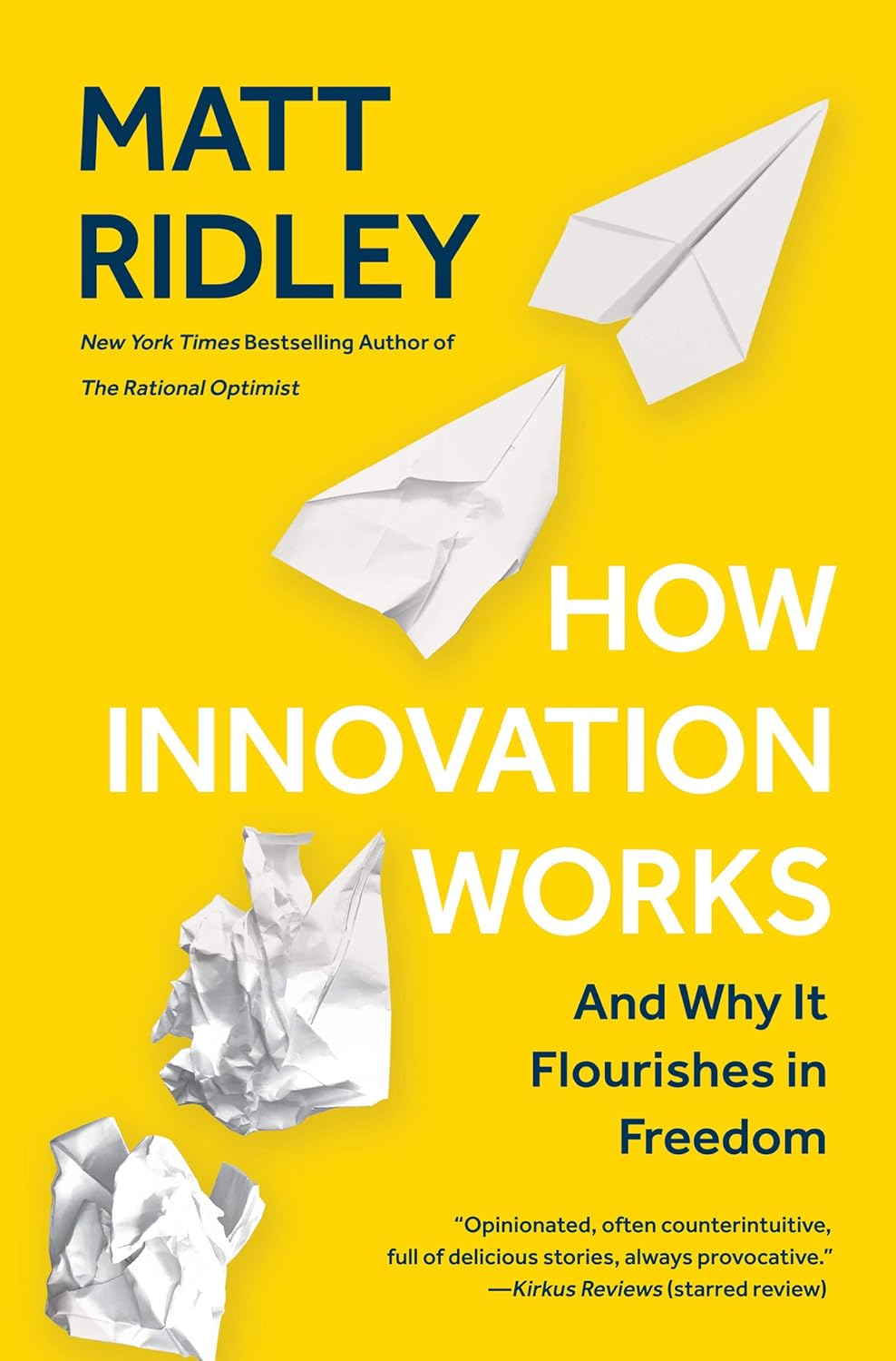
Matt Ridley
How Innovation Works
Matt Ridley

Innovation is the main event of the modern age, the reason we experience both dramatic improvements in our living standards and unsettling changes in our society. Forget short-term symptoms like Donald Trump and Brexit, it is innovation itself that explains them and that will itself shape the 21st century for good and ill. Yet innovation remains a mysterious process, poorly understood by policy makers and businessmen, hard to summon into existence to order, yet inevitable and inexorable when it does happen.

More Details
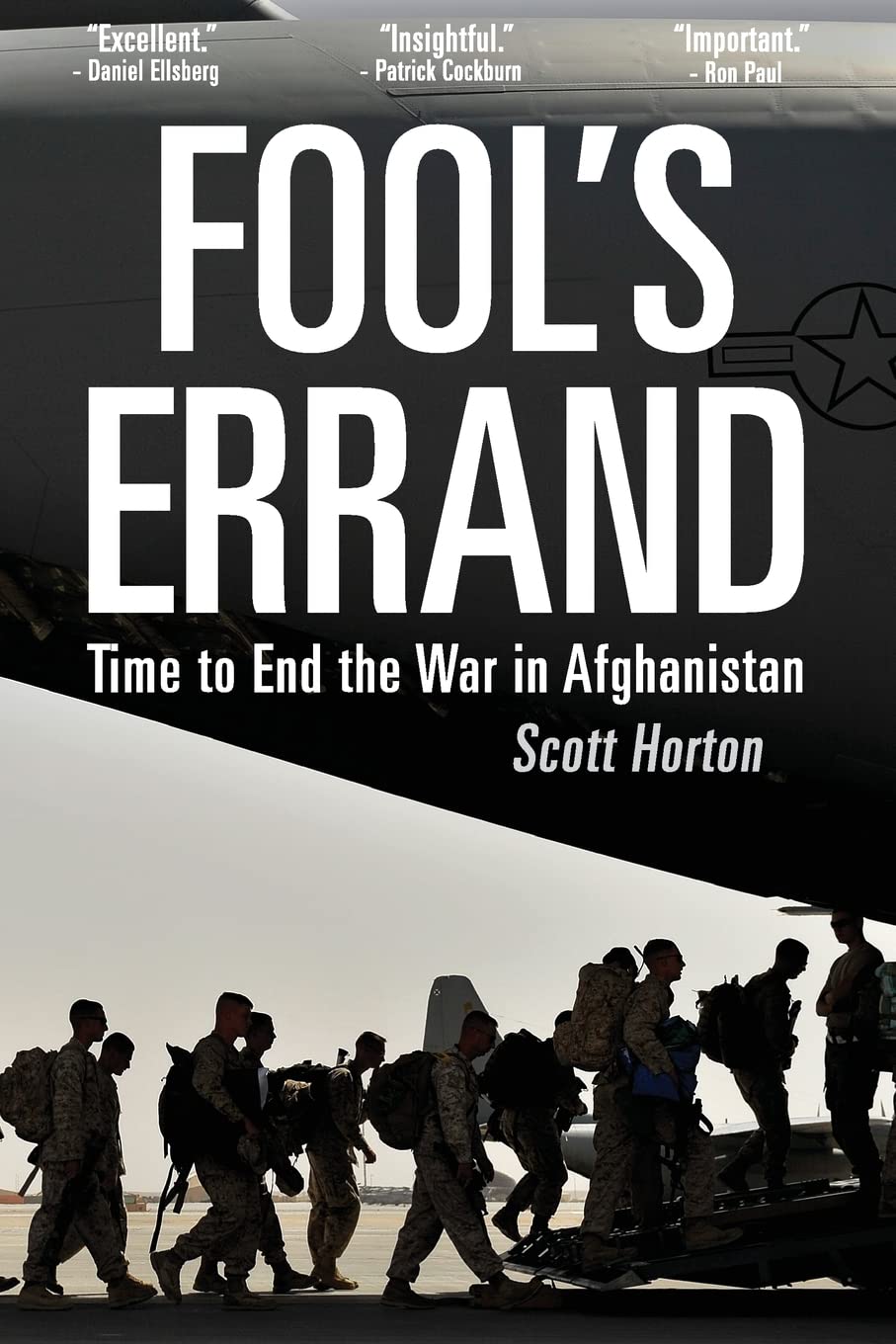
Scott Horton
Fool's Errand
Fool's Errand
Scott Horton

“In Fool’s Errand, Scott Horton masterfully explains the tragedy of America’s longest war and makes the case for immediate withdrawal. I highly recommend this excellent book on America’s futile and self-defeating occupation of Afghanistan.” — Daniel Ellsberg, Pentagon Papers whistleblower and author of The Doomsday Machine: Confessions of a Nuclear War Planner “The real story of the disastrous U.S. war in Afghanistan must be written so that future generations may understand the folly of Washington’s warmongers. Scott Horton’s Afghan war history is an important contribution to this vital effort.” — Ron Paul, M.D., former U.S. congressman and author of Swords into Plowshares: A Life in Wartime and a Future of Peace and Prosperity

More Details
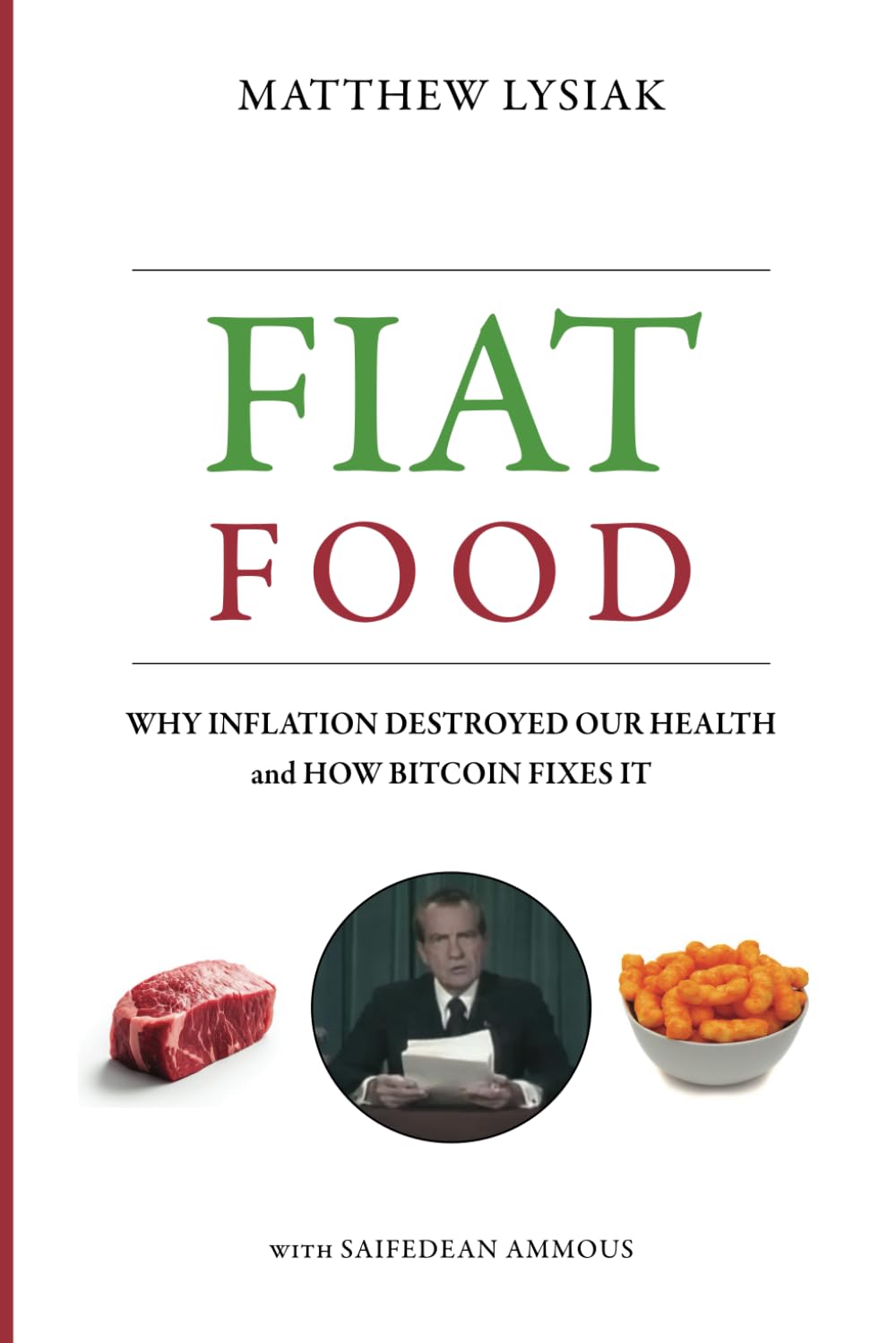
Matthew Lysiak
Fiat Food
Fiat Food
Matthew Lysiak

THE REAL COST OF INFLATION ON A COUNTRY can be best seen not through government-sanctioned data points circulated throughout the corporate sponsored media, but in the financial, physical, and mental health of its citizenry. Officials point to the increase of paper wealth as evidence that their stewardship in both the economy and nutrition has led to a rise in the quality of life. In reality, the past fifty years has seen the true standard of living for most Americans plummet. Debasement of the currency has left the American people poorer, and through the resulting degradation of the nutrients of their food supply, sicker than at any time in recent history. What follows is an examination of one of the most compelling “who[1]done-its” in American history. In Fiat Food, Lysiak unravels a plot by the largest institutions of American power and the outsized ramifications it has had on modern civilization.

More Details
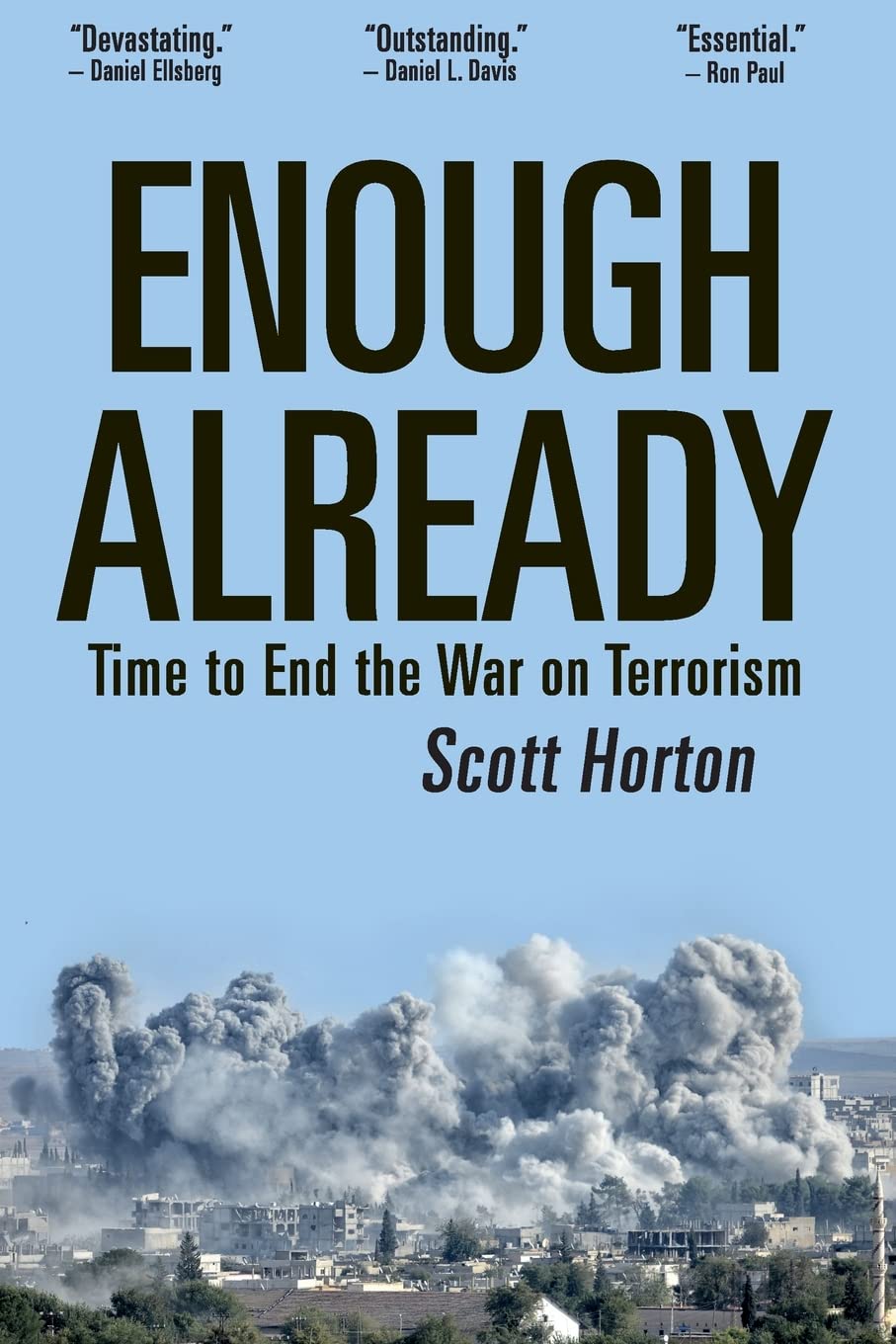
Scott Horton
Enough Already
Enough Already
Scott Horton

“If you only read one book this year on America’s unending ‘War on Terror,’ it should be this persuasive and devastatingly damning account of how the United States created the original al Qaeda terrorism threat by its own actions and then increased that threat by orders of magnitude by its wanton killings in one country after another in the name of ‘counter-terrorism.’ Once I started reading it, I couldn’t stop!” — Daniel Ellsberg, Pentagon Papers whistleblower and author of The Doomsday Machine: Confessions of a Nuclear War Planner

More Details
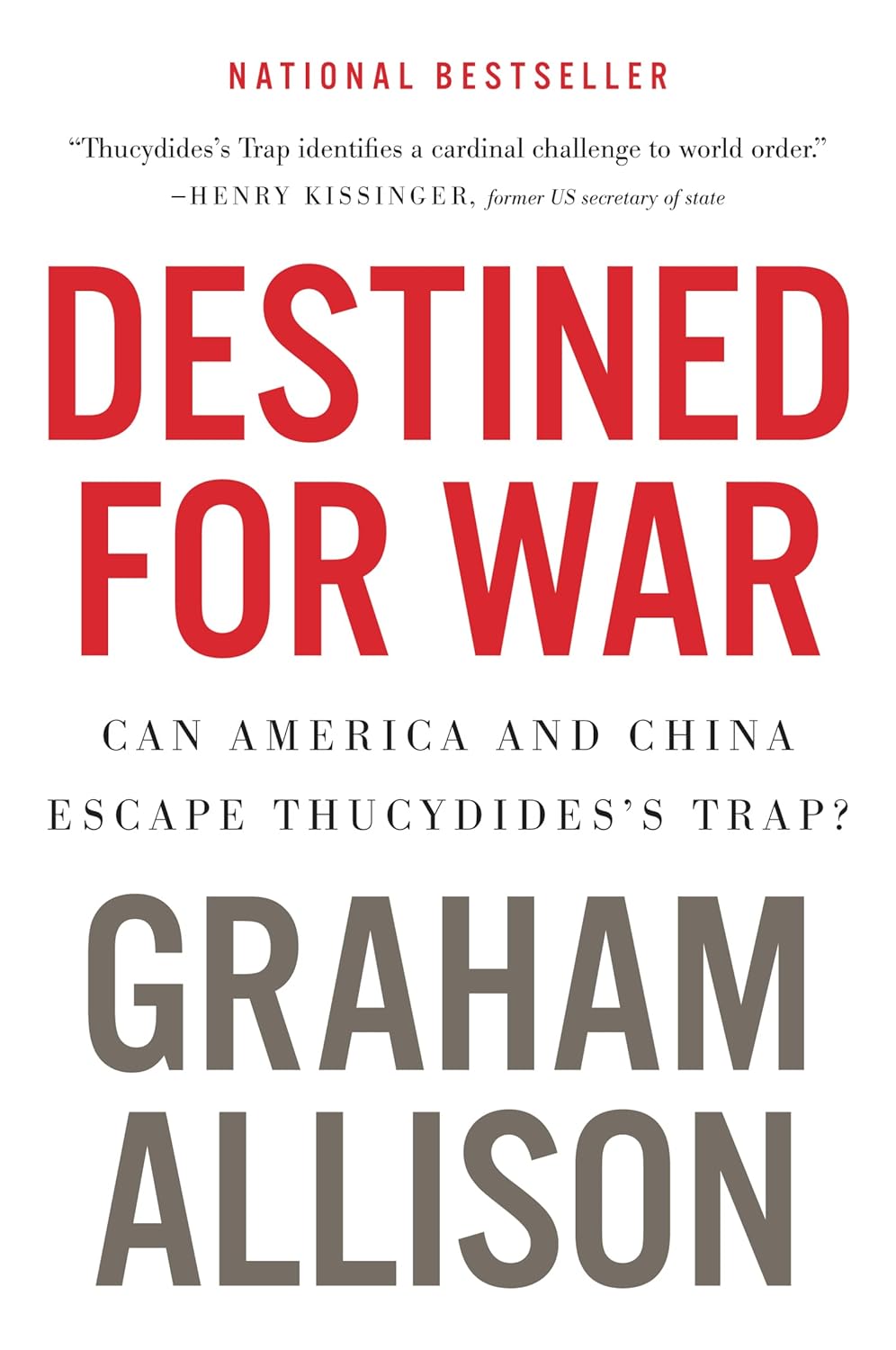
Graham Allison
Destined for War
Destined for War
Graham Allison

China and the United States are heading toward a war neither wants. The reason is Thucydides’s Trap: when a rising power threatens to displace a ruling one in the field of international relations, violence is the likeliest result. Over the past five hundred years, these conditions have occurred sixteen times; war broke out in twelve. At the time of publication, an unstoppable China approached an immovable America, and both Xi Jinping and Donald Trump promised to make their countries “great again,” the seventeenth case was looking grim―it still is. A trade conflict, cyberattack, Korean crisis, or accident at sea could easily spark a major war.

More Details
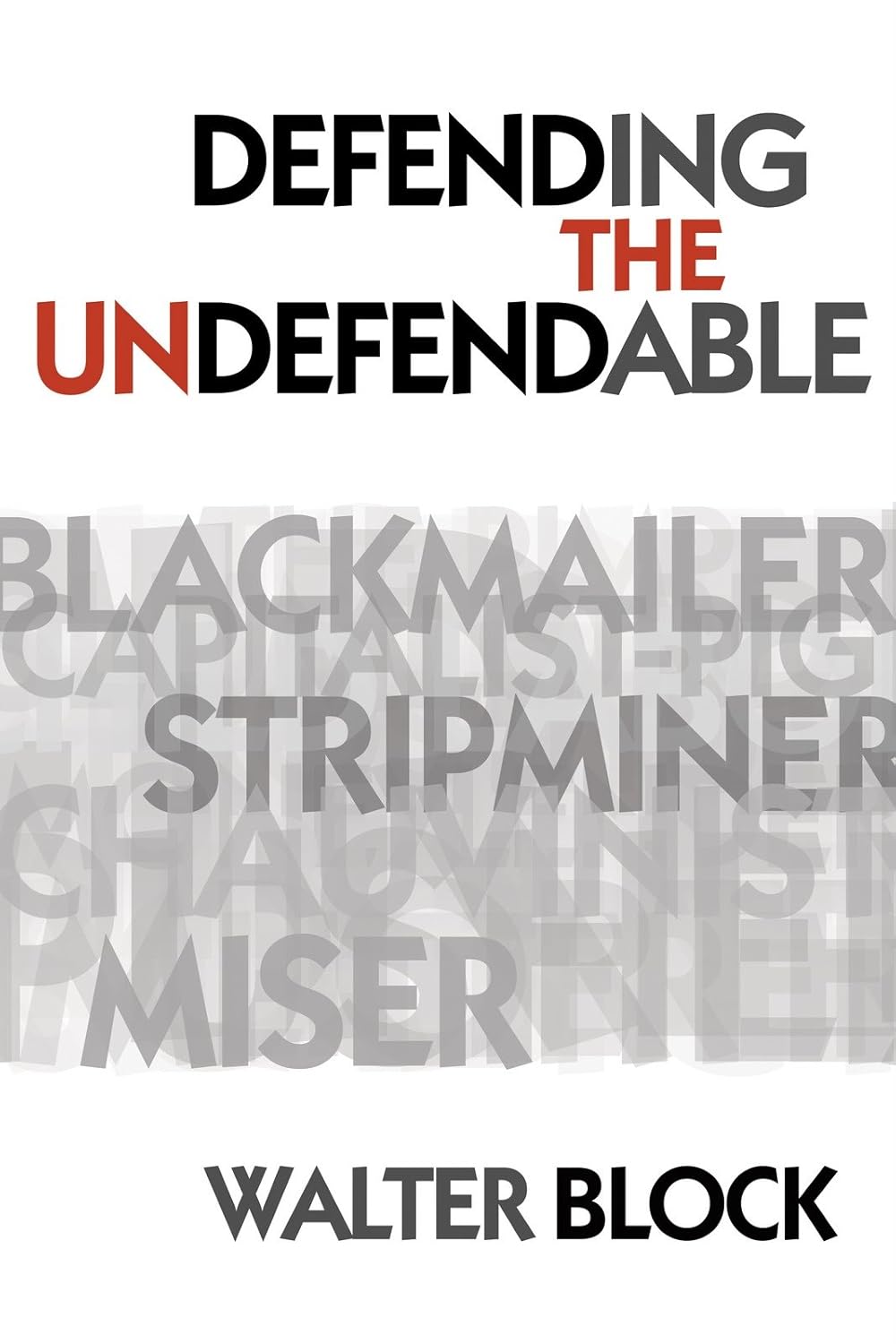
Walter Block
Defending the Undefendable
Walter Block

Defending the Undefendable performs the service of highlighting, the fullest and starkest terms, the essential nature of the productive services performed by all people in the free market. By taking the most extreme examples and showing how the Smithian principles work even in these cases, the book does far more to demonstrate the workability and morality of the free market than a dozen sober tomes on more respectable industries and activities. By testing and proving the extreme cases, he all the more illustrates and vindicates the theory.

More Details
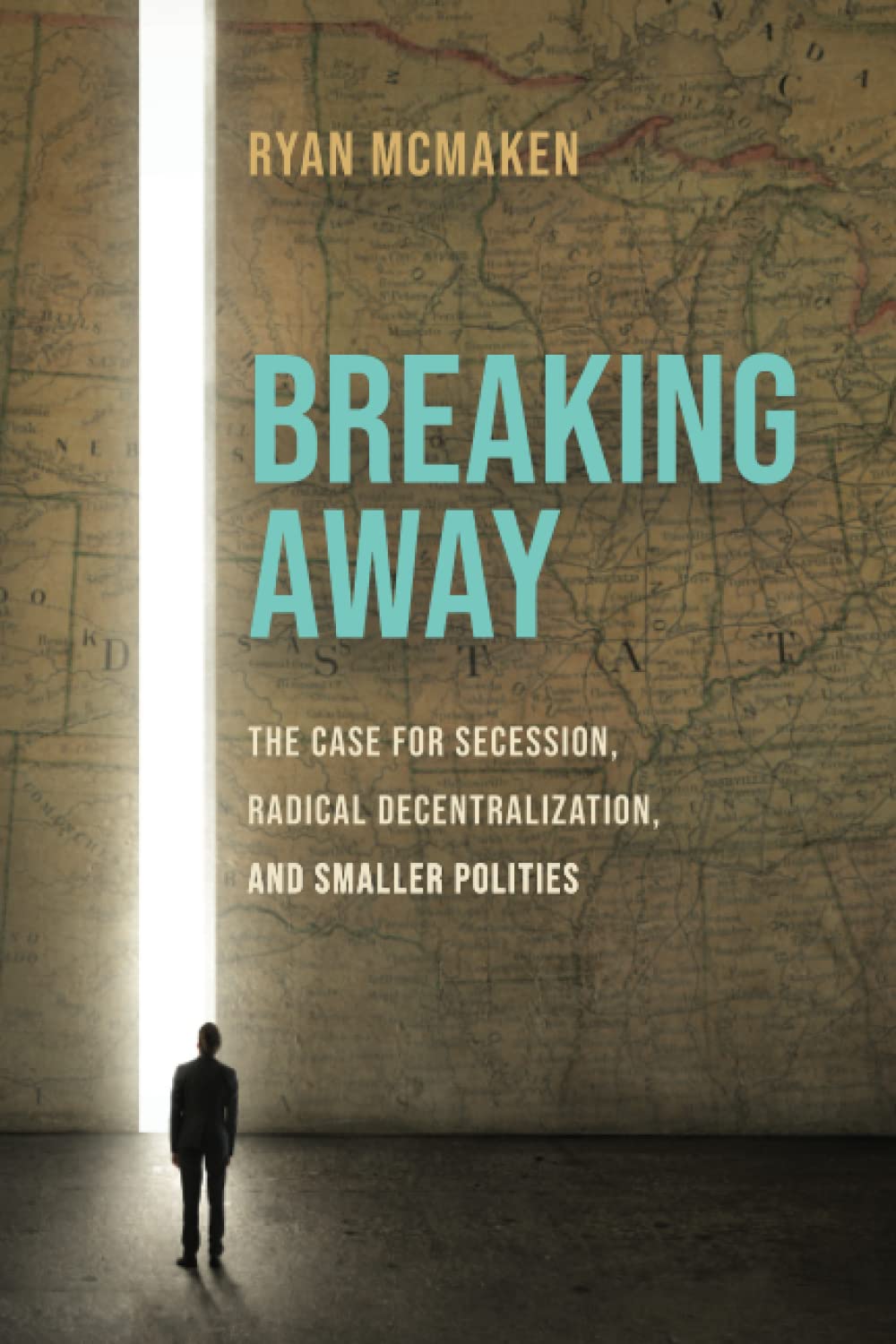
Ryan McMaken
Breaking Away
Breaking Away
Ryan McMaken

Breaking Away differs from countless other books on secession and decentralization in that it considers examples and benefits of secession and radical decentralization in a much broader historical, geographical, and theoretical context. This book is for anyone interested in how issues of secession and decentralization come up again and again worldwide as communities of human beings seek self-determination, freedom, and economic prosperity. McMaken also examines small states which are often examples of successful cases of secession and radical decentralization. The reader will come away with a better understanding of how political decentralization continues to be relevant, useful, and important in the modern world.

More Details
Murray N. Rothbard
Anatomy of the State
Murray N. Rothbard

Murray Rothbard was known as the state's greatest living enemy, and this book is his most powerful statement on the topic. He explains what a state is and what it is not. He shows how it is an institution that violates all that we hold as honest and moral, and how it operates under a false cover. He shows how the state wrecks freedom, destroys civilization, and threatens all lives and property and social well being, all under the veneer of "good intentions."

More Details
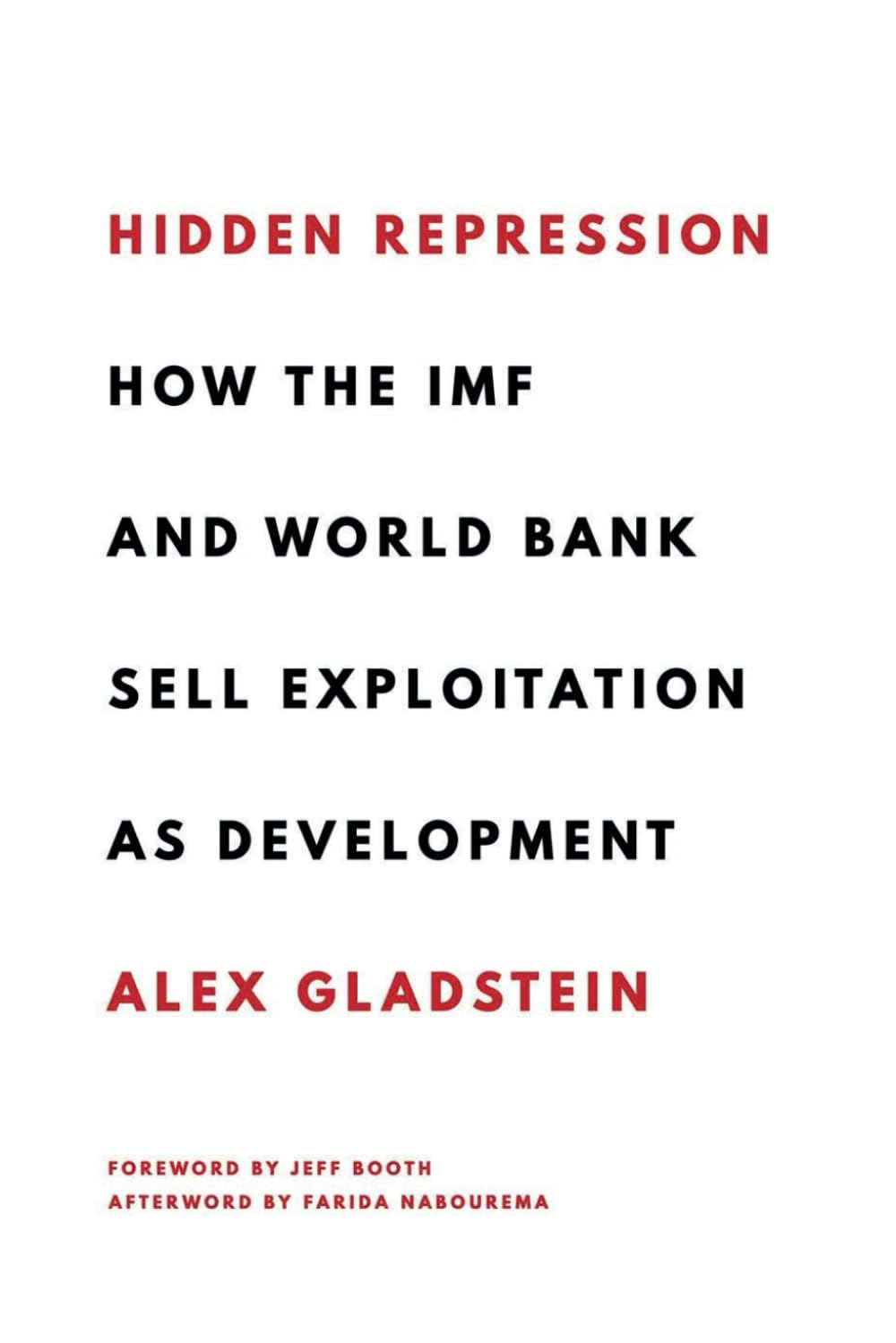
Alex Gladstein
Hidden Repression
Hidden Repression
Alex Gladstein

The IMF and World Bank were created to help countries survive financial crises and to help them develop into prosperous economic actors. But their 75-year track record shows the opposite: their loans and structural adjustment policies have plunged poor countries into impossibly large debt traps and forced the Third World to focus on producing goods for consumption in the West, instead of growing consumption and industry at home. The Bank and the Fund’s “development and assistance” has been anything but. The reality is a history of neocolonial exploitation with shocking results. Alex Gladstein has a lot to say about Bitcoin, human rights, financial privilege, and personal freedom. In his first book Check Your Financial Privilege, he says it, starting with the fact that anyone born into a reserve currency like the euro, yen, or pound has financial privilege over the 89% of the world population born into weaker systems.

More Details
Hans-Hermann Hoppe
The Myth of National Defense
Hans-Hermann Hoppe

With eleven chapters by top libertarian scholars on all aspects of defense, this book edited by Hans-Hermann Hoppe it represents an ambitious attempt to extend the idea of free enterprise to the provision of security services. It argues that "national defense" as provided by government is a myth not unlike the myth of socialism itself. It is more viably privatized and replaced by the market provision of security.

More Details
Hans-Hermann Hoppe
The Private Production of Defense
Hans-Hermann Hoppe

Hans-Hermann Hoppe, a standout pupil of Murray Rothbard and now the foremost Austrian social theorist, is no stranger to seemingly insurmountable theoretical problems. In work after work, Hoppe has made remarkably pioneering insights into social order and the free market.In The Private Production of Defense, Hoppe takes on one the most difficult subjects in economic and political theory: the provision of security. Addressing those who would claim that only the state can and should supply society with the service of protection, Hoppe argues that in fact it is better provided by free markets than government. In the process he tackles a hundred counterarguments. Here we have an important and exhilarating update and refinement of an argument rarely made even in the libertarian tradition.

More Details
Murray N. Rothbard
For a New Liberty
For a New Liberty
Murray N. Rothbard

A classic that for over two decades has been hailed as the best general work on libertarianism available. Rothbard begins with a quick overview of its historical roots, and then goes on to define libertarianism as resting "upon one single axiom: that no man or group of men shall aggress upon the person or property of anyone else." He writes a withering critique of the chief violator of liberty: the State. Rothbard then provides penetrating libertarian solutions for many of today's most pressing problems, including poverty, war, threats to civil liberties, the education crisis, and more.

More Details

Managing Wealth

Steve Corbett
When Helping Hurts
When Helping Hurts
Steve Corbett

Poverty is much more than simply a lack of material resources, and it takes much more than donations and handouts to solve it. When Helping Hurts shows how some alleviation efforts, failing to consider the complexities of poverty, have actually (and unintentionally) done more harm than good. But it looks ahead. It encourages us to see the dignity in everyone, to empower the materially poor, and to know that we are all uniquely needy—and that God in the gospel is reconciling all things to himself. Focusing on both North American and Majority World contexts, When Helping Hurts provides proven strategies for effective poverty alleviation, catalyzing the idea that sustainable change comes not from the outside in, but from the inside out.

More Details
Robert D. Lupton
Toxic Charity
Toxic Charity
Robert D. Lupton

Veteran urban activist Robert Lupton reveals the shockingly toxic effects that modern charity has upon the very people meant to benefit from it. Toxic Charity provides proven new models for charitable groups who want to help—not sabotage—those whom they desire to serve. Lupton, the founder of FCS Urban Ministries (Focused Community Strategies) in Atlanta, the voice of the Urban Perspectives newsletter, and the author of Compassion, Justice and the Christian Life, has been at the forefront of urban ministry activism for forty years. Now, in the vein of Jeffrey Sachs’s The End of Poverty, Richard Stearns’s The Hole in Our Gospel, and Gregory Boyle’s Tattoos on the Heart, his groundbreaking Toxic Charity shows us how to start serving needy and impoverished members of our communities in a way that will lead to lasting, real-world change.

More Details
Andrew Henderson
Nomad Capitalist
Nomad Capitalist
Andrew Henderson

What it will give you is a vision of what's possible, including second passport opportunities, offshore banking countries to use (and avoid), specific jurisdictions to consider for business and investment, and the basic framework you will need to legally lower your taxes and build the life of your dreams overseas. You will also get a look at the life of the Nomad Capitalist himself and the kind of boots-on-the-ground anecdotes and personal experiences that helped him gain the knowledge he has used to help hundreds of people go where they’re treated best. If you want to thrive in today’s world, start here. Those who want complete freedom from the world’s broken systems must become Nomad Capitalists themselves, learning to navigate the world system to reclaim their freedom and rediscover the possibilities of capitalism’s greatest promises.

More Details
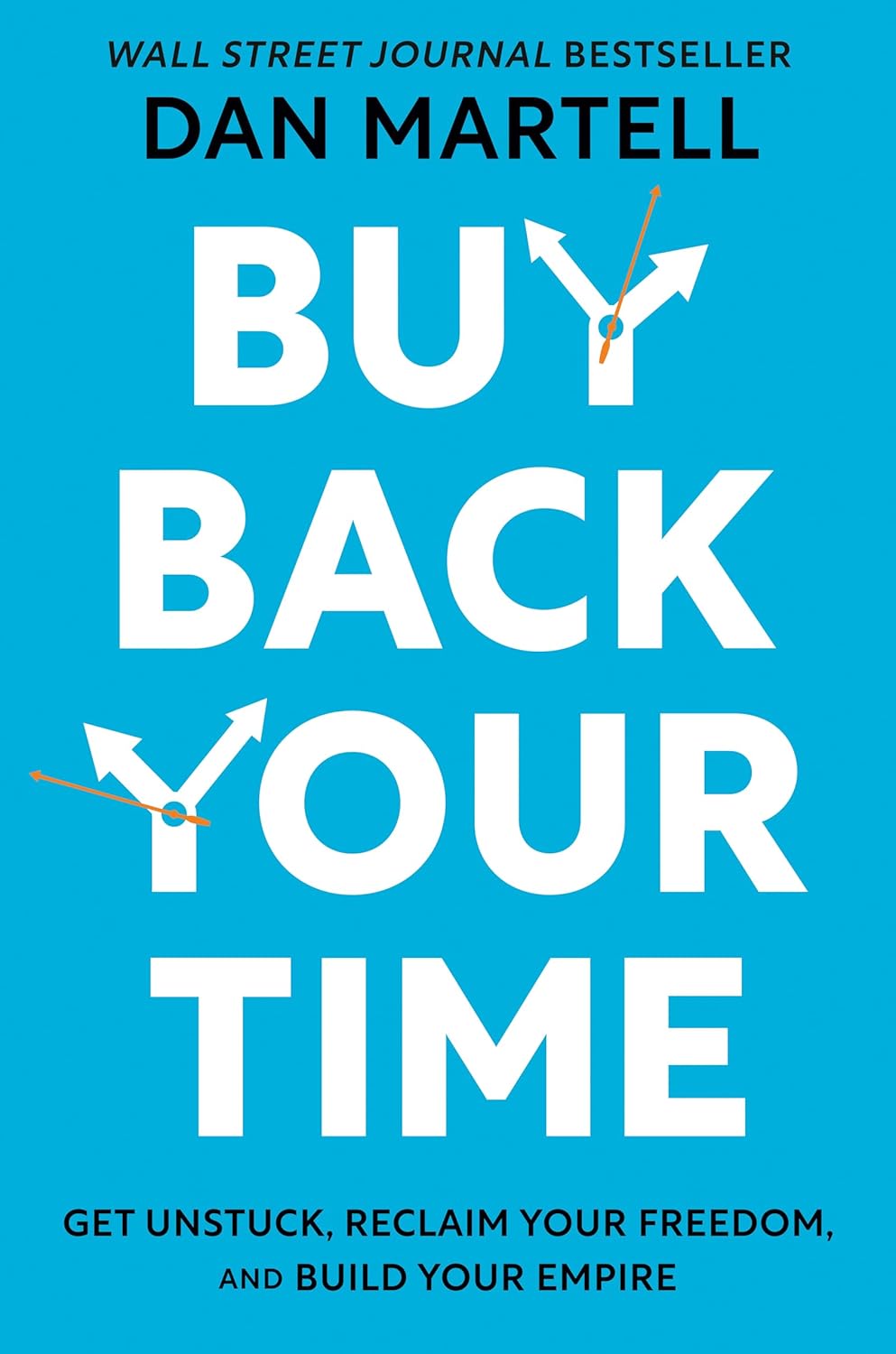
Dan Martell
Buy Back Your Time
Buy Back Your Time
Dan Martell

How you use your free time will make or break your success. The secret? It’s not about working harder or finding more time to do work. It’s about designing the freedom to engage in the high-value work that brings you energy and fulfillment. This is at the heart of the message that has made Dan Martell the world’s most popular SaaS (Software-as-a-Service) coach. Now, in his first book, Buy Back Your Time, he teaches entrepreneurs at every level how to scale their business, fast, while avoiding burnout. Trading money for time—that is, literally buying back free space in your calendar—will give you more financial success than you ever dreamed was possible. With over two decades of experience as a serial entrepreneur and founder, Dan Martell will teach you the secrets to work less and play more while building an empire. He’ll dig into the practical steps that will allow you to start buying back time immediately, while also developing operating procedures and hiring practices that will ensure rapid and robust growth. And he will teach you how to invest in your newfound time wisely—at work and at home—so you keep building your empire while living your best life.

More Details
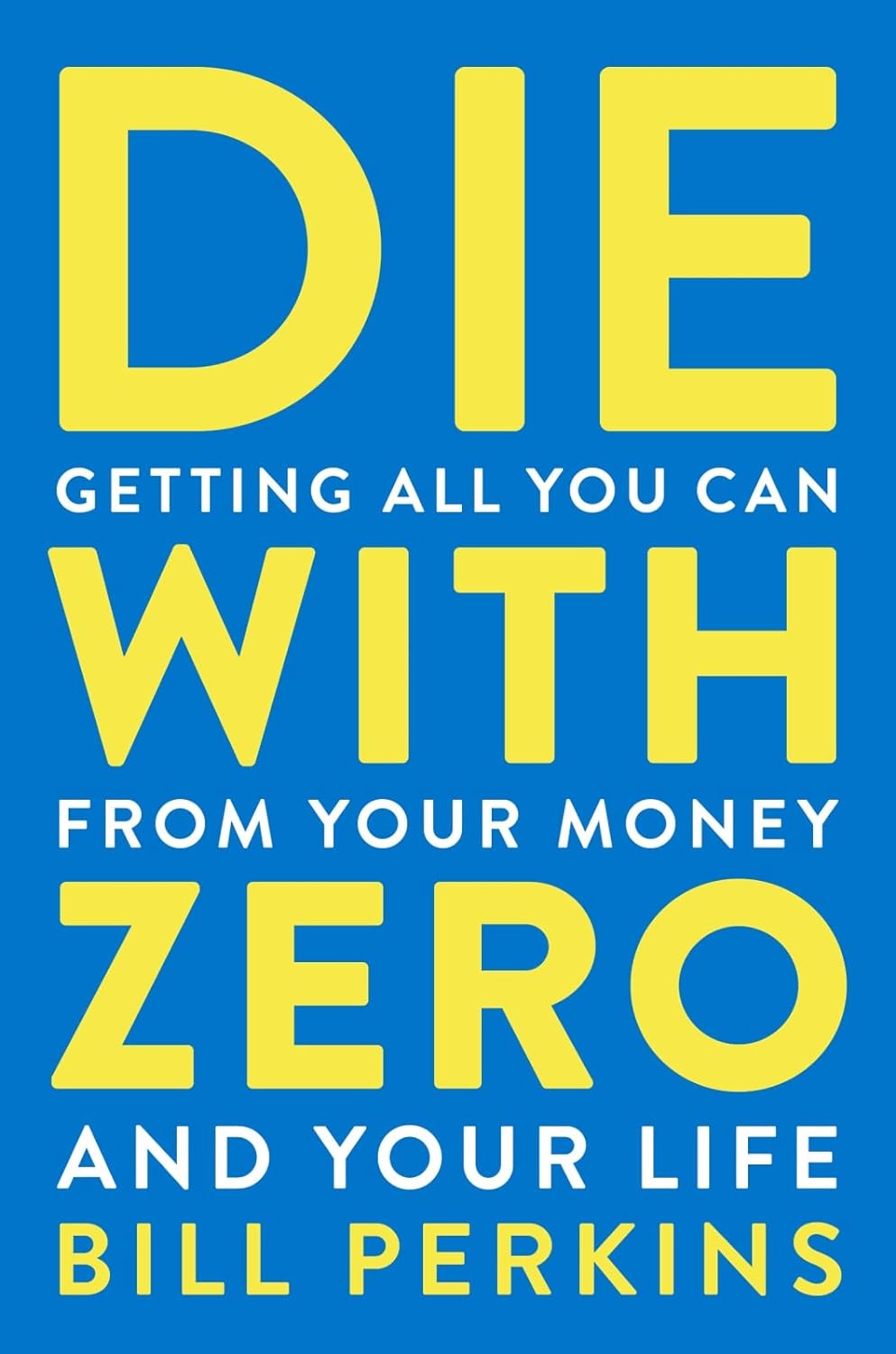
Bill Perkins
Die with Zero
Die with Zero
Bill Perkins

Imagine if by the time you died, you did everything you were told to. You worked hard, saved your money, and looked forward to financial freedom when you retired. The only thing you wasted along the way was . . . your life. Die with Zero presents a startling new and provocative philosophy as well as a practical personal finance guide on how to get the most out of your money—and out of your life. It’s intended for those who place lifelong memorable experiences far ahead of simply making and accumulating money for one’s so-called “golden years.” In short, Bill Perkins wants to rescue you from over-saving and under-living. Regardless of your age, Die with Zero will teach you Perkins’s plan for optimizing your life and engaging in intentional lifestyle design, stage by stage, so you’re fully engaged and enjoying what you’ve worked and saved for.

More Details
Morgan Housel
The Art of Spending Money
Morgan Housel

Most of us don’t know how to spend money. We chase things that impress others but leave us cold. Or we save endlessly, afraid to spend on what would actually make life better. We confuse admiration with envy, comfort with excess, and utility with status. The Art of Spending Money doesn't provide budgets, hacks, or one-size-fits-all solutions. It gives you understanding of how your relationship with money shapes your decisions—and how to reshape it so money works for you. Morgan Housel’s work has helped millions rethink how they earn, save, and invest. Now he turns his attention to the other side of the equation: how to spend. With insight and warmth, he shows why the most valuable return on investment is peace of mind, why expectations matter more than income, and why doing well with money has less to do with spreadsheets and more to do with self-awareness.

More Details
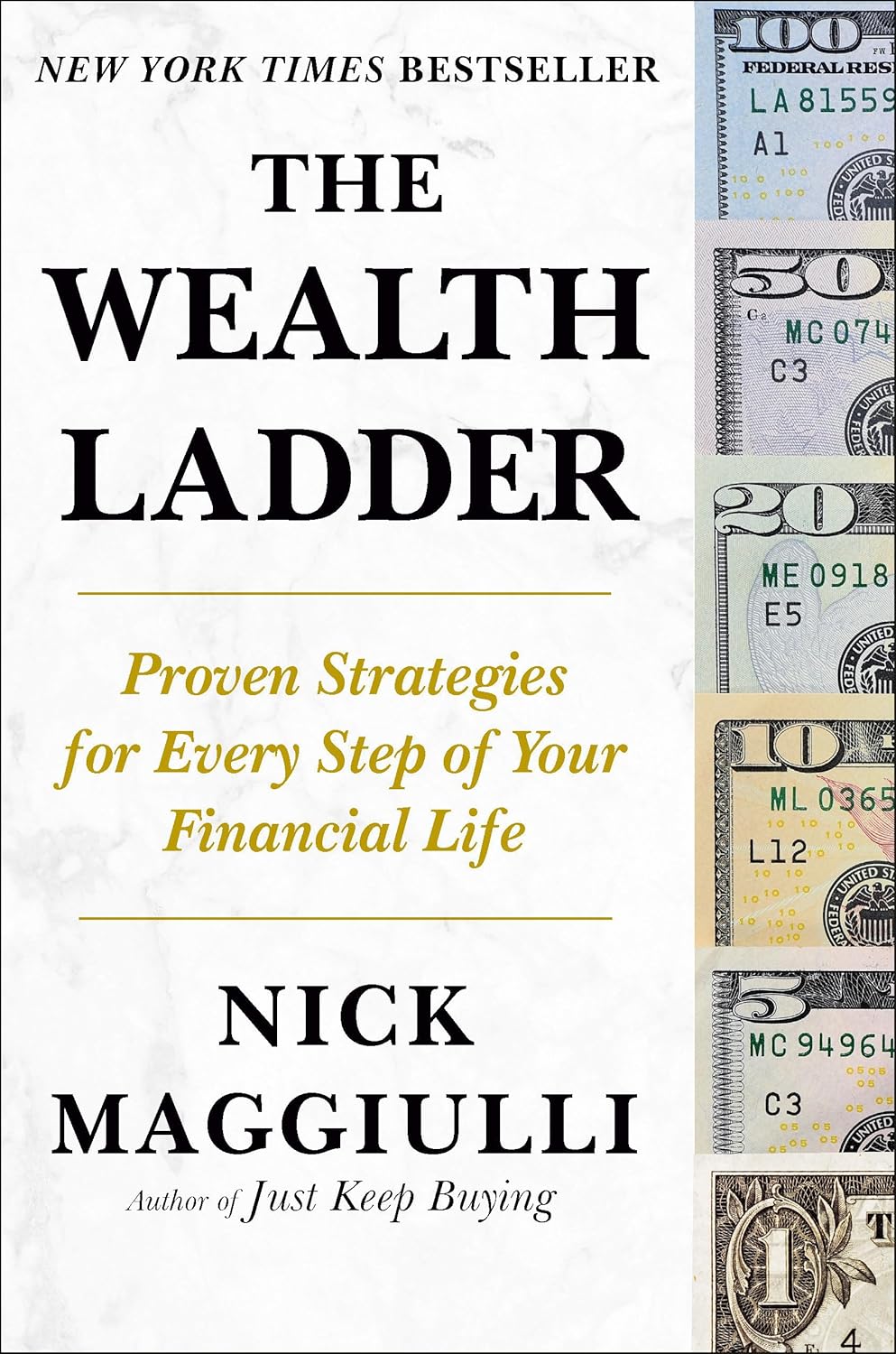
Nick Maggiulli
The Wealth Ladder
The Wealth Ladder
Nick Maggiulli

Do you feel stuck financially? Are you working more, trying to spend less, yet still not seeing results? If so, the issue isn’t your effort—it’s your approach. This is where The Wealth Ladder comes in. It’s not a get-rich-quick scheme or a one-size-fits-all solution to your money problems. It’s a new philosophy for thinking about money altogether. In a world where interest rates shift, careers take new turns, and desires evolve, our financial strategy must keep up. This is why The Wealth Ladder breaks wealth into six distinct levels, each demanding its own strategy. What works at Level 1 won’t cut it at Level 6—and vice versa. You’ll learn exactly how to handle your spending, income, investments, and more, with tailored advice for every stage. The result? Smarter choices, less stress, and a clear path upward.

More Details

History

Robert P. Murphy
The Politically Incorrect Guide to the Great Depression and the New Deal
Robert P. Murphy

In this timely new P.I. Guide, Murphy reveals the stark truth: free market failure didn't cause the Great Depression and the New Deal didn't cure it. Shattering myths and politically correct lies, he tells why World War II didn t help the economy or get us out of the Great Depression; why it took FDR to make the Depression Great; and why Herbert Hoover was more like Obama and less like Bush than the liberal media would have you believe. Free-market believers and capitalists everywhere should have this on their bookshelf and in their briefcases.

More Details
Adam Fergusson
When Money Dies
When Money Dies
Adam Fergusson

In 1923, with its currency effectively worthless (the exchange rate in December of that year was one dollar to 4,200,000,000,000 marks), the German republic was all but reduced to a barter economy. Expensive cigars, artworks, and jewels were routinely exchanged for staples such as bread; a cinema ticket could be bought for a lump of coal; and a bottle of paraffin for a silk shirt. People watched helplessly as their life savings disappeared and their loved ones starved. Germany's finances descended into chaos, with severe social unrest in its wake. Money may no longer be physically printed and distributed in the voluminous quantities of 1923. However, "quantitative easing," that modern euphemism for surreptitious deficit financing in an electronic era, can no less become an assault on monetary discipline. Whatever the reason for a country's deficit— necessity or profligacy, unwillingness to tax or blindness to expenditure—it is beguiling to suppose that if the day of reckoning is postponed economic recovery will come in time to prevent higher unemployment or deeper recession. What if it does not? Germany in 1923 provides a vivid, compelling, sobering moral tale.

More Details
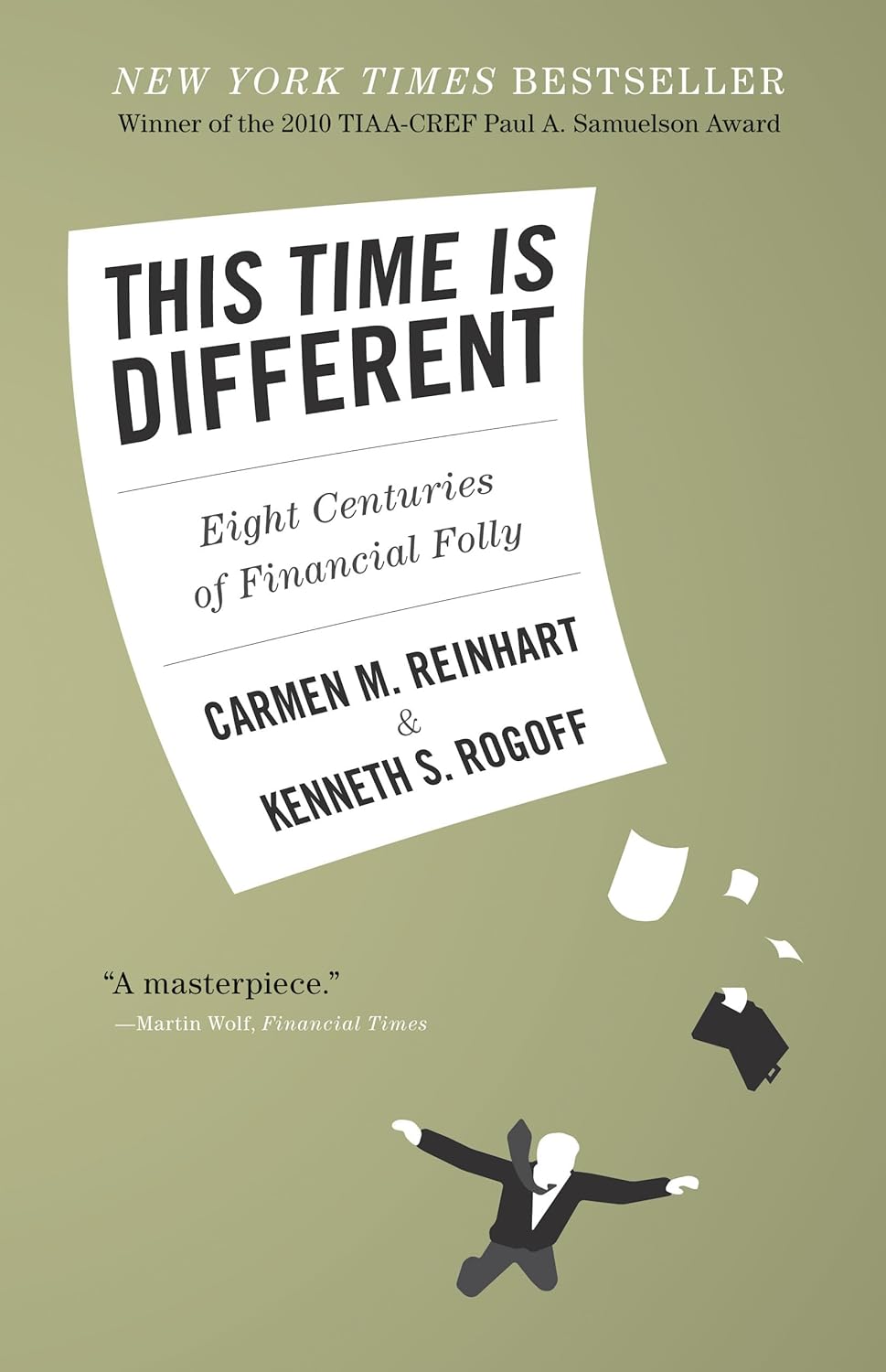
Carmen M. Reinhart
This Time Is Different
Carmen M. Reinhart

Throughout history, rich and poor countries alike have been lending, borrowing, crashing, and recovering their way through an extraordinary range of financial crises. Each time, the experts have chimed, “this time is different”—claiming that the old rules of valuation no longer apply and that the new situation bears little similarity to past disasters. With this breakthrough study, leading economists Carmen Reinhart and Kenneth Rogoff definitively prove them wrong. Covering sixty-six countries across five continents and eight centuries, This Time Is Different presents a comprehensive look at the varieties of financial crises—including government defaults, banking panics, and inflationary spikes—from medieval currency debasements to the subprime mortgage catastrophe. Reinhart and Rogoff provocatively argue that financial combustions are universal rites of passage for emerging and established market nations. A remarkable history of financial folly, This Time Is Different will influence financial and economic thinking and policy for decades to come.

More Details
Thomas J. Dilorenzo
The Real Lincoln
The Real Lincoln
Thomas J. Dilorenzo

In The Real Lincoln, author Thomas J. DiLorenzo uncovers a side of Lincoln not told in many history books--and overshadowed by the immense Lincoln legend. Through extensive research and meticulous documentation, DiLorenzo portrays the sixteenth president as a man who devoted his political career to revolutionizing the American form of government from one that was very limited in scope and highly decentralized—as the Founding Fathers intended—to a highly centralized, activist state. Standing in his way, however, was the South, with its independent states, its resistance to the national government, and its reliance on unfettered free trade. To accomplish his goals, Lincoln subverted the Constitution, trampled states' rights, and launched a devastating Civil War, whose wounds haunt us still. According to this provacative book, 600,000 American soldiers did not die for the honorable cause of ending slavery but for the dubious agenda of sacrificing the independence of the states to the supremacy of the federal government, which has been tightening its vise grip on our republic to this very day.

More Details
Thomas J. DiLorenzo
The Problem with Lincoln
Thomas J. DiLorenzo

Abraham Lincoln was widely and deeply unpopular during his presidency. And for good reason. He overturned our original constitutional order, violated the rights of Americans both North and South, massively inflated the federal government, and plunged the nation into a wholly unnecessary war. Why? Not to free the slaves, as his hagiographers would have you believe, but out of personal ambition, greed for power, and, incidentally, to enrich the railroad interests that supported his political career. Court historians have turned King Lincoln into a secular saint, but what did Abraham Lincoln’s contemporaries know that has been forgotten or covered up? Bestselling author Thomas J. DiLorenzo debunks the pious myths to reveal the real Lincoln.

More Details
Thomas E. Woods Jr.
The Politically Incorrect Guide to American History
Thomas E. Woods Jr.

Most Americans trust that their history professors and high school teachers will give students honest and accurate information. The Politically Incorrect Guide to American Historymakes it quite clear that liberal professors have misinformed our children for generations. Professor Thomas E. Woods, Jr. takes on the most controversial moments of American history and exposes how history books are merely a series of clichés drafted by academics who are heavily biased against God, democracy, patriotism, capitalism and most American family values.

More Details
James Grant
The Forgotten Depression
James Grant

In The Forgotten Depression, James Grant “makes a strong case against federal intervention during economic downturns” (Pittsburgh Tribune Review), arguing that the well-intended White House-led campaign to prop up industrial wages helped turn a bad recession into America’s worst depression. He offers examples like this, and many others, as important strategies we can learn from the earlier depression and apply today and to the future. This is a powerful response to the prevailing notion of how to fight recession, and “Mr. Grant’s history lesson is one that all lawmakers could take to heart” (Washington Times).

More Details
Frederick Taylor
The Downfall of Money Copy
Frederick Taylor

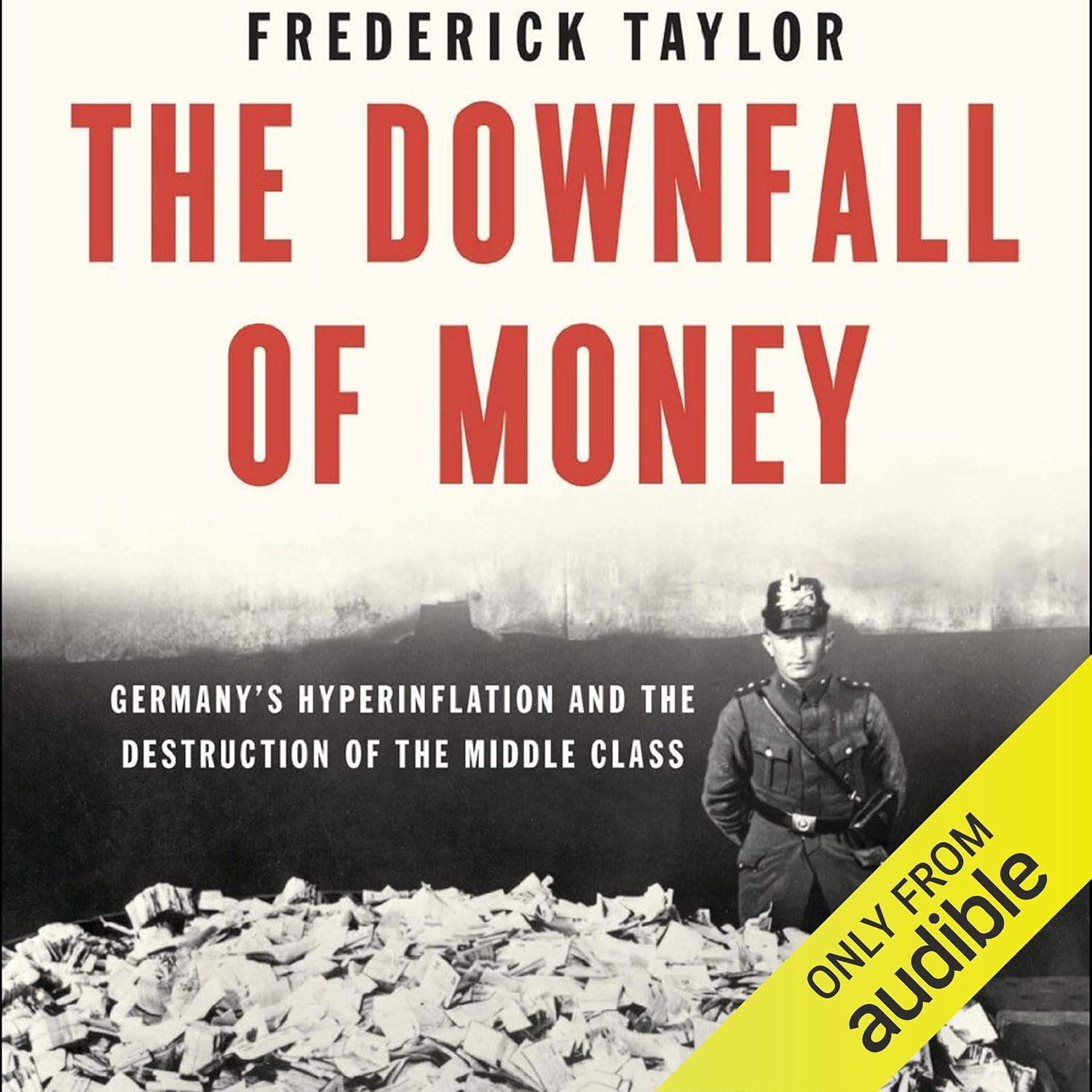
An economic horror story: The complete meltdown of a major modern country’s financial system, and its disastrous effects on every aspect of society. A hundred years ago, many theorists believed - just as they did at the beginning of our 21st century - that the world had reached a state of economic perfection, a never-before-seen human interdependence that would lead to universal growth and prosperity. Then, as now, the German mark was one of the most trusted currencies in the world. Yet the early years of the Weimar Republic in Germany witnessed the most calamitous meltdown of a developed economy in modern times. The Downfall of Money will tell anew the dramatic story of the hyperinflation that saw the mark - worth 4.2 to the dollar in 1914 - plunge until it traded at over 4 trillion to 1 by the autumn of 1923.

More Details
Frederick Taylor
The Downfall of Money
Frederick Taylor

An economic horror story: The complete meltdown of a major modern country’s financial system, and its disastrous effects on every aspect of society. A hundred years ago, many theorists believed - just as they did at the beginning of our 21st century - that the world had reached a state of economic perfection, a never-before-seen human interdependence that would lead to universal growth and prosperity. Then, as now, the German mark was one of the most trusted currencies in the world. Yet the early years of the Weimar Republic in Germany witnessed the most calamitous meltdown of a developed economy in modern times. The Downfall of Money will tell anew the dramatic story of the hyperinflation that saw the mark - worth 4.2 to the dollar in 1914 - plunge until it traded at over 4 trillion to 1 by the autumn of 1923.

More Details
G. Edward Griffin
The Creature from Jekyll Island
G. Edward Griffin

This is the classic exposé of the Fed that has become one of the best-selling books in its category of all time. Where does money come from? Where does it go? Who makes it? The money magician's secrets are unveiled. Here is a close look at their mirrors and smoke machines, the pulleys, cogs, and wheels that create the grand illusion called money. A boring subject? Just wait. You'll be hooked in five minutes. It reads like a detective story - which it really is, but it's all true. This book is about the most blatant scam of history. It's all here: the cause of wars, boom-bust cycles, inflation, depression, prosperity. Your world view will definitely change. Putting it quite simply, this may be the most important book on world affairs you will ever read. The 5th Edition includes a no-holds barred analysis of bank bailouts that are shown to be nothing less than legalized plunder of the people. Many other updates have been added, including a revision to the list of those who attended the historic meeting at Jekyll Island where the Federal Reserve was created.

More Details
Iris Chang
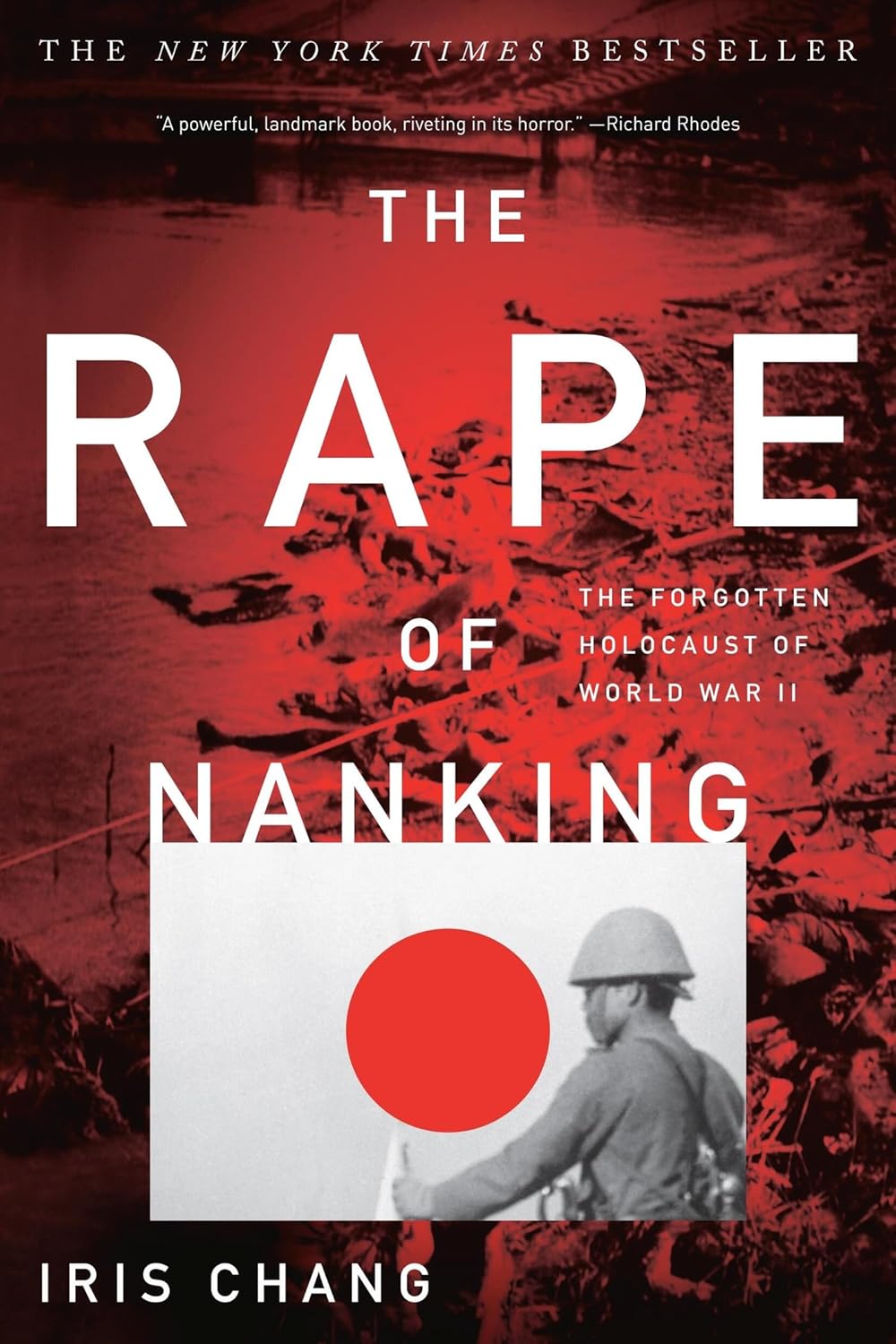
Rape of Nanking
Rape of Nanking
Iris Chang

In December 1937, the Japanese army swept into the ancient city of Nanking. Within weeks, more than 300,000 Chinese civilians and soldiers were systematically raped, tortured, and murdered—a death toll exceeding that of the atomic blasts of Hiroshima and Nagasaki combined. Historian Iris Chang tells the story from three perspectives: that of the Japanese soldiers, that of the Chinese, and that of a group of Westerners who refused to abandon the city and created a safety zone that saved almost 300,000 Chinese.

More Details
Christopher R. Browning
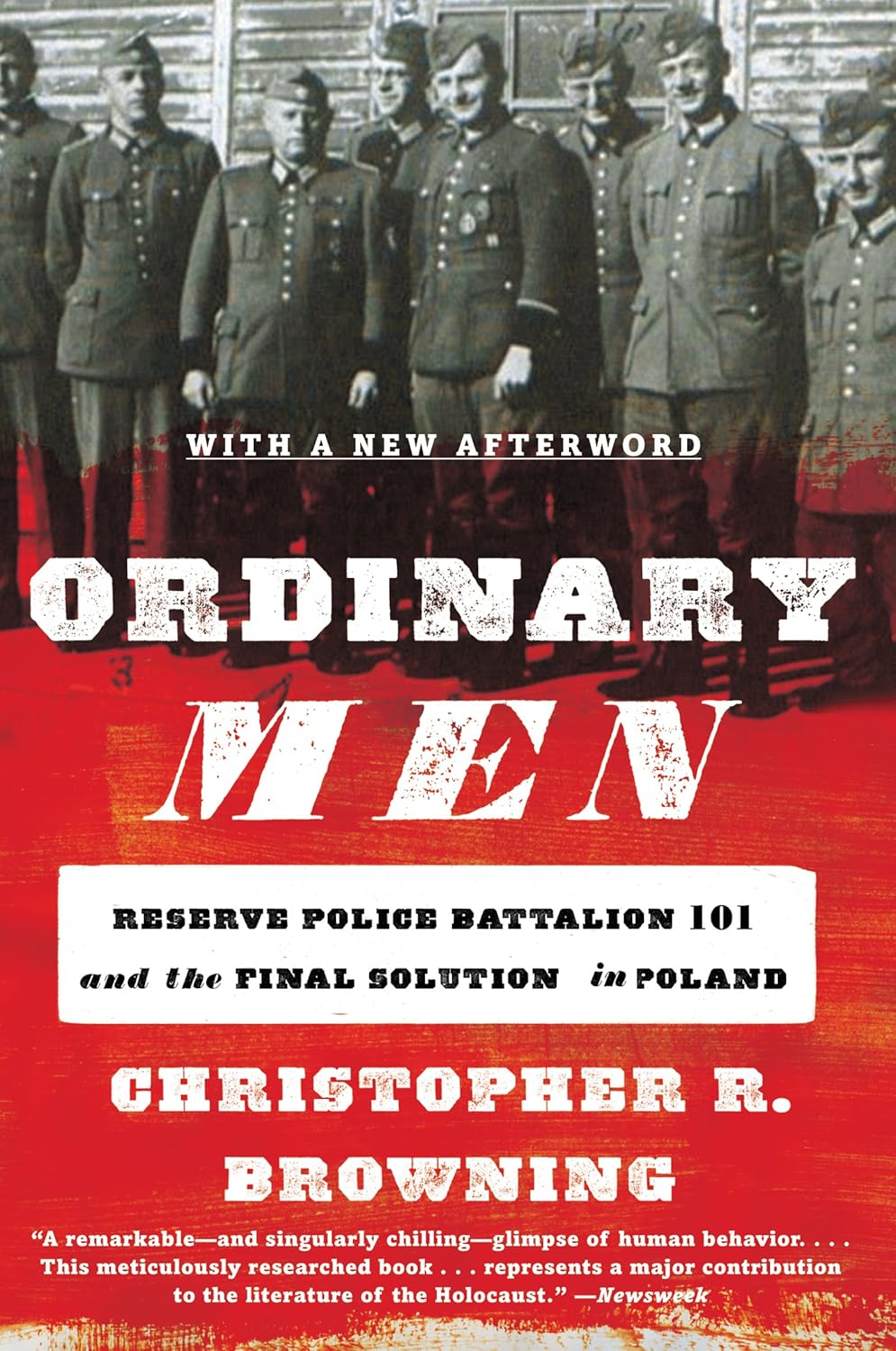
Ordinary Men
Ordinary Men
Christopher R. Browning

Ordinary Men is the true story of Reserve Police Battalion 101 of the German Order Police, which was responsible for mass shootings as well as round-ups of Jewish people for deportation to Nazi death camps in Poland in 1942. Browning argues that most of the men of RPB 101 were not fanatical Nazis but, rather, ordinary middle-aged, working-class men who committed these atrocities out of a mixture of motives, including the group dynamics of conformity, deference to authority, role adaptation, and the altering of moral norms to justify their actions. Very quickly three groups emerged within the battalion: a core of eager killers, a plurality who carried out their duties reliably but without initiative, and a small minority who evaded participation in the acts of killing without diminishing the murderous efficiency of the battalion whatsoever.

More Details
Murray N. Rothbard
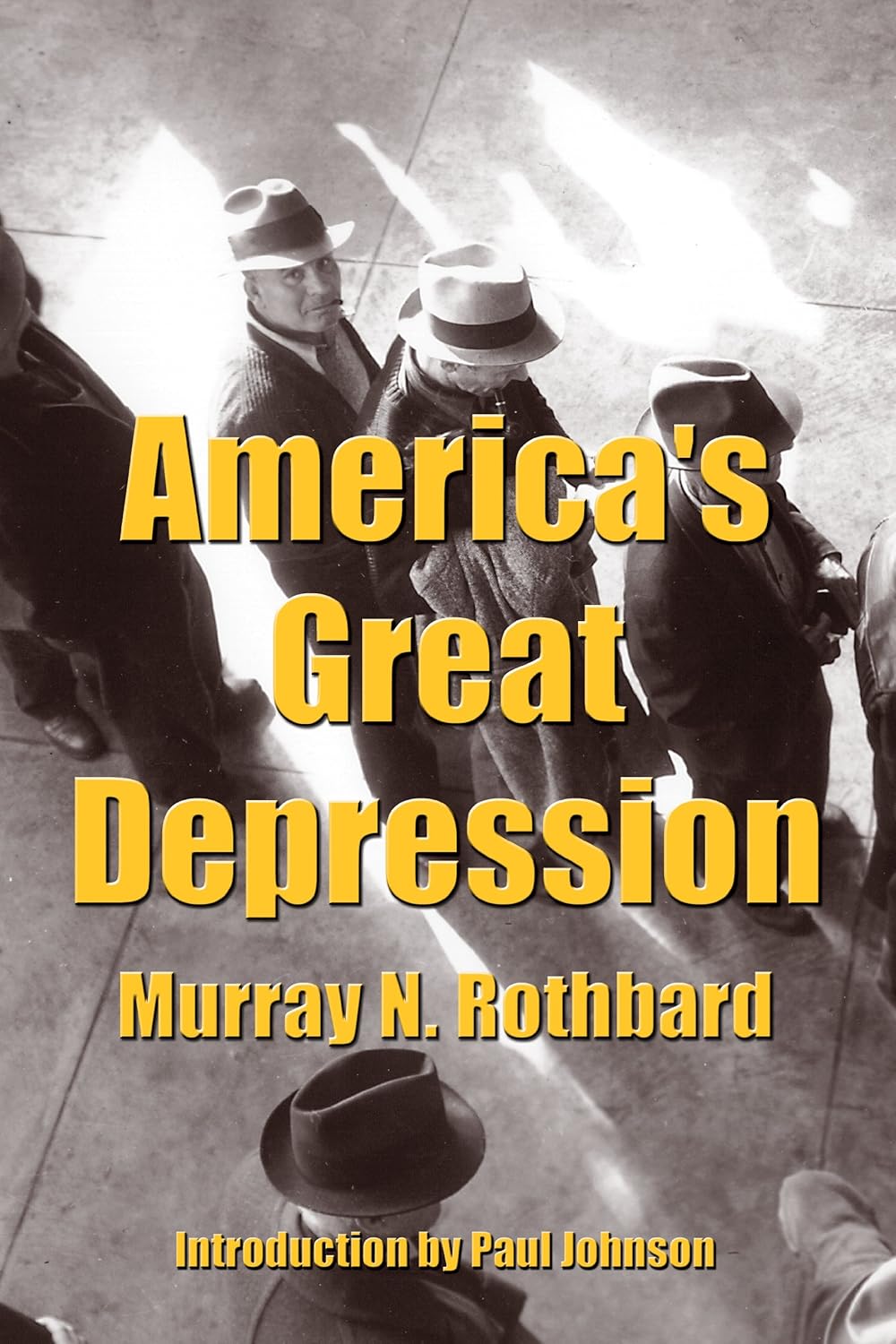
America's Great Depression
Murray N. Rothbard

Applied Austrian economics doesn't get better than this. Murray N. Rothbard's America's Great Depression is a staple of modern economic literature and crucial for understanding a pivotal event in American and world history. The Mises Institute edition features, along with a new introduction by historian Paul Johnson, top-quality paper and bindings, in line with the standard set by The Scholars Edition of Human Action. Since it first appeared in 1963, it has been the definitive treatment of the causes of the depression. The book remains canonical today because the debate is still very alive.

More Details
Vaclav Smil
Energy and Civilization
Vaclav Smil

Energy is the only universal currency; it is necessary for getting anything done. The conversion of energy on Earth ranges from terra-forming forces of plate tectonics to cumulative erosive effects of raindrops. Life on Earth depends on the photosynthetic conversion of solar energy into plant biomass. Humans have come to rely on many more energy flows—ranging from fossil fuels to photovoltaic generation of electricity—for their civilized existence. In this monumental history, Vaclav Smil provides a comprehensive account of how energy has shaped society, from pre-agricultural foraging societies through today's fossil fuel–driven civilization.

More Details
David Graeber
Debt: The First 5,000 Years
David Graeber

Before there was money, there was debt. For more than 5,000 years, since the beginnings of the first agrarian empires, humans have used elaborate credit systems to buy and sell goods—that is, long before the invention of coins or cash. It is in this era that we also first encounter a society divided into debtors and creditors—which lives on in full force to this day. So says anthropologist David Graeber in a stunning reversal of conventional wisdom. He shows that arguments about debt and debt forgiveness have been at the center of political debates from Renaissance Italy to Imperial China, as well as sparking innumerable insurrections. He also brilliantly demonstrates that the language of the ancient works of law and religion (words like “guilt,” “sin,” and “redemption”) derive in large part from ancient debates about debt, and shape even our most basic ideas of right and wrong.

More Details

Personal Development

Mark Manson
The Subtle Art of Not Giving a F*ck
Mark Manson

There are only so many things we can give a f**k about so we need to figure out which ones really matter, Manson makes clear. While money is nice, caring about what you do with your life is better, because true wealth is about experience. A much-needed grab-you-by-the-shoulders-and-look-you-in-the-eye moment of real-talk, filled with entertaining stories and profane, ruthless humor, The Subtle Art of Not Giving a F*ck is a refreshing slap for a generation to help them lead contented, grounded lives.

More Details
James Dale Davidson
The Sovereign Individual
James Dale Davidson

In The Sovereign Individual, Davidson and Rees-Mogg explore the greatest economic and political transition in centuries—the shift from an industrial to an information-based society. This transition, which they have termed "the fourth stage of human society," will liberate individuals as never before, irrevocably altering the power of government. This outstanding book will replace false hopes and fictions with new understanding and clarified values.

More Details
Nassim Nicholas Taleb
The Black Swan
The Black Swan
Nassim Nicholas Taleb

A black swan is a highly improbable event with three principal characteristics: It is unpredictable; it carries a massive impact; and, after the fact, we concoct an explanation that makes it appear less random, and more predictable, than it was. The astonishing success of Google was a black swan; so was 9/11. For Nassim Nicholas Taleb, black swans underlie almost everything about our world, from the rise of religions to events in our own personal lives.

More Details
Eric Jorgenson
The Almanack of Naval Ravikant
Eric Jorgenson

Naval Ravikant is an entrepreneur, philosopher, and investor who has captivated the world with his principles for building wealth and creating long-term happiness. The Almanack of Naval Ravikant is a collection of Naval’s wisdom and experience from the last ten years, shared as a curation of his most insightful interviews and poignant reflections. This isn’t a how-to book, or a step-by-step gimmick. Instead, through Naval’s own words, you will learn how to walk your own unique path toward a happier, wealthier life. This book has been created as a public service. It is available for free download in pdf and e-reader versions on Navalmanack.com. Naval is not earning any money on this book. Naval has essays, podcasts and more at Nav.al and is on Twitter @Naval.

More Details
Nassim Nicholas Taleb
Skin in the Game
Skin in the Game
Nassim Nicholas Taleb

In his most provocative and practical book yet,one of the foremost thinkers of our time redefines what it means to understand the world, succeed in a profession, contribute to a fair and just society, detect nonsense, and influence others. Citing examples ranging from Hammurabi to Seneca, Antaeus the Giant to Donald Trump, Nassim Nicholas Taleb shows how the willingness to accept one’s own risks is an essential attribute of heroes, saints, and flourishing people in all walks of life.

More Details
Chris Voss
Never Split the Difference
Chris Voss

"This book blew my mind. It’s a riveting read, full of instantly actionable advice-not just for high-stakes situations, but also for handling everyday conflicts at work and at home." ―Adam Grant, author of Think Again This international bestseller, with more than 5 million copies sold, offers a field-tested approach to high-stakes negotiations―whether in the boardroom, in your community, or at home.

More Details
Ray Dalio
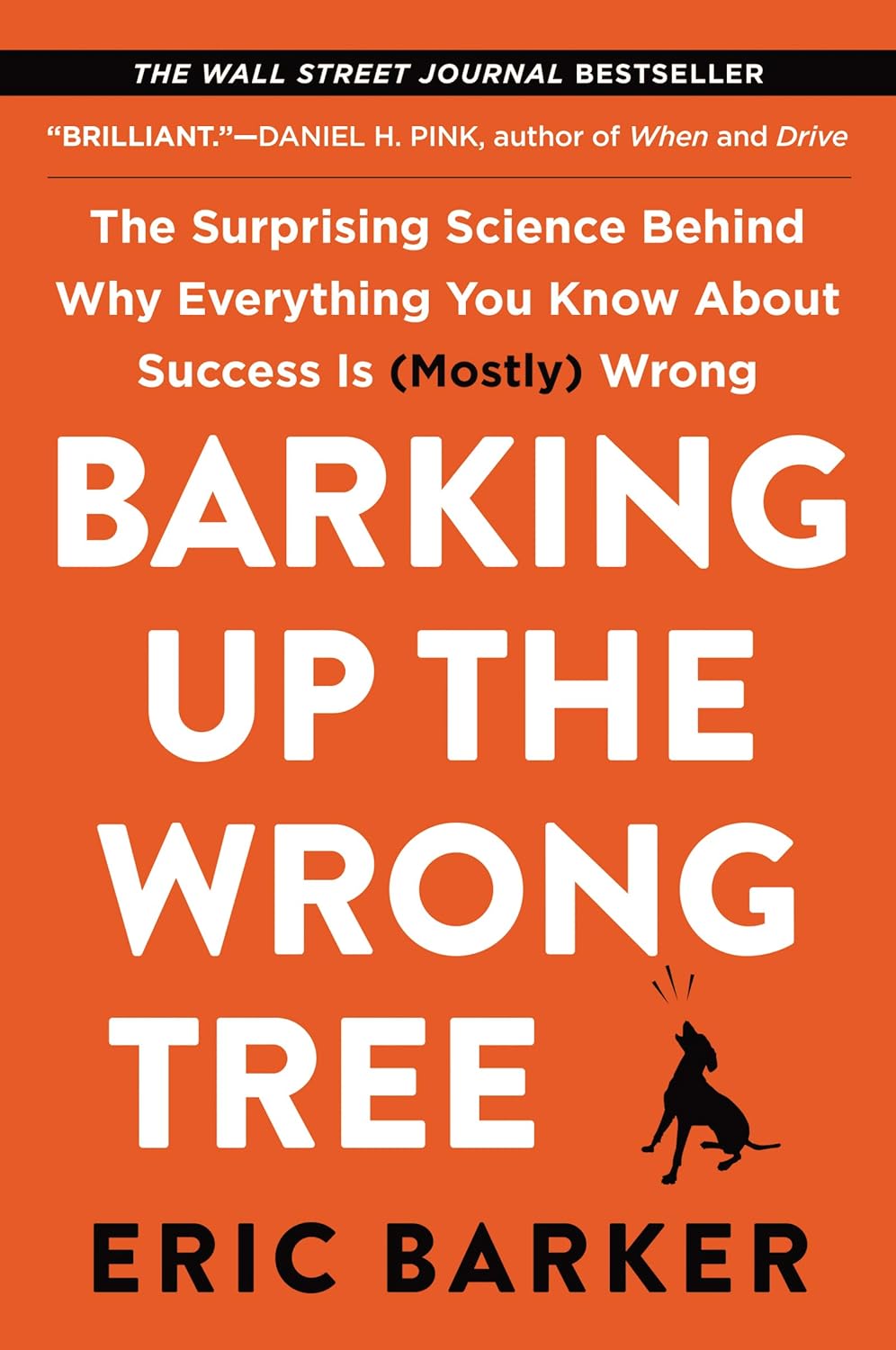
Barking Up the Wrong Tree
Ray Dalio

By looking at what separates the extremely successful from the rest of us, we learn what we can do to be more like them—and find out in some cases why it’s good that we aren’t. Barking Up the Wrong Tree draws on startling statistics and surprising anecdotes to help you understand what works and what doesn’t so you can stop guessing at success and start living the life you want.

More Details
James Clear
Atomic Habits
Atomic Habits
James Clear

No matter your goals, Atomic Habits offers a proven framework for improving--every day. James Clear, one of the world's leading experts on habit formation, reveals practical strategies that will teach you exactly how to form good habits, break bad ones, and master the tiny behaviors that lead to remarkable results. If you're having trouble changing your habits, the problem isn't you. The problem is your system. Bad habits repeat themselves again and again not because you don't want to change, but because you have the wrong system for change. You do not rise to the level of your goals. You fall to the level of your systems. Here, you'll get a proven system that can take you to new heights. Clear is known for his ability to distill complex topics into simple behaviors that can be easily applied to daily life and work. Here, he draws on the most proven ideas from biology, psychology, and neuroscience to create an easy-to-understand guide for making good habits inevitable and bad habits impossible. Along the way, readers will be inspired and entertained with true stories from Olympic gold medalists, award-winning artists, business leaders, life-saving physicians, and star comedians who have used the science of small habits to master their craft and vault to the top of their field.

More Details
Nassim Nicholas Taleb
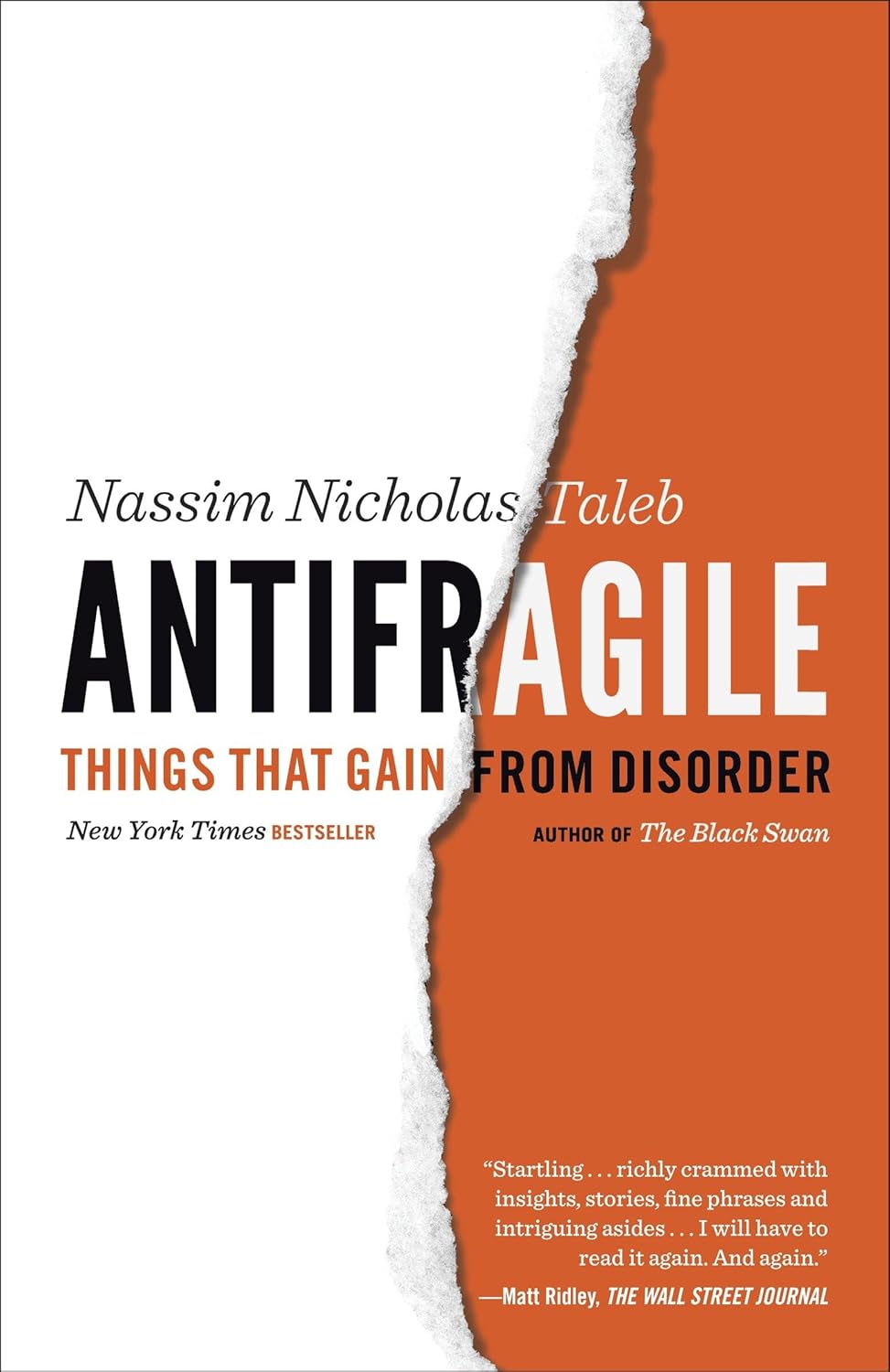
Antifragile
Antifragile
Nassim Nicholas Taleb

Furthermore, the antifragile is immune to prediction errors and protected from adverse events. Why is the city-state better than the nation-state, why is debt bad for you, and why is what we call “efficient” not efficient at all? Why do government responses and social policies protect the strong and hurt the weak? Why should you write your resignation letter before even starting on the job? How did the sinking of the Titanic save lives? The book spans innovation by trial and error, life decisions, politics, urban planning, war, personal finance, economic systems, and medicine. And throughout, in addition to the street wisdom of Fat Tony of Brooklyn, the voices and recipes of ancient wisdom, from Roman, Greek, Semitic, and medieval sources, are loud and clear.

More Details
Brian Christian
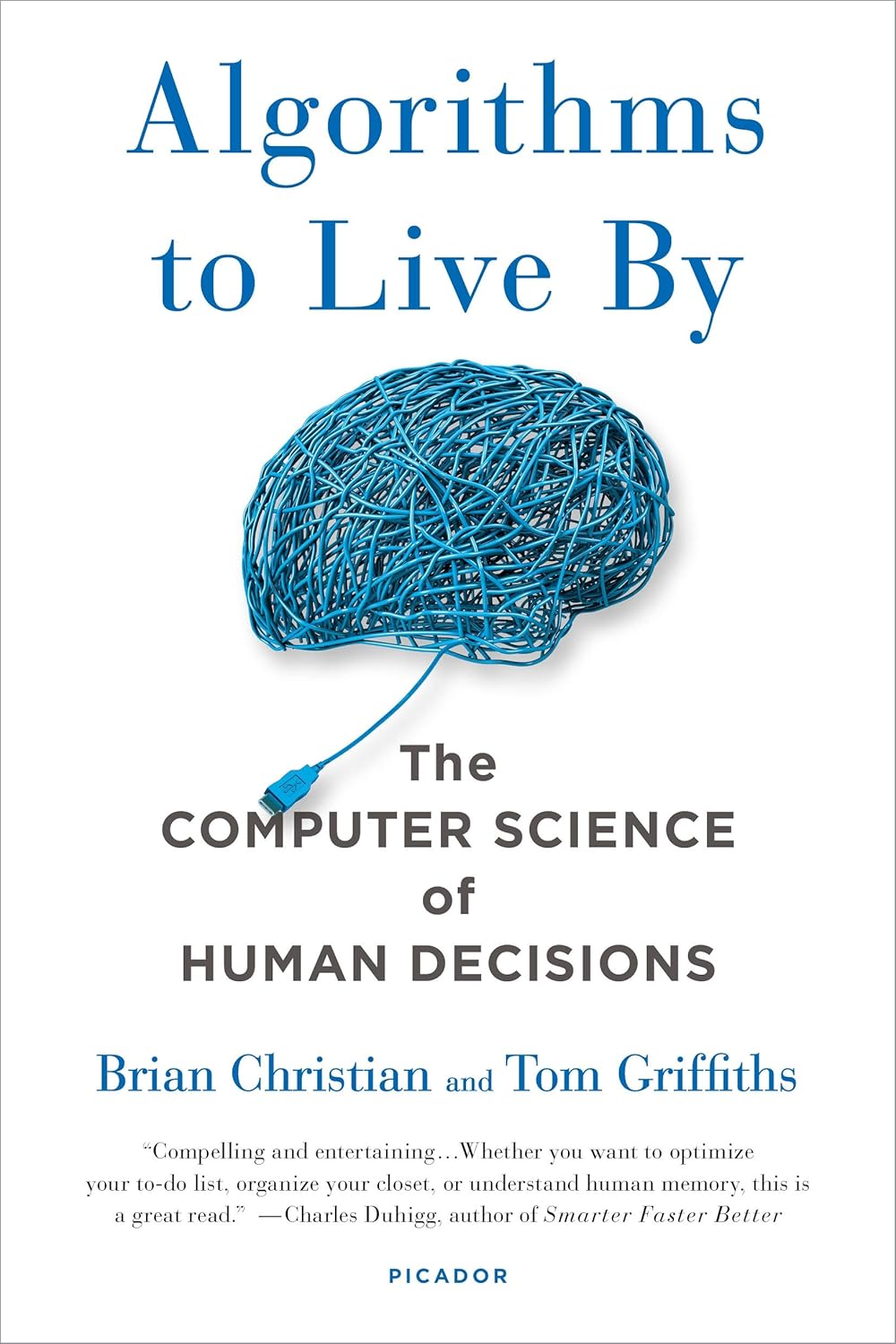
Algorithms to Live By
Brian Christian

What should we do, or leave undone, in a day or a lifetime? How much messiness should we accept? What balance of the new and familiar is the most fulfilling? These may seem like uniquely human quandaries, but they are not. Computers, like us, confront limited space and time, so computer scientists have been grappling with similar problems for decades. And the solutions they’ve found have much to teach us. In a dazzlingly interdisciplinary work, Brian Christian and Tom Griffiths show how algorithms developed for computers also untangle very human questions. They explain how to have better hunches and when to leave things to chance, how to deal with overwhelming choices and how best to connect with others. From finding a spouse to finding a parking spot, from organizing one’s inbox to peering into the future, Algorithms to Live By transforms the wisdom of computer science into strategies for human living.

More Details
Jordan B. Peterson
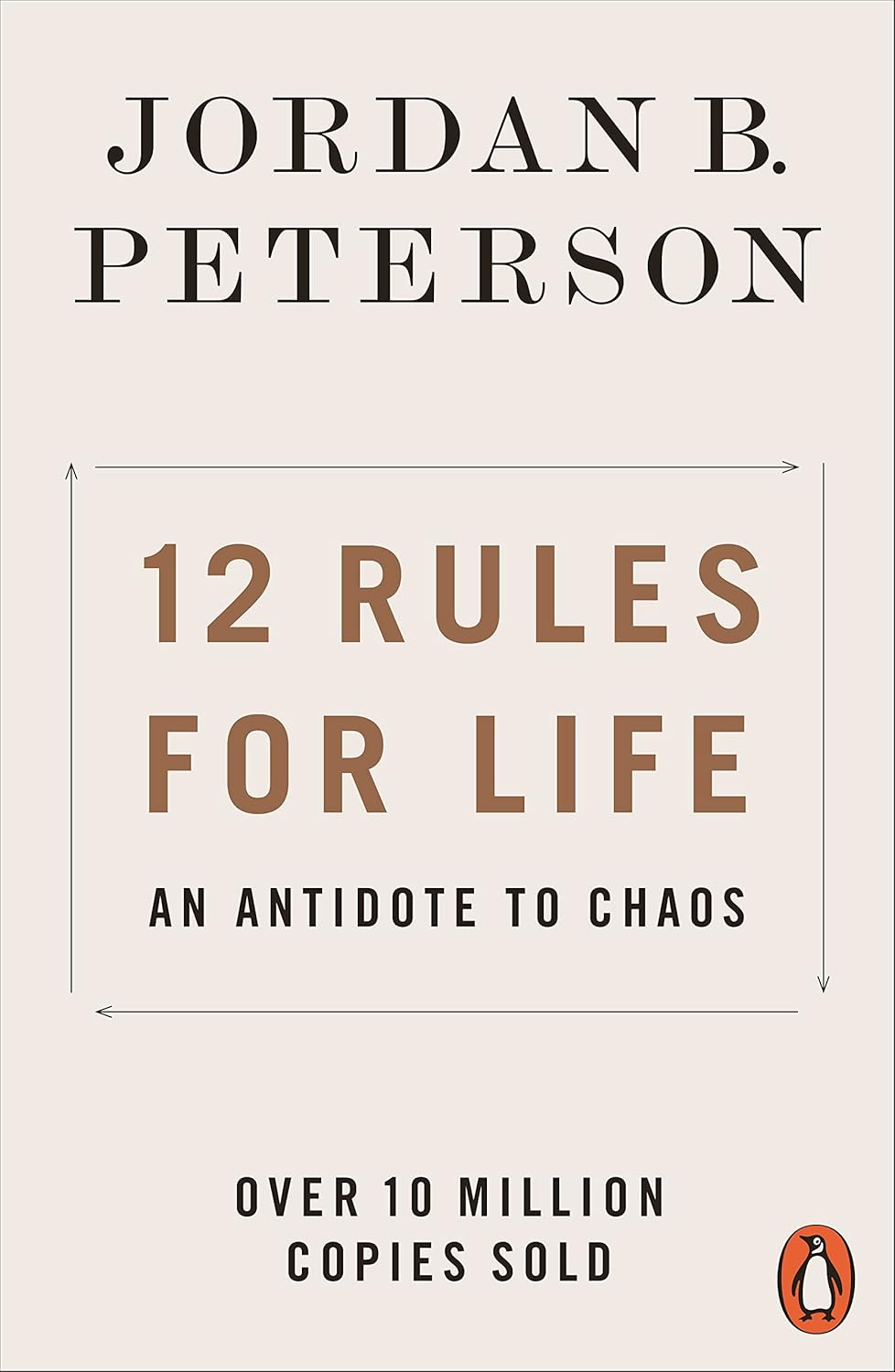
12 Rules for Life
12 Rules for Life
Jordan B. Peterson

Acclaimed clinical psychologist Jordan Peterson has influenced the modern understanding of personality, and now he has become one of the world's most popular public thinkers, with his lectures on topics from the Bible to romantic relationships to mythology drawing tens of millions of viewers. In an era of unprecedented change and polarizing politics, his frank and refreshing message about the value of individual responsibility and ancient wisdom has resonated around the world. In this book, he provides twelve profound and practical principles for how to live a meaningful life, from setting your house in order before criticising others to comparing yourself to who you were yesterday, not someone else today. Happiness is a pointless goal, he shows us. Instead we must search for meaning, not for its own sake, but as a defence against the suffering that is intrinsic to our existence.

More Details

Business

Mark Tepper
Walk Away Wealthy
Walk Away Wealthy
Mark Tepper

In Walk Away Wealthy, Mark Tepper--a leading authority on wealth management and financial planning for entrepreneurs--shows you how to build a strong exit plan, an absolute requirement if you hope to get the full value from a sale. Tepper's twelve secrets debunk myths and deliver practical advice as he walks you through what most people don't know (or refuse to believe) about the process of planning their exit. And although it's best to start planning the exit as early as possible, the book also delivers advice for those who may have waited too long and feel lost in the face of a rapidly approaching sale.

More Details
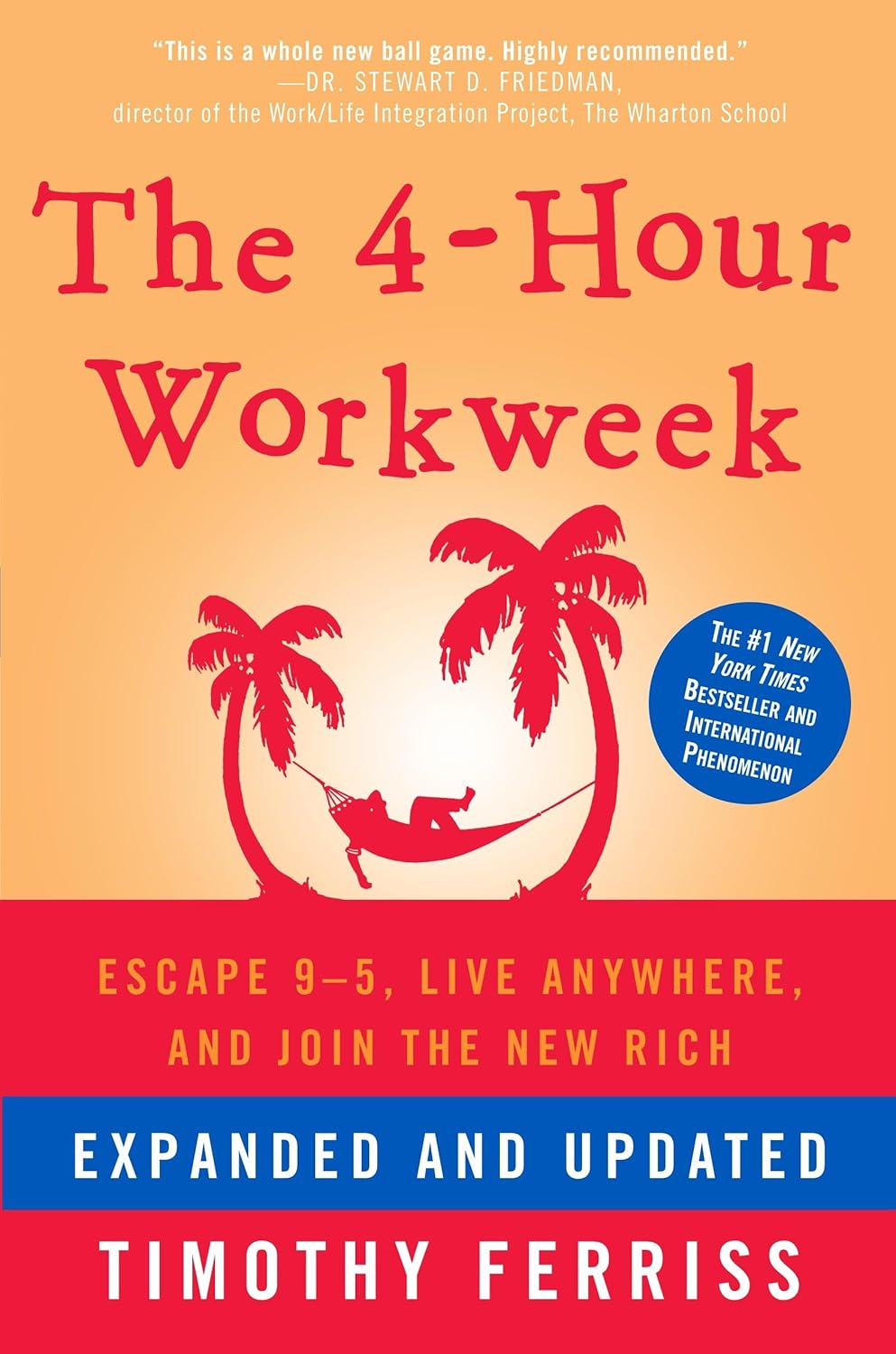
Timothy Ferriss
The 4-Hour Workweek
The 4-Hour Workweek
Timothy Ferriss

Ever wonder, “How can I work smarter and not harder?” Forget the old concept of retirement and the rest of the deferred-life plan–there is no need to wait and every reason not to, especially in unpredictable economic times. Whether your dream is escaping the rat race, experiencing high-end world travel, or earning a monthly five-figure income with zero management, The 4-Hour Workweek is the blueprint.

More Details
John Warrillow
Built to Sell
Built to Sell
John Warrillow

Most business owners started their company because they wanted more freedom—to work on their own schedules, make the kind of money they deserve, and eventually retire on the fruits of their labor. Unfortunately, according to John Warrillow, most owners find that stepping out of the picture is extremely difficult because their business relies too heavily on their personal involvement. Without them, their company—no matter how big or profitable—is essentially worthless. But the good news is that entrepreneurs can take specific steps—no matter what stage a business is in—to create a valuable, sellable company. Warrillow shows exactly what it takes to create a solid business that can thrive long into the future.

More Details
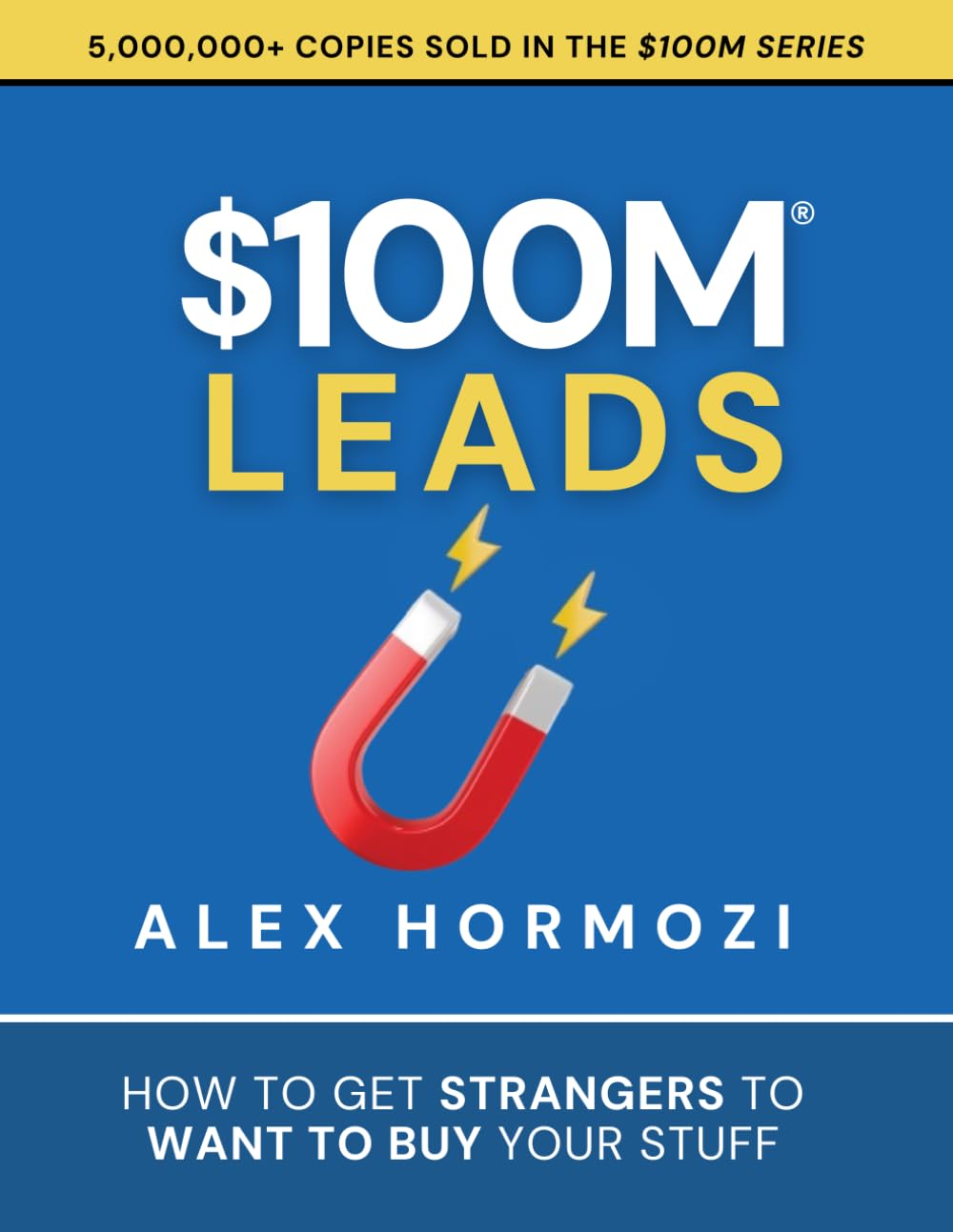
Alex Hormozi
$100M Leads
$100M Leads
Alex Hormozi

You can get 2x, 10x, or 100x more leads than you currently are without changing anything about what you sell… This book contains the playbooks that took me from sleeping on my gym floor to owning a multimillion-dollar portfolio of companies that generate $200,000,000 a year. Wanna know the biggest difference between those two time periods? How many leads I was getting. The problem is - most business owners don’t know how to get leads. I wrote this book to solve your LEADS problem.

More Details
Alex Hormozi
$100M Offers
$100M Offers
Alex Hormozi

The methods contained within this book are so simple, so instantaneous, and so effective, it’s as if they work by magic. If you implement even one tactic in this book, you’ll see the change in your prospects' demeanor. And you’ll know the $100M Offer method worked when you start hearing “What do I need to do to move forward?” ...before you even ask for the sale.

More Details

Trading

Mark Douglas
Trading in the Zone
Trading in the Zone
Mark Douglas

Douglas uncovers the underlying reasons for lack of consistency and helps traders overcome the ingrained mental habits that cost them money. He takes on the myths of the market and exposes them one by one teaching traders to look beyond random outcomes, to understand the true realities of risk, and to be comfortable with the "probabilities" of market movement that governs all market speculation.

More Details

Biographies

Roger Lowenstein
When Genius Failed
When Genius Failed
Roger Lowenstein

In this business classic—now with a new Afterword in which the author draws parallels to the recent financial crisis—Roger Lowenstein captures the gripping roller-coaster ride of Long-Term Capital Management. Drawing on confidential internal memos and interviews with dozens of key players, Lowenstein explains not just how the fund made and lost its money but also how the personalities of Long-Term’s partners, the arrogance of their mathematical certainties, and the culture of Wall Street itself contributed to both their rise and their fall. When it was founded in 1993, Long-Term was hailed as the most impressive hedge fund in history. But after four years in which the firm dazzled Wall Street as a $100 billion moneymaking juggernaut, it suddenly suffered catastrophic losses that jeopardized not only the biggest banks on Wall Street but the stability of the financial system itself. The dramatic story of Long-Term’s fall is now a chilling harbinger of the crisis that would strike all of Wall Street, from Lehman Brothers to AIG, a decade later. In his new Afterword, Lowenstein shows that LTCM’s implosion should be seen not as a one-off drama but as a template for market meltdowns in an age of instability—and as a wake-up call that Wall Street and government alike tragically ignored.

More Details
Ron Chernow
Titan: The Life of John D. Rockefeller
Ron Chernow

From the acclaimed, award-winning author of Alexander Hamilton: here is the essential, endlessly engrossing biography of John D. Rockefeller, Sr.—the Jekyll-and-Hyde of American capitalism. In the course of his nearly 98 years, Rockefeller was known as both a rapacious robber baron, whose Standard Oil Company rode roughshod over an industry, and a philanthropist who donated money lavishly to universities and medical centers. He was the terror of his competitors, the bogeyman of reformers, the delight of caricaturists—and an utter enigma. Drawing on unprecedented access to Rockefeller’s private papers, Chernow reconstructs his subjects’ troubled origins (his father was a swindler and a bigamist) and his single-minded pursuit of wealth. But he also uncovers the profound religiosity that drove him “to give all I could”; his devotion to his father; and the wry sense of humor that made him the country’s most colorful codger. Titan is a magnificent biography—balanced, revelatory, elegantly written.

More Details
Jordan Belfort
The Wolf of Wall Street
Jordan Belfort

The story follows Belfort’s journey from an ambitious young broker to a wealthy, indulgent figure living a life of money, power, drugs, and women. He and his associates exploit the stock market through unethical practices while evading the FBI. The narrative emphasizes the moral ambiguity of Belfort’s actions and the consequences of greed and corruption.

More Details
Alice Schroeder
The Snowball
The Snowball
Alice Schroeder

This complete biography of the man known everywhere as “the Oracle of Omaha” was written by highly respected former financial analyst and business writer Alice Schroeder with the cooperation of Buffett himself, who gave her thousands of hours of his own time as well as complete access to his wife, children, friends, and business associates—and his files. The result is the fullest exploration of his philosophy of life we will ever have. Here are the principles and ideas that made Buffett astoundingly wealthy, enriched the lives (and bank accounts) of those who adopted them, and created the most fascinating American success story of our time.

More Details
Gregory Zuckerman
The Man Who Solved the Market
Gregory Zuckerman

The Man Who Solved the Market is a portrait of a modern-day Midas who remade markets in his own image, but failed to anticipate how his success would impact his firm and his country. It’s also a story of what Simons’s revolution will mean for the rest of us long after his death in 2024.

More Details
Thomas Giacomaro
The King of Con
The King of Con
Thomas Giacomaro

In The King of Con, Tom details how he hashes out a deal with the FBI, agreeing to become a crime informant in an effort to avoid jail time—only, he continues his high-finance, white-collar scheming, luring celebrities and other high-profile contacts to invest multimillions in his new business ventures. When it all comes crashing down, Tom is thrown in prison for over a decade, yet, even behind bars, he's able to get what he wants from anyone . . . and he eventually finds a way to get released early.

More Details
Brad Stone
The Everything Store
Brad Stone

Amazon.com started off delivering books through the mail. But its visionary founder, Jeff Bezos, wasn't content with being a bookseller. He wanted Amazon to become the everything store, offering limitless selection and seductive convenience at disruptively low prices. To do so, he developed a corporate culture of relentless ambition and secrecy that's never been cracked. Until now. Brad Stone enjoyed unprecedented access to current and former Amazon employees and Bezos family members, giving readers the first in-depth, fly-on-the-wall account of life at Amazon. Compared to tech's other elite innovators -- Jobs, Gates, Zuckerberg -- Bezos is a private man. But he stands out for his restless pursuit of new markets, leading Amazon into risky new ventures like the Kindle and cloud computing, and transforming retail in the same way Henry Ford revolutionized manufacturing.

More Details
Ashlee Vance
Elon Musk
Elon Musk
Ashlee Vance

Elon Musk spotlights the technology and vision of Elon Musk, the renowned entrepreneur and innovator behind SpaceX, Tesla, and SolarCity, who sold one of his Internet companies, PayPal, for $1.5 billion. Ashlee Vance captures the full spectacle and arc of the genius’s life and work, from his tumultuous upbringing in South Africa and flight to the United States to his dramatic technical innovations and entrepreneurial pursuits. Vance uses Musk’s story to explore one of the pressing questions of our age: can the nation of inventors and creators who led the modern world for a century still compete in an age of fierce global competition? He argues that Musk—one of the most unusual and striking figures in American business history—is a contemporary, visionary amalgam of legendary inventors and industrialists including Thomas Edison, Henry Ford, Howard Hughes, and Steve Jobs. More than any other entrepreneur today, Musk has dedicated his energies and his own vast fortune to inventing a future that is as rich and far-reaching as the visionaries of the golden age of science-fiction fantasy.

More Details
Bradley Hope
Billion Dollar Whale
Bradley Hope

Now a #1 international bestseller, Billion Dollar Whale is "an epic tale of white-collar crime on a global scale" (Publishers Weekly), revealing how a young social climber from Malaysia pulled off one of the biggest heists in history. In 2009, a chubby, mild-mannered graduate of the University of Pennsylvania's Wharton School of Business named Jho Low set in motion a fraud of unprecedented gall and magnitude--one that would come to symbolize the next great threat to the global financial system. Over a decade, Low, with the aid of Goldman Sachs and others, siphoned billions of dollars from an investment fund--right under the nose of global financial industry watchdogs. Low used the money to finance elections, purchase luxury real estate, throw champagne-drenched parties, and even to finance Hollywood films like The Wolf of Wall Street. By early 2019, with his yacht and private jet reportedly seized by authorities and facing criminal charges in Malaysia and in the United States, Low had become an international fugitive, even as the U.S. Department of Justice continued its investigation. Billion Dollar Whale has joined the ranks of Liar's Poker, Den of Thieves, and Bad Blood as a classic harrowing parable of hubris and greed in the financial world.

More Details
Rob Copeland
The Fund
The Fund
Rob Copeland

When the billionaire founder of Bridgewater Associates, the largest hedge fund on the planet, announced in 2022 that he was stepping down from the company he started out of his apartment nearly 50 years ago, the news made headlines around the world. Dalio cultivated an aura of international admiration and fame thanks to his company’s eye-popping success, coupled with a mystique he encouraged with frequent media appearances, celebrity hobnobbing, and his bestselling book, Principles. In The Fund, award-winning New York Times journalist Rob Copeland punctures this carefully-constructed narrative of the benevolent business titan, exposing his much-promoted “principles” as one of the great feats of hubris in modern memory―in practice, they encouraged a toxic culture of paranoia and backstabbing.

More Details

Science

J. Storrs Hall
Where Is My Flying Car?
J. Storrs Hall

In Where Is My Flying Car?, J. Storrs Hall sets out to answer this deceptively simple question. What starts as an examination of the technical limitations of building flying cars evolves into an investigation of the scientific, technological, and social roots of the economic stagnation that started in the 1970s. From the failure to adopt nuclear energy and the suppression of cold fusion technology to the rise of a counterculture hostile to progress, Hall recounts how our collective ambitions for the future were derailed, with devastating consequences for global wealth creation and distribution. He then outlines a framework for a future powered by exponential progress—one in which we build as much in the world of atoms as we do in the world of bits, one rich in abundance and wonder.

More Details
Alex Epstein
Fossil Future
Fossil Future
Alex Epstein

For over a decade, philosopher and energy expert Alex Epstein has predicted that any negative impacts of fossil fuel use on our climate will be outweighed by the unique benefits of fossil fuels to human flourishing--including their unrivaled ability to provide low-cost, reliable energy to billions of people around the world, especially the world’s poorest people.

More Details
Michael Shellenberger
Apocalypse Never
Apocalypse Never
Michael Shellenberger

Michael Shellenberger has been fighting for a greener planet for decades. He helped save the world’s last unprotected redwoods. He co-created the predecessor to today’s Green New Deal. And he led a successful effort by climate scientists and activists to keep nuclear plants operating, preventing a spike of emissions. But in 2019, as some claimed “billions of people are going to die,” contributing to rising anxiety, including among adolescents, Shellenberger decided that, as a lifelong environmental activist, leading energy expert, and father of a teenage daughter, he needed to speak out with a fact-based approach to climate change to separate science from fiction. Despite decades of news media attention, many remain ignorant of basic facts. Carbon emissions peaked and have been declining in most developed nations for over a decade. Deaths from extreme weather, even in poor nations, declined 80 percent over the last four decades. And the risk of Earth warming to very high temperatures is increasingly unlikely thanks to slowing population growth and abundant natural gas.

More Details
Neil deGrasse Tyson
Astrophysics for People in a Hurry
Neil deGrasse Tyson

"Astrophysics for People in a Hurry" is a captivating journey through the cosmos, crafted by a renowned astrophysicist with a gift for making complex scientific concepts accessible to all. In this slim yet powerful volume, readers are invited to embark on an exhilarating odyssey through the vast expanse of space and time, condensed into bite-sized chapters tailor-made for the busy modern reader.

More Details

Fiction

Ayn Rand
Atlas Shrugged
Atlas Shrugged
Ayn Rand

Who is John Galt? When he says that he will stop the motor of the world, is he a destroyer or a liberator? Why does he have to fight his battles not against his enemies but against those who need him most? Why does he fight his hardest battle against the woman he loves? You will know the answer to these questions when you discover the reason behind the baffling events that play havoc with the lives of the amazing men and women in this book. You will discover why a productive genius becomes a worthless playboy...why a great steel industrialist is working for his own destruction...why a composer gives up his career on the night of his triumph...why a beautiful woman who runs a transcontinental railroad falls in love with the man she has sworn to kill.

More Details

Joe's Partner Ecosystem:
Explore companies Joe personally endorses.

Partners

The companies listed below may offer compensation to Joe / Heresy Financial for referred business. Joe also holds direct ownership stakes in some of the companies listed below.

Swan Bitcoin
Swan Bitcoin exists to accelerate and democratize long-term Bitcoin adoption by lowering friction, building trust, and elevating understanding. The company serves as an adoption engine that helps people move from casual curiosity to confident ownership through education, access, and safe infrastructure that turns speculators and newcomers into true Bitcoiners. We are committed to providing the safest way to buy Bitcoin. But more than that, we view it as our duty to help educate our clients about this new money. In turn, we hope you help educate your friends and family about Bitcoin’s benefits.
Monetary Metals
Keith Weiner started Monetary Metals with one radical idea: that gold is money, still. If gold still has moneyness, then it can and should be used to finance production, the way it was used for millennia. In 2012 he established a hedge fund and launched a website to cover our unique approach to analyzing gold and silver markets. Four years later, we launched the first Gold Fixed Income product which paid 3% annual interest on gold, in gold, thus putting the wheels of Monetary Metals in motion.
M1 Finance
Everything M1 does centers on you, the investor. From our product features, to our automation tools, to the content we produce, we’re focused on helping you manage your money and grow your wealth the way you want to. That’s why our mantra is Sophisticated wealth building, simplified. You should have total choice, control, and transparency over how you achieve them. This includes choosing the stocks and ETFs you like and having the capability to move your money among your various M1 accounts.
TradingView
We're here to help you make smarter trading decisions with the best tools and the best community at your back. We believe financial knowledge means a stronger shot at freedom — whatever that looks like for you right now. Trading isn't putting it all on red If you're going to trade, you'll have your fair share of hard knocks. We know this from our experience, experience we always share so you can learn from, and see both our triumphs and our disasters. Trading ain't that easy In fact, it's pretty darn difficult — many will try but far fewer will succeed. And that's why we team up with an astronaut: because he knows the value of hard work, preparation, and commitment, just like our dedicated users. But freedom is within reach Well-researched, disciplined trading is one of the clearest paths to independence. Research, patience, and strategy aren't just tools — they're your ticket to financial freedom you choose.
Miles Franklin
Founded in 1989 by David and Andy Schectman, Miles Franklin Precious Metals has grown from a family vision into a trusted national leader in precious metals investments. With over $11 billion in sales and not a single formal customer complaint, we’ve built our business on the pillars of integrity, transparency, and personalized service. We’re more than a precious metals dealer. We’re your full-service partner in building, protecting, and preserving wealth through every economic season. From facilitating Precious Metals IRAs to providing secure storage with Brinks Global Services, we make it simple and secure to diversify your portfolio and safeguard your assets. At Miles Franklin, we’re not just here to sell you gold and silver—we’re here to help you understand the role of precious metals, protect your wealth, and navigate a changing financial world with confidence. Backed by decades of family-driven values, we believe in building lasting relationships and empowering you to preserve your legacy with peace of mind.